San Felipe Springs, the water source that built Del Rio
San Felipe Springs still powers Del Rio, feeding the city and Laughlin Air Force Base. Its history, ecology and water demands still shape daily life.
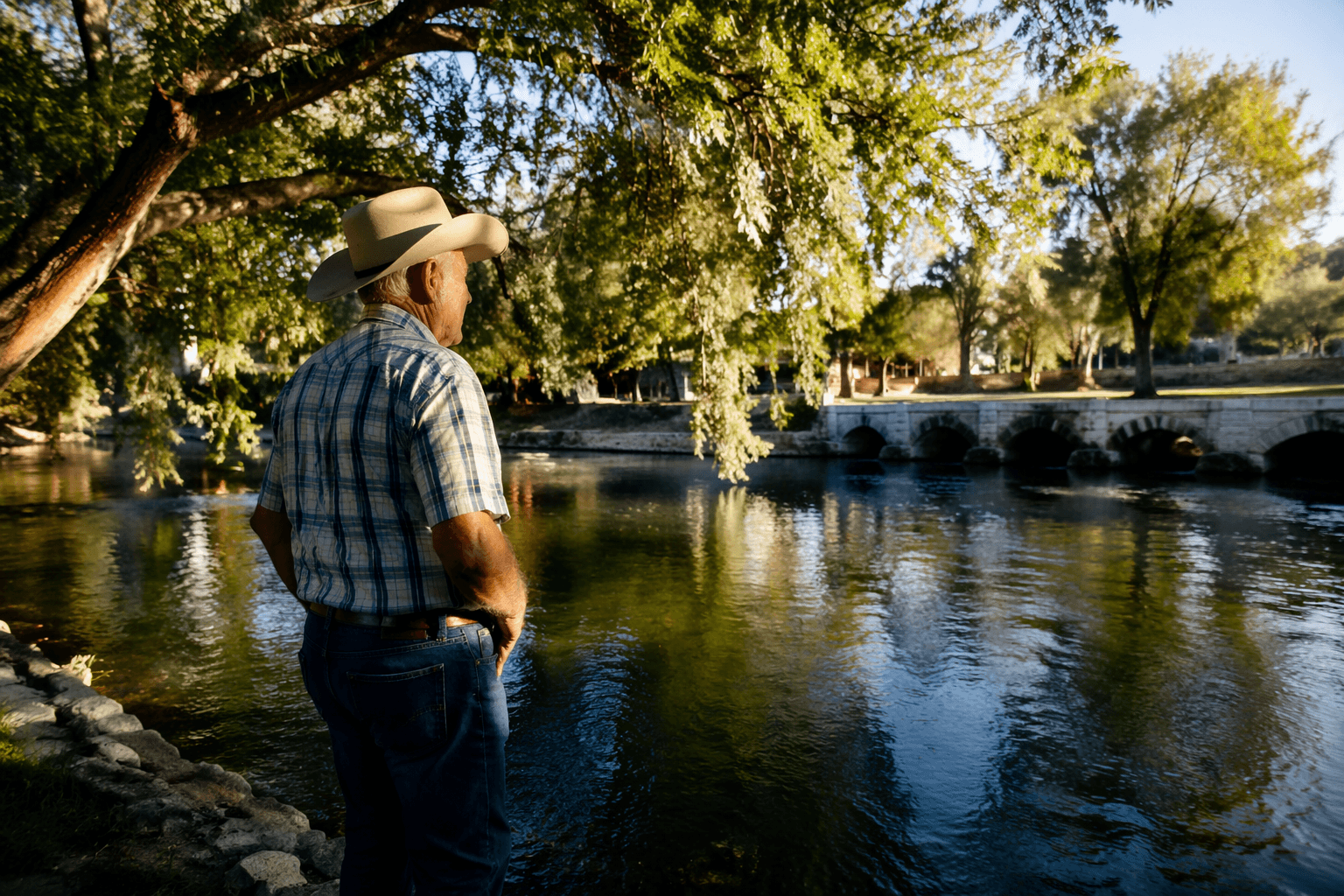
San Felipe Springs is why Del Rio exists where it does. The springs rise under artesian pressure through a fault in the rock northeast of town, and for centuries they have drawn people, settlement, and infrastructure to this corner of Val Verde County.
A spring that built a border town
Long before Del Rio became a city, Gaspar Castaño de Sosa stopped at San Felipe Springs in 1590, marking the site as a place of travel and water on the route through the region. The springs later anchored a mission in 1808 and the settlement of San Felipe del Rio in 1834, setting the stage for the community that grew after the Civil War into present-day Del Rio.
That history still matters because the town never drifted far from the water source that created it. San Felipe Springs is the third largest springs in Texas, and it is not just a scenic landmark or a historical footnote. It remains the sole water supply for the city of Del Rio and Laughlin Air Force Base, which makes the springs part of the region’s civic backbone as much as its origin story.
The water system that still depends on the springs
Del Rio’s water treatment plant is built around San Felipe Springs. Raw water reaches the plant from the East and West San Felipe Springs pump stations, and the treatment system is designed to handle an incoming flow of 18.2 million gallons per day. That capacity shows how closely the city’s daily routines, public health and local growth remain tied to the springs.
The city’s utilities department treats safe drinking water as a basic public obligation, and in Del Rio that obligation begins at the springs themselves. When the source is strong, it supports the city and the base. When flow drops, every downstream user feels the strain.
That dependency became especially visible in August 2023, when Del Rio said declining flow at San Felipe Springs forced the city into Stage 2 of its drought contingency plan. The response was not symbolic. It was a practical acknowledgment that the spring system can tighten under drought conditions and that the city has to manage risk before shortages become a crisis.
Why the numbers matter
The hydrology behind San Felipe Springs is part of what makes it so unusual. The Texas State Historical Association says the average flow in 1977 was more than 63,200 gallons per minute, and the average flow from 1889 to 1977 was 41,080 gallons per minute. Those are not abstract figures for a museum label. They are the scale of a water source that has sustained a city, a military installation, and the landscape around them.
Amistad Reservoir, impounded in 1968, changed the springs as well. The reservoir increased the flow of San Felipe Springs by adding recharge water and by diverting part of the flow from springs that were inundated. In other words, a massive regional water project altered a local source that had already shaped settlement patterns for generations.
For Del Rio, that connection between reservoir, springs and city supply is central to understanding present-day water stewardship. The springs are a natural feature, but they are also part of a managed system whose behavior is influenced by drought, recharge and the larger Rio Grande basin.
A creek with statewide ecological importance
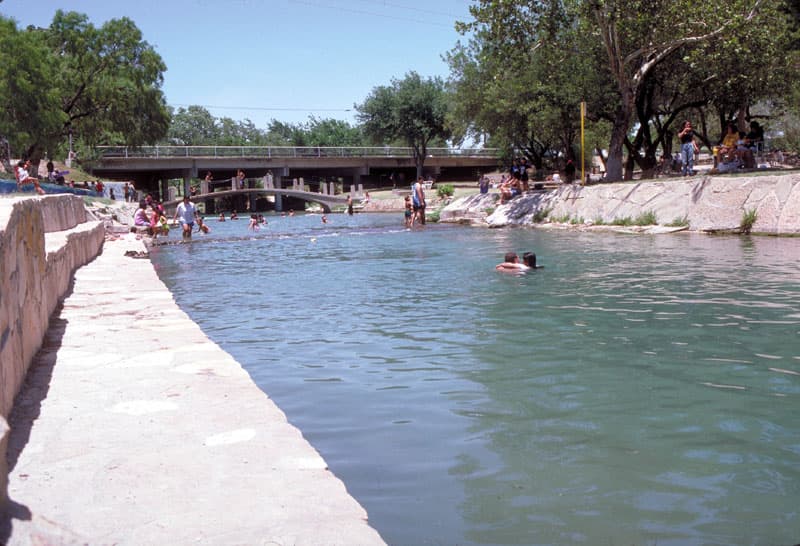
San Felipe Springs feeds San Felipe Creek, and the creek carries its own distinction. Texas Parks & Wildlife Department classifies the stream segment as having high water quality, exceptional aquatic life and high aesthetic value. The same department has also rated it the No. 2 scenic river in Texas, which helps explain why the creek corridor remains one of the most recognizable natural places in Del Rio.
The ecological story goes deeper than scenery. Texas Parks & Wildlife says the creek supports rare freshwater mussels, including one of only four known remaining populations of the endemic Texas fatmucket and one of only four known remaining populations of the endemic golden orb freshwater mussel. That puts the local watershed in a conservation context that reaches far beyond Val Verde County.
Freshwater mussels are among the most imperiled animal groups in the United States, and Texas has more than 50 native mussel species. Fifteen of them are listed as threatened at the state level. In that broader picture, San Felipe Creek is not just a pleasant waterway in a desert city. It is habitat with statewide and regional significance.
What San Felipe Springs means to Del Rio now
The springs explain the city’s geography, but they also shape how people experience Del Rio today. The creek corridor links water quality, wildlife habitat, recreation and local identity in one place that residents pass, visit and rely on every day. It is where the history of settlement meets the practical realities of a dry landscape and a growing demand for reliable water.
That is why San Felipe Springs remains one of the clearest examples in West Texas of geology turning into civic life. A fault in the rock northeast of Del Rio helped create a spring system that drew explorers, supported a mission, formed a settlement, supplied a city and base, and now anchors conservation concerns as well.
In Val Verde County, the springs are not just why Del Rio was founded. They are why Del Rio still has to think carefully about water, growth and the land that makes life here possible.
This article was produced by Prism’s automated news system from verified source data, official records, and press releases, then run through automated quality and moderation checks before publishing. The system is built and supervised by the people who set the standards it runs under. Read our full AI policy.
Know something we missed? Have a correction or additional information?
Submit a Tip
