Seminole Canyon offers hiking, rock art and deep local history
Seminole Canyon pairs rugged hikes with rare rock art, and its layered history makes it one of Val Verde County’s most important day trips.

Seminole Canyon State Park & Historic Site still does what few places in West Texas can: it lets you walk a canyon, see ancient pictographs and read the county’s history in the rock. West of Comstock in Val Verde County, the 2,172.5-acre park ties together scenery, archaeology and the long human story of the Lower Pecos in a single day trip.
A canyon that rewards a planned visit
Texas Parks and Wildlife describes Seminole Canyon as a place where deep canyon walls, prehistoric shelter sites and the broader Lower Pecos landscape come together. That is not just a slogan for the brochure rack. It is a reminder that this is a rugged, remote place with sparse vegetation, rocky terrain and a landscape still shaped by erosion, flooding and the harsh environment of far West Texas.
The park opened in February 1980 after the state purchased the land from private owners between 1973 and 1977. That history matters because Seminole Canyon is not a roadside stop built around a single overlook. It is a preserved tract of land that was deliberately assembled to protect a landscape with both scenic and archaeological value, and that makes a difference for anyone deciding how to spend a summer day in Val Verde County.
How to see the rock art and canyon history
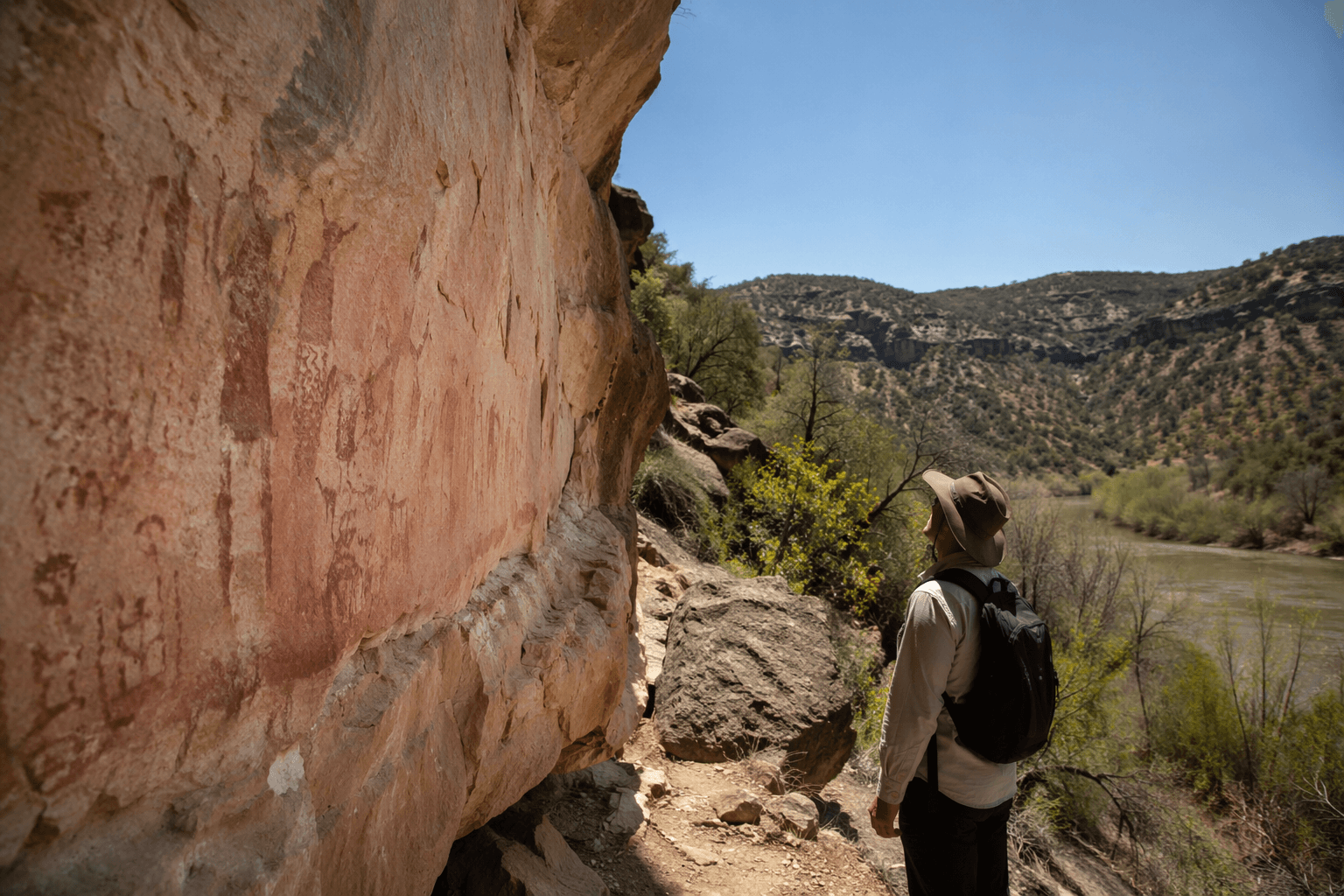
For most visitors, the most meaningful way into Seminole Canyon is through guided access. The Fate Bell Shelter tour runs Wednesday through Sunday, requires reservations and comes with per-person fees. Texas Parks and Wildlife describes it as a fairly rugged hike, which means visitors should be prepared for real trail conditions rather than an easy stroll.
The park also offers the Upper Canyon Hike, a half-day outing that focuses on railroad and military history while also visiting remote rock art sites. The Friends of Seminole Canyon run that hike during the fall, winter and spring, while Shumla Archaeological Research & Education Center also offers guided treks led by a professional archaeologist. Taken together, those options make Seminole Canyon especially strong for people who want more than a pretty view. The place gives access to the archaeology, the old transportation story and the geography that shaped both.
The view itself adds to the experience. TPWD notes that the park’s trails look out across country that extends well into neighboring Mexico, a reminder that the canyon’s significance is regional, not confined to one county line.
A record of human use stretching back millennia
Seminole Canyon’s value is measured in centuries and millennia, not seasons. Texas Parks and Wildlife says early hunters first visited the area about 12,000 years ago, when now-extinct elephant, camel, bison and horse roamed the plains. About 7,000 years ago, a later culture emerged that began producing the pictographs now associated with the Lower Pecos.
The Texas State Historical Association says the park contains 72 recorded sites spanning roughly 9,000 years, from the Early Archaic period through Historic times. That long record helps explain why the canyon remains such an important destination for archaeologists and historians. It is not a single site with a single story. It is a layered landscape where different peoples left evidence of travel, shelter, survival and ceremony over thousands of years.
The rock art itself is unusually concentrated. Texas Parks and Wildlife says the Lower Pecos pictograph style appears only in a limited area that includes portions of the Rio Grande, Pecos River and Devils River regions, and more than 200 pictograph sites preserve examples of that style. Shumla says a recent study led with Texas State University found Pecos River style murals were painted for more than 4,000 years, beginning nearly 6,000 years ago. That research strengthens the argument that this corner of Val Verde County helps protect one of the oldest and longest-lived rock-art traditions in the Americas.
The broader Lower Pecos landscape
Seminole Canyon does not stand alone. The Lower Pecos Canyonlands Archeological District was designated a National Historic Landmark on January 13, 2021, and the district is described as 1,518.51 acres of nationally significant resources. Just 2 miles west of Seminole Canyon State Park, the White Shaman Preserve is described by the Witte Museum as one of the most significant archaeological sites in North America and is one of 35 contributing sites in that district.
That larger framework matters for visitors and for the county. Seminole Canyon is part of a nationally recognized heritage landscape, not an isolated curiosity. For Val Verde County, that recognition supports a type of tourism that is slower, more educational and more tied to place than a typical recreation stop.

Local history is still visible on the ground
The canyon also carries a more recent layer of Val Verde history. Friends of Seminole Canyon says the park once hosted a railroad-worker camp with a store and saloon, and remnants still remain, including a track base, a restored baking oven, an explosives storage area and historic graffiti on the canyon walls. That detail changes the way the park reads. It is not only about ancient peoples and rock art. It is also about the workers, rail lines and frontier-era activity that later passed through the same landscape.
Fate Bell Shelter has its own documented excavation history. A.T. Jackson worked there in 1932, and Mark Parsons briefly tested it in 1963. Texas Beyond History notes that vandalism and looting damaged the shelter before stronger protection measures were put in place. That history is a blunt reminder of why preservation still matters. Once a shelter is disturbed, the evidence inside it cannot be fully replaced.
Why Seminole Canyon matters to Val Verde County
Seminole Canyon is one of those places that helps define a county’s identity as much as it serves visitors. It connects Comstock and the surrounding region to thousands of years of human use, and it anchors heritage tourism in the western part of Val Verde County. The park is valuable not because it is easy, but because it is irreplaceable.
For summer visitors, the right approach is simple: treat it as a serious landscape, not a casual stop. Book the guided tour, respect the rugged terrain, plan for the heat and give the canyon the attention its history deserves. In a county shaped by distance, weather and deep time, Seminole Canyon remains one of the clearest places to see how all three still matter.
This article was produced by Prism’s automated news system from verified source data, official records, and press releases, then run through automated quality and moderation checks before publishing. The system is built and supervised by the people who set the standards it runs under. Read our full AI policy.
Did this article answer your question?