Seminole Canyon State Park Preserves Thousands of Years of Lower Pecos History
Painted up to 5,000 years ago inside Fate Bell Shelter, Seminole Canyon's pictographs are both a Val Verde heritage anchor and newly vulnerable to regional development pressure.
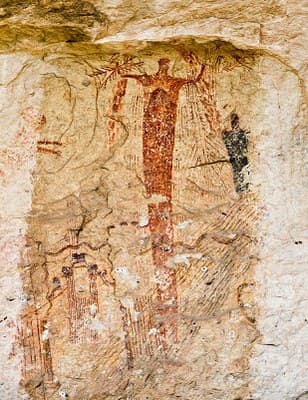
Nine miles west of Comstock, U.S. Highway 90 cuts through a stretch of raw Chihuahuan Desert where the land breaks open into steep canyon cuts draining toward the Rio Grande. Here, more than 2,100 acres of the Lower Pecos canyonlands are held in public trust at Seminole Canyon State Park & Historic Site, protecting what researchers and local leaders alike describe as one of the most extraordinary concentrations of prehistoric rock art in North America. The pictographs inside Fate Bell Shelter, the park's centerpiece, were painted by nomadic hunter-gatherers across a span of roughly 1,500 to 5,000 years, on limestone walls that preserved pigment, color, and compositional intent across a timeframe that dwarfs any written record from the continent.
A Landmark With Deep Roots
The site forms part of the Lower Pecos Canyonlands Archaeological District, a National Historic Landmark, a designation reflecting the globally rare density of intact rock-art panels found within the region's canyon system. Archaeological work documented in the park's interpretive materials traces human activity through multiple millennia of occupation, with evidence pointing to communities who returned to these shelters repeatedly, leaving behind layered visual records that researchers are still decoding.
Texas Parks and Wildlife Department (TPWD) assembled the park's land base through purchases made during the 1970s and opened the site to public access in 1980. Since that opening, Seminole Canyon has served a dual purpose: recreational destination for hikers, campers, and birders, and an active research site where archaeologists continue to find new detail in panels that appear, at a glance, to be static images.
What the Walls of Fate Bell Shelter Show
The imagery inside Fate Bell Shelter includes stylized anthropomorphs, humanlike figures with animal attributes, large depictions of cats and deer, and complex multi-figure compositions that researchers believe were laid down deliberately over long periods. Pigment was applied across generations, producing a mural in which layers of meaning and authorship overlap. Analysis by institutions including the Shumla Archaeological Research and Education Center, founded in 1998 by Texas State University anthropologist Carolyn Boyd, has demonstrated that some of these compositions were oriented to interact with seasonal patterns of sunlight and shadow, connecting the art to the astronomical knowledge of its makers.
That research has drawn international scholars to the Lower Pecos, reinforcing Seminole Canyon's standing not just as a Texas cultural site but as a subject of study that reaches into global conversations about early human symbolic behavior.
Seeing the Pictographs: How Guided Tours Work
Access to Fate Bell Shelter and the canyon is available only through ranger-guided tours, offered Wednesday through Sunday at 10 a.m. and 3 p.m. Reservations are required and can be made online through TPWD or by calling (512) 389-8900. Tour fees are $8 per person for visitors 13 and older; children ages 5 to 12 pay $5. Children under 4 are free. No pets are permitted on canyon tours.
The guided format is not incidental. Rangers walk every group into the canyon both to interpret the panels and to enforce the visitor protections that the art requires. Two rules apply without exception inside the shelters: no touching the pictographs, and no flash photography. Both can cause damage that the pigments, despite surviving thousands of years of natural conditions, cannot recover from.
Visitors interested in the White Shaman mural, another major Pecos River style panel located elsewhere in the broader canyonlands, can register for Saturday tours offered by the Witte Museum during the fall through spring season.
Trails, Camping, and What Else the Park Offers
Beyond the canyon, Seminole Canyon has nearly 10 miles of trails open for self-guided hiking and mountain biking, including rim routes and paths leading toward the Rio Grande. The park's 46 campsites range from primitive drive-up sites to sites with water and electricity; all have access to restrooms and showers. Amistad Reservoir and the adjacent Amistad National Recreation Area border the park to the south and west, extending the area's recreational footprint considerably.
Birdwatchers will find the park sits within the Rio Bravo Loop of the Great Texas Wildlife Trails, with canyon, desert, and seed-eating bird species represented across the habitat. Just outside the Visitors Center stands The Maker of Peace, a 17-foot bronze statue created by Texas artist Bill Worrell in 1994, a work that signals from the entrance what kind of place this is.
Planning a Safe Visit
Cell phone coverage is limited across much of the park; plan accordingly before leaving the highway. The desert environment demands preparation:
- Bring more water than you think you need, particularly on exposed rim trails
- Sun protection is essential; shade is minimal outside the canyon shelters
- Sturdy footwear handles the uneven limestone terrain far better than casual shoes
During warm months, TPWD and the park's Friends groups advise arriving early to complete trails and reach the canyon before midday heat peaks. The TPWD alerts page for Seminole Canyon posts temporary closures and tour schedule changes; checking it before departure prevents wasted drives out from Del Rio or Comstock.
Educational organizations should coordinate in advance with park staff or the Friends group to arrange ranger talks and guided canyon routes; walk-in group access to the shelter is not available.
What Preservation Actually Requires
For Val Verde County, Seminole Canyon is an economic anchor as well as a cultural one, drawing heritage tourists whose interest in the Lower Pecos rock art generates measurable regional activity. But recent preservation debates have sharpened awareness of how exposed these panels remain. Threats from erosion, humidity, flooding, vandalism, and large-scale federal infrastructure proposals in the surrounding canyonlands have made the question of the pictographs' long-term survival a live issue, not a distant hypothetical.
The art has survived for thousands of years because of the specific conditions of the canyon shelters. Keeping those conditions intact, and keeping visitor behavior aligned with what the panels can tolerate, is the work that determines whether the next generation of Val Verde residents inherits the same extraordinary record that stretches back to the end of the last ice age.
This article was produced by Prism’s automated news system from verified source data, official records, and press releases, then run through automated quality and moderation checks before publishing. The system is built and supervised by the people who set the standards it runs under. Read our full AI policy.
Did this article answer your question?