Seminole Canyon State Park Preserves World-Class Rock Art, Draws Heritage Tourists
Seminole Canyon State Park preserves world-class Lower Pecos rock art and draws heritage tourists, boosting local visitation and shaping local planning needs.
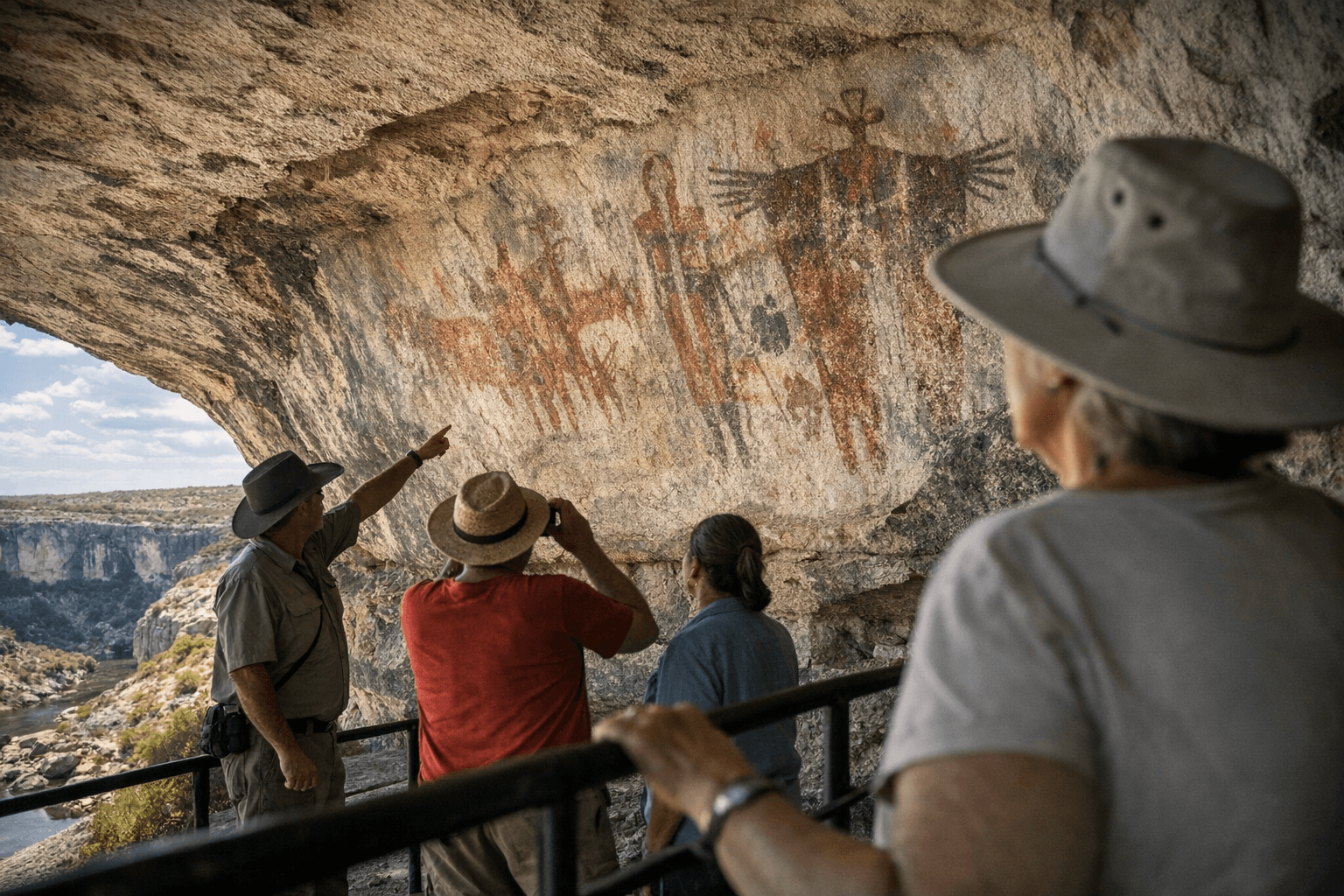
Seminole Canyon State Park & Historic Site near Comstock safeguards some of Val Verde County’s most significant cultural resources, including the Fate Bell Shelter pictographs, and serves as a regional anchor for heritage and outdoor tourism. The site’s visitor center, guided pictograph tours, hiking trails and interpretive programming attract people who commonly combine visits to Comstock and Langtry, Amistad National Recreation Area, and nearby ranching-country viewpoints.
Preservation of Lower Pecos rock art at Seminole Canyon has cultural and economic ripple effects across the county. Heritage tourists who come for the pictographs also spend at local businesses in Comstock and Langtry, supporting lodging, dining and gas stops along US-90. For a small county economy, those visitors translate into visible income but also elevated demand for county services, from road maintenance to emergency response.
Public health and community planners need to weigh both benefits and risks tied to increased visitation. Seminole Canyon’s remote location off US-90 means that medical response times can be longer than in urban areas. Visitors hiking to pictograph shelters confront summer heat and rugged terrain; limited on-site camping options add pressure on visitors to plan their stays carefully. Val Verde County health officials and Texas State Parks staff can reduce preventable injuries and heat-related illness by coordinating on signage, first-aid stations, water availability and clear messaging about guided-tour schedules and trail conditions.
Access and equity are central local concerns. Seminole Canyon’s interpretive programming offers educational value, yet transportation barriers and park fees can limit participation by Val Verde County residents, especially students and low-income families who live closest to these shared cultural assets. Local leaders and park managers can expand outreach, offer targeted community days or school partnerships, and ensure that programming reflects and involves local voices in interpreting the rock art and landscape.
Practical visitor information remains straightforward: Seminole Canyon State Park & Historic Site is located off US-90; park phone and reservation information are available through the Texas State Parks website. Guided tours of pictograph shelters run on a schedule, and visitors should plan ahead because on-site camping is limited.
Seminole Canyon’s rock art connects Val Verde County to deep time and creates present-day opportunities and responsibilities. For residents, the site is both an economic engine and a shared cultural classroom; for policymakers, it is a reminder that heritage tourism must be paired with equitable access, public-health planning and investments in local services so the county can host visitors safely while honoring the histories on its cliffs.
This article was produced by Prism’s automated news system from verified source data, official records, and press releases, then run through automated quality and moderation checks before publishing. The system is built and supervised by the people who set the standards it runs under. Read our full AI policy.
Did this article answer your question?