Shumla preserves Lower Pecos rock art in Val Verde County
Shumla is racing to document Lower Pecos murals before weather and damage erase them. In Comstock, that work doubles as STEM training and a countywide heritage asset.

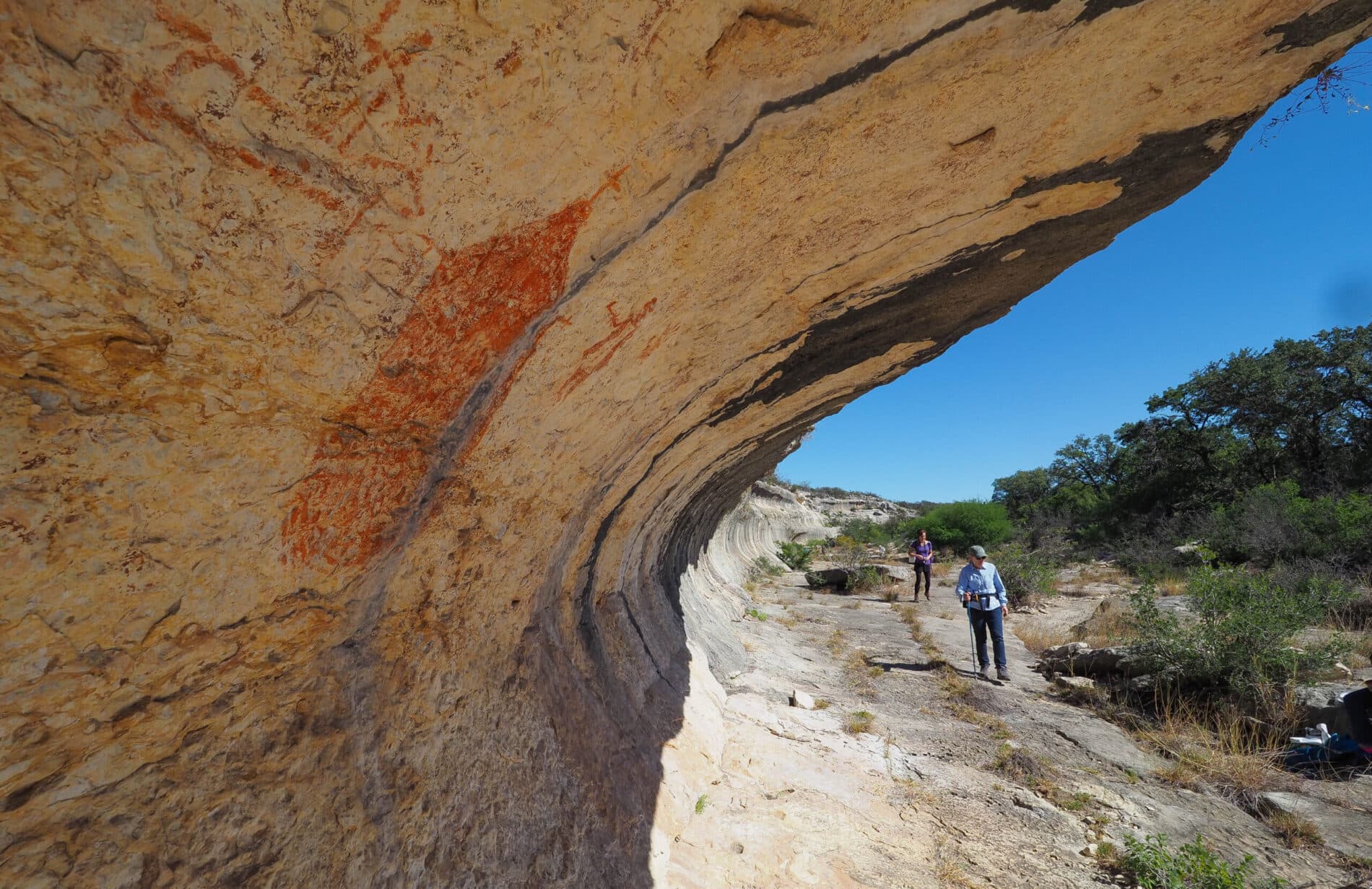
The Lower Pecos rock art corridor is one of Val Verde County’s most important places, not because it is scenic alone, but because it holds a deep record of human life that cannot be replaced. In Comstock, Shumla Archaeological Research and Education Center is documenting and preserving murals that date back as far as 4,000 BP, while flooding, siltation, and time continue to threaten what remains.
Why the Lower Pecos matters
West of Del Rio, the Lower Pecos Canyonlands sit among the most archaeologically rich landscapes in North America. Shumla says the region contains hundreds of complex, multi-colored murals and that at least 320 rockshelters are known to contain rock art. The broader record stretches from the late Pleistocene through European contact, which makes the corridor more than a collection of images on stone. It is a long-running cultural archive.
That scale is what gives the work in Val Verde County its urgency. The murals are not isolated relics tucked away in a few famous sites. They are part of a wide pattern of human expression spread across the canyonlands, and each documented figure adds to the record of how people lived, thought, and made meaning in this borderland.
For the county, that means the heritage story is not abstract. World-significant art sits in the local landscape, and the responsibility for protecting it is local too. The value is measured not only in archaeology, but also in identity, education, and the long-term reputation of Comstock and the surrounding county as a place where major scientific and cultural work is happening.
How Shumla is preserving the murals
Shumla’s preservation model combines field archaeology with modern imaging and digital documentation. Its team records every figure and line, then builds searchable databases so the murals can be studied without relying on fragile original surfaces. The organization uses high-tech imaging, 3-D modeling, portable x-ray fluorescence, digital microscopy, GIS mapping, and drone photography to capture details that can be difficult to see in person.
That technical approach matters because the art itself is vulnerable. Murals exposed in rockshelters can be damaged by weathering, flooding, silt, and human contact. Damming of the Rio Grande to create Amistad Reservoir already flooded many mural sites, and the remaining art still faces environmental pressure. Preservation in this setting is not a one-time rescue. It is a sustained effort to document as much as possible before more is lost.

The work also changes how the art can be studied. Detailed imaging and searchable records allow researchers to compare panels, identify repeated patterns, and revisit sites digitally after field seasons end. In practical terms, that means the record can be protected even when the rock surface itself cannot be fully shielded from harm.
Why Comstock is part of the story
Shumla’s presence in Comstock makes the county central to the preservation effort. The organization’s office is at 28 Langtry Street, placing it in the heart of a small community that is helping steward a resource with global significance. It also operates a 66-acre Harrington Campus west of the Pecos River bridge, where field schools, events, educational programs, and research projects take place.
That campus turns the preservation mission into a local institution, not just a remote research program. Students, researchers, and educators can work where the landscape itself is part of the curriculum, and the county gains a permanent anchor for heritage-based learning. In a rural area, that kind of presence matters because it connects land, place, and instruction in a way that can be felt beyond the walls of a classroom.
The result is a preservation story with local consequences. Comstock is not simply hosting a museum-like outpost. It is helping support a research center whose work generates documentation, field training, and public understanding for one of Texas’ most important archaeological landscapes.
What Shumla Scholars means for local students
One of the clearest ways the work reaches the community is through Shumla Scholars, the program the center runs with Comstock ISD. It gives local students access to the same kinds of tools archaeologists use in the field, including digital microscopy, drone photography, GIS, and 3-D modeling.
That matters because it links heritage to education in a concrete way. Students are not only learning about the past in the abstract. They are using the technology that helps preserve it, which makes archaeology relevant to science, mapping, data analysis, and digital documentation. For a small district, that is a powerful bridge between place-based history and modern STEM skills.
The program also gives students a direct connection to the stories of the people who painted the murals thousands of years ago. That connection builds civic knowledge in a place where the landscape itself carries evidence of long human occupation. It also helps show how preservation work can produce long-term community value, not just academic publications or tourist interest.
What this means for Val Verde County
The Lower Pecos story is larger than any single shelter or mural panel. In Val Verde County, it brings together preservation, education, research, and local identity in one landscape. The county’s role is unusual: it contains art that is old enough to reach back thousands of years, yet current enough to demand modern tools, local partnerships, and ongoing care.
Shumla’s work also makes the stakes easy to understand in practical terms. If the murals are not documented, details can disappear under weather, flooding, and erosion. If students do not get involved, the knowledge stays distant from the community that lives closest to it. If the research center’s campus and programs remain active, the county keeps a rare asset that can support learning, stewardship, and public understanding for years to come.
That is why the Lower Pecos corridor deserves attention in Val Verde County. It is a record of human thought carved and painted into stone, and Shumla’s job is to make sure that record is not erased before the county fully understands what it has in its own backyard.
This article was produced by Prism’s automated news system from verified source data, official records, and press releases, then run through automated quality and moderation checks before publishing. The system is built and supervised by the people who set the standards it runs under. Read our full AI policy.
Did this article answer your question?