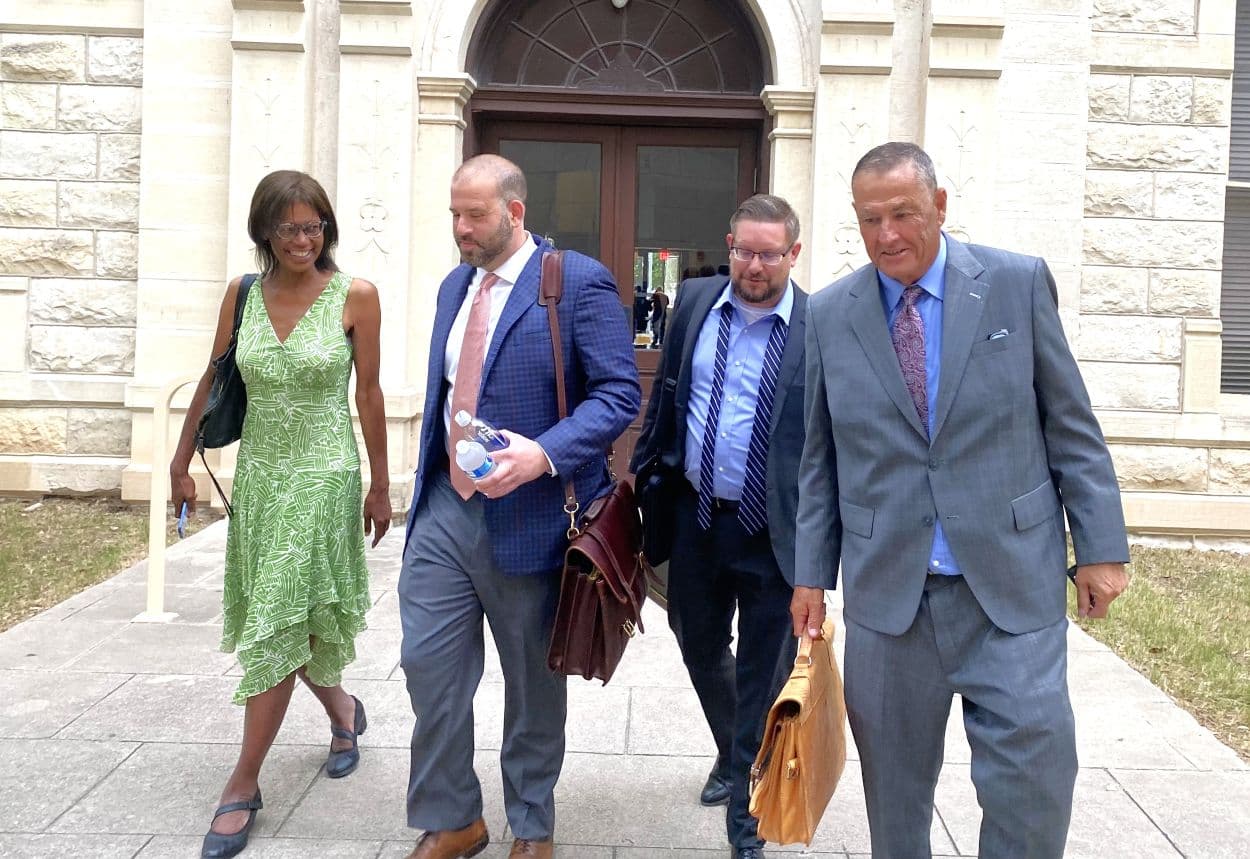
Tarver School marks Del Rio’s early Black education history
Tarver School began with Black Del Rio families in 1901 and still marks a school system divided by race, grade limits, and memory. The building site at Ware and Pierce keeps that history visible.

Black Del Rio families built Tarver School into a place of their own long before integration reached Val Verde County. Records preserved by the Val Verde County Historical Commission place an African American school in Del Rio as early as 1901, and the school remained part of the city’s education landscape until the 1920s. The later Tarver building, a one-room stucco school funded from a 1929-1930 Del Rio ISD bond package, stood at the corner of Ware and Pierce Streets, anchoring this history in a real neighborhood rather than a distant memory.
A school made in a segregated city
Tarver School makes the clearest sense when it is set inside the school system Del Rio actually had. For the first six decades of the 20th century, the Texas State Historical Association describes Del Rio as having a tripartite segregated public school system, with separate schooling for White and Black students and a separate system emerging for children of Mexican descent. That structure was not abstract policy; it shaped where children went, how far they could study, and what public resources reached each community.
The same legal and social landscape helped define one of the state’s most important school cases, Del Rio ISD v. Salvatierra, decided in 1930. In that case, Texas courts reviewed a local school district’s actions toward children of Mexican descent for the first time. Tarver School belongs in that same story of divided access, because it shows how Black families in Del Rio were also forced to build educational space within a system that did not treat them equally.
The building on Ware Street
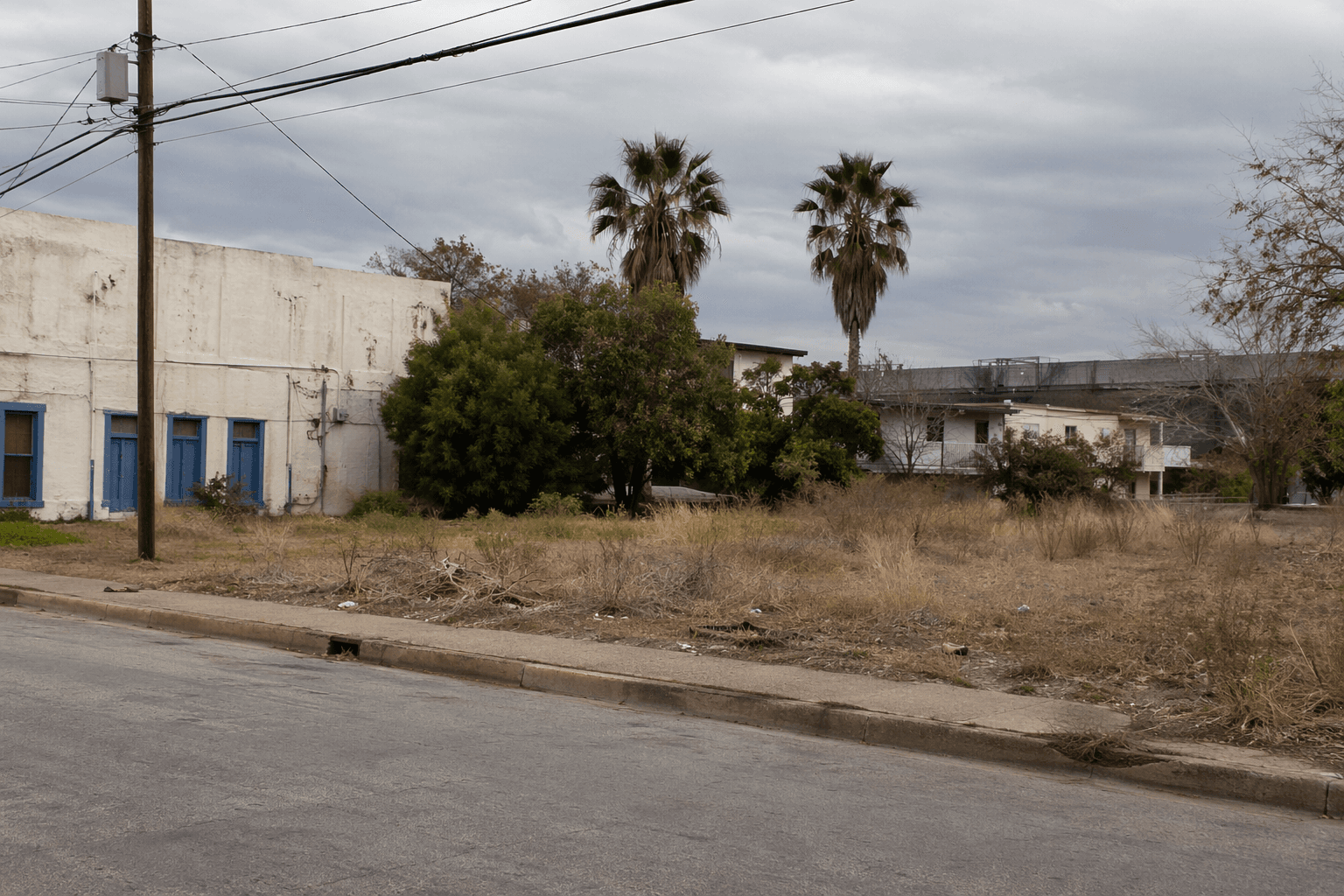
The Tarver School site is more than a line in a record. The Val Verde County Historical Commission identifies the old building as sitting at the corner of Ware and Pierce Streets, and its project materials note that a 2003 photograph captured the structure before changes erased part of it from view. The commission also says the wooden addition that once extended north no longer exists, leaving the stucco core as the strongest surviving reminder of the original school.
That physical location matters in a city where neighborhoods have changed over time. A small school on Ware Street tells a larger story about how Black residents created opportunity with the public resources they could secure, even when those resources were limited. The one-room design says as much as the records do: Tarver was built for function, but it also stood as a community statement that education for Black children in Del Rio would exist.
What the marker effort preserves
Tarver School also sits within a broader preservation effort led by the Val Verde County Historical Commission. The commission notes that the Texas Historical Commission created the state marker program in 1953, and that the first Texas historical markers were cast in 1962. That timeline helps explain why histories like Tarver’s often surfaced later, after the people who used the school had already moved on or died.
The commission’s Tarver School page lists Doug Braudaway as a contact for the project, a practical detail that gives descendants, historians, and former students a point of entry for documents and photographs. In a county where so much memory still lives in family stories, a marker project can become the bridge between an archival record and living testimony. Tarver’s physical marker work turns a once-overlooked school into a site people can still locate, revisit, and talk about.
The memory kept by descendants and institutions
The strongest human link in the Tarver story comes through Carrie Wade Jenkins. The Whitehead Memorial Museum says Jenkins attended Tarver School through the 8th grade, which the museum described as the highest grade an African American could get in Del Rio during the 1940s. She later graduated from Columbus High School in Columbus, Texas, a path that shows how limited the local system still was even decades after Tarver first appeared.
That detail gives the school its most urgent meaning. Tarver was not just a building for young children; it represented the ceiling imposed on Black education in Del Rio at the time. For families who remembered it, the school was both an opportunity and a boundary, a place where local children could learn and a reminder that the broader system still held them back.
The Whitehead Memorial Museum has helped bring that memory into public view. The museum describes itself as a nonprofit that preserves the early history of Del Rio and Val Verde County, and it has displayed an African American Del Rio exhibit that it said had never before been shown there. That exhibit, alongside Tarver School, shows how local institutions are beginning to place Black Del Rio history where it belongs: inside the city’s main public memory, not at the edge of it.
Why Tarver still matters in Del Rio
Tarver School matters now because it helps explain how Del Rio’s schools came to be understood the way they are today. The school’s early organization in 1901, its closure in the 1920s, and the later one-room building funded from a 1929-1930 bond package show a community that kept pushing for education even when public systems moved slowly. The school’s corner location on Ware and Pierce Streets gives that effort a map readers can still follow.
It also matters because the story is not finished. A building photographed in 2003, a north addition that no longer exists, a marker program built decades later, and a museum exhibit only recently given space all show that memory in Val Verde County is still being assembled. Tarver School stands as one of the clearest places where Black family persistence, local school finance, and public history meet in Del Rio.
This article was produced by Prism’s automated news system from verified source data, official records, and press releases, then run through automated quality and moderation checks before publishing. The system is built and supervised by the people who set the standards it runs under. Read our full AI policy.
Did this article answer your question?