Texas GOP seeks to add water treaty to T-MEC over Mexico debt
Val Verde County could feel Mexico’s water debt at Amistad first, where Del Rio already plans for shortages and a new GOP push seeks tougher trade leverage.
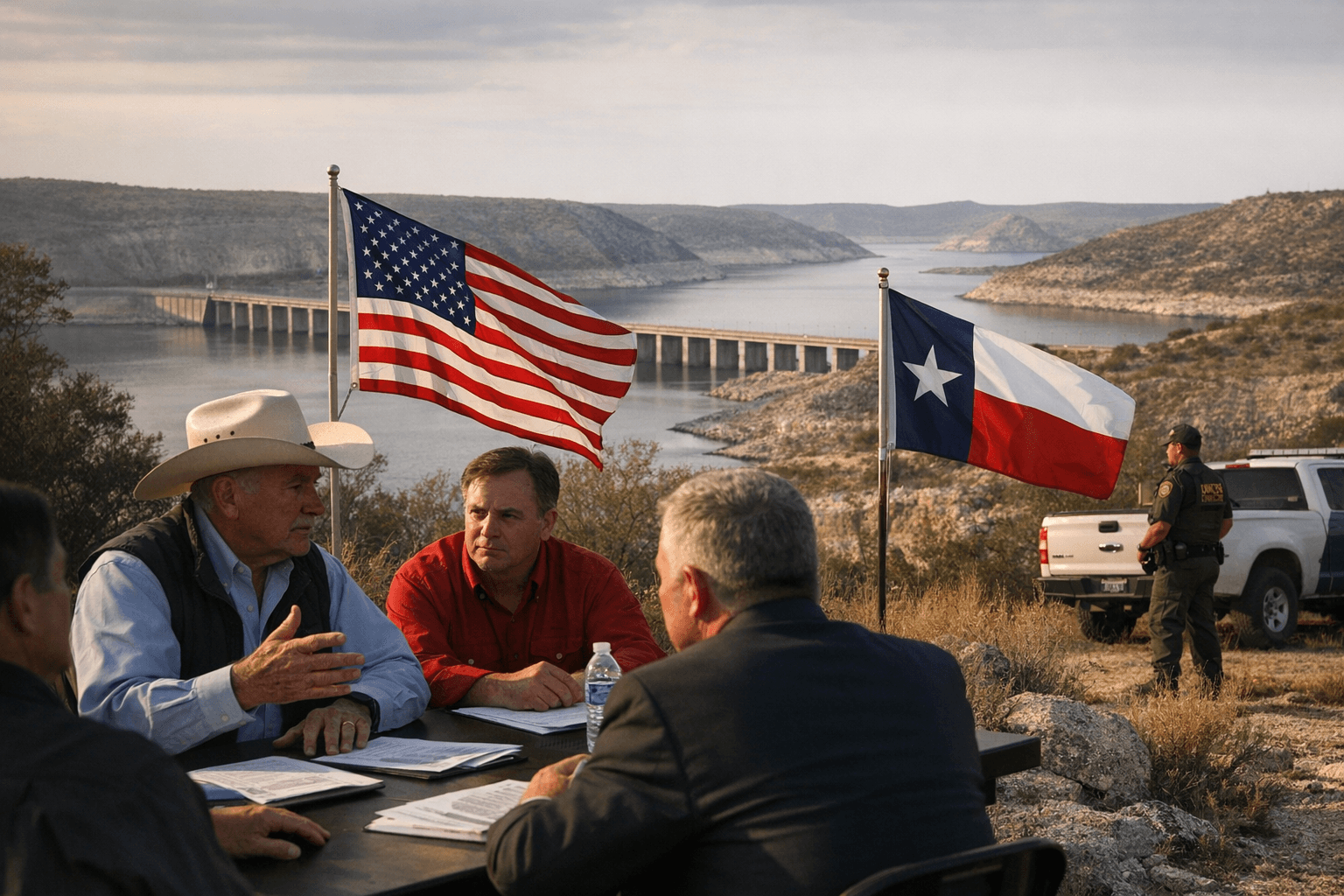
A new Texas Republican push to bind Mexico’s water deliveries to the USMCA would land closest to home in Val Verde County, where Amistad Reservoir sits 12.8 river miles above Del Rio and anchors flood control, water conservation, recreation and electric power on the border. Congresswoman Monica De La Cruz and a dozen other Texas Republicans asked U.S. Trade Representative Jamieson Greer and Chief Agricultural Negotiator Julie Callahan to use the upcoming USMCA review to force Mexico to meet its 1944 treaty water obligations with stricter enforcement.
For Del Rio, the stakes are not abstract. The city’s utilities department says its water conservation drought contingency plan is meant to trigger when supplies are threatened, and the Texas Water Development Board says Val Verde County’s groundwater and surface water are tightly connected, with the Devils River and San Felipe Springs part of the county’s water system. The board also says future groundwater development is on the horizon, which means any unresolved Rio Grande shortfall keeps local officials planning around scarcity instead of certainty.
Amistad is also a major piece of infrastructure, not just a lake. The Texas Water Development Board says the reservoir is jointly managed by the United States and Mexico under the 1944 treaty, with a conservation capacity of 3.2 million acre-feet and the larger dam system holding about 5.5 million acre-feet overall. The International Boundary and Water Commission says the dam has 55 sinkholes identified, a potential stability risk, and that the structure is tied to water supply for 3 million people as well as international commerce. That is why confidence in the river system matters as much as the water itself.

The new letter also shows how previous pressure campaigns have fallen short on the ground. In April 2025, the State Department said Mexico had agreed to immediate transfers from Amistad and monthly transfers from both Amistad and Falcon, along with a longer-term plan to address outstanding debts. USDA then approved $280 million in relief for Texas producers hit by shortages tied to the treaty, underscoring how much the crisis had already cost farmers and ranchers. For Val Verde County, the unresolved question is whether stronger trade leverage will produce steadier deliveries, or just another round of promises layered over the same dry-river reality.
This article was produced by Prism’s automated news system from verified source data, official records, and press releases, then run through automated quality and moderation checks before publishing. The system is built and supervised by the people who set the standards it runs under. Read our full AI policy.
Did this article answer your question?