Val Verde County guide maps Del Rio’s downtown history on foot
Start at the restored courthouse and Del Rio’s old Perry Street, then follow a downtown walk shaped by merchants, stonemasons and border radio history.

Begin at the courthouse
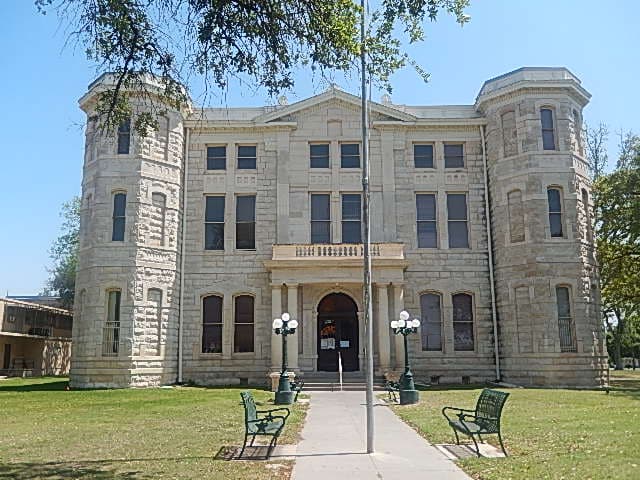
The best place to read Del Rio on foot is the restored 1887 Val Verde County Courthouse, where the downtown story starts to make sense block by block. Texas Time Travel points heritage travelers to that courthouse as the starting point for the city’s downtown walks, and the building itself carries two clear layers of history: an 1887 design by Larmour & Watson and a 1915 alteration that gave it the metal roof and central dome still seen today.
From there, the downtown guide turns familiar streets into a map of how the city grew. Main Street, Garfield Avenue, Pecan Street, Spring Street, Griner Street and Canal Street are not just names on signs. They mark the historic core of Del Rio, the older commercial and civic footprint that still anchors the city’s center and gives the walk its value for anyone who wants to understand Del Rio beyond a drive-through glance.
Follow the street names back to the city’s first block
One of the most useful details in the walking tour is also one of the easiest to miss: Main Street was originally named Perry Street, after John Perry, one of Del Rio’s earliest merchants. In its earliest form, it ran only through what are now the 800 to 1200 blocks at the very southern end of the modern street. That detail changes the way you read downtown, because it shows how a small commercial strip became the spine of a larger city center.
The street grid tells a larger civic story too. Val Verde County was organized in 1885, and Del Rio was chosen as the county seat the same year. City government did not formally begin until 1905, when residents voted to incorporate and elected James McLymont as the city’s first mayor. Put those dates together, and the walk becomes more than a sightseeing route. It becomes a timeline of how a county seat turned into an incorporated city with a downtown worth preserving.
How to use the walk
If you are planning a weekend outing, meeting family in town, or showing Del Rio to guests, the guide works best as a self-directed loop through the core blocks. Start at the courthouse, then follow the names in order as they radiate from the historic center, pausing where older storefronts, civic buildings and public spaces still shape the feel of the district.
- Begin at the restored courthouse, then use Main Street as your anchor.
- Work outward to Garfield Avenue, Pecan Street, Spring Street, Griner Street and Canal Street.
- Leave time to look at storefronts, building lines and the public spaces that make the downtown walkable.
- Treat the route as a short history lesson and a practical way to see where Del Rio’s old commercial life still survives.
The guide matters because it turns history into something usable. A family can follow it as a weekend activity, a student group can use it for a local-history project, and a visitor can turn a quick stop into a more meaningful look at the city’s civic origins. It also rewards residents who already know the streets by car, because walking makes the older layout, the setbacks and the surviving architecture easier to notice.
The craftsmen behind the buildings
The downtown walk also opens a window into the immigrant labor that helped shape Del Rio’s visual identity. The historical commission says Italian immigrants arrived in the late 1880s and formed what became known as an Italian Colony. Some of those immigrants were stonemasons, and they built many of the city’s oldest and most distinctive buildings.
That story gives the walk a different kind of depth. You are not only following a route past historic blocks, you are seeing the work of the people who helped construct them. The commission’s page on John Taini strengthens that connection, saying he worked as a subcontractor on the Val Verde County Courthouse in 1885. In practical terms, that means the courthouse and surrounding blocks are not abstract heritage markers. They are tied to named builders whose labor still sits in the city’s masonry and civic fabric.
Radio history gives downtown a borderland reach
The visitors-guides page does not stop at storefronts and courthouses. It also points to Radio Del Rio, which connects downtown history to the city’s broadcast past and to the wider borderland culture that shaped the region. Dr. John R. Brinkley came to Del Rio after his 1929 radio-license revocation by the Federal Radio Commission, at a time when advertising on the radio was illegal.
That chapter matters because it links a local city guide to one of the more unusual episodes in early American broadcasting. The historical commission says the Carter Family first found national acclaim on XERA radio, owned by Brinkley, across the Rio Grande from Del Rio. That gives the walking guide a broader frame: Del Rio was not only a county seat with old streets and civic buildings, it also sat beside a powerful radio story that reached listeners far beyond Val Verde County.
Why this guide still matters now
Del Rio has been a Texas Main Street City since 2002, and that designation helps explain why a downtown walking guide carries real civic value. The Del Rio Main Street Program says its work is to preserve and showcase historic downtown Del Rio as the heart of the community, while supporting preservation-based economic development, merchant recruitment, streetscape improvements and a pedestrian-friendly mix of commerce, entertainment, arts and education.
The Main Street board is volunteer staffed and includes merchants, building owners and other interested parties, which places the walking tour inside a broader local effort to keep downtown active as well as historically legible. In that sense, the guide is not just about the past. It helps keep downtown visible, walkable and relevant, whether you are tracing the city’s earliest streets, studying its builders or introducing someone to Del Rio for the first time.
This article was produced by Prism’s automated news system from verified source data, official records, and press releases, then run through automated quality and moderation checks before publishing. The system is built and supervised by the people who set the standards it runs under. Read our full AI policy.
Did this article answer your question?