Val Verde County Historical Commission Offers Comprehensive Online Guide to Heritage Sites
Residents will learn how to use the county’s online resources to find historic marker texts, brochures, preservation guidance, and local site information across Del Rio, Langtry, Comstock and beyond.

1. Historic markers
The online guide catalogs local historic markers across Val Verde County and provides the full texts for each plaque. These transcripts let residents and teachers verify facts, plan walks, or prepare interpretive materials without having to transcribe weathered metal in the field. For community research and school projects, marker texts are primary-source starting points that make local stories accessible and shareable.
2. Val Verde County Courthouse
The site includes information about the county courthouse as a civic landmark and orientation point for heritage tours. The courthouse is framed both as an architectural anchor and a living center of civic life, helping residents connect everyday governance to historical context. Knowing courthouse history supports community understanding of local institutions and encourages civic participation in preservation decisions.
3. Brown Plaza
Brown Plaza is featured as a public gathering space with heritage significance and practical use for events and commemoration. The online guide describes the plaza’s role in community rituals, which helps organizers plan heritage walks, memorials, and festivals that are culturally resonant. Maintaining plaza access and programming contributes to social cohesion and offers safe, familiar places for intergenerational exchange.
4. The Brinkley Mansion
The Brinkley Mansion is identified as a noteworthy heritage property with interpretive resources available online for visitors and researchers. The guide points residents to descriptive material that supports backyard history projects, photographic documentation, and responsibly planned tours. Highlighting the mansion in the roster encourages stewardship and raises awareness about private and public responsibilities in preserving landmark properties.
5. Del Rio heritage sites
Del Rio is presented as the county’s cultural hub, with multiple heritage sites and brochure-ready routes available through the online resource. The site’s brochures and texts help locals and visitors build walking or driving itineraries that link museums, markers, and public plazas. Promoting Del Rio sites supports local businesses by drawing foot traffic to downtown shops, restaurants, and service providers.
6. Langtry heritage sites
Langtry’s entries on the guide provide concise place descriptions and tie-in material useful for short stops or extended visitors who want to learn about the area’s specific past. The online information supports small-group tours and educational field trips that bring outside visitors into local economies. Ensuring Langtry’s stories remain visible online helps prevent erasure of smaller communities’ contributions to county history.
7. Comstock heritage sites
Comstock’s listings include marker texts and location notes that make these more remote sites easier to find and interpret. The guide’s clarity reduces the barrier to visiting rural corners of Val Verde County, connecting folks to landscape-scale histories and bolstering rural tourism. Increased awareness of Comstock can help channel heritage dollars to underresourced areas and support equitable cultural preservation.
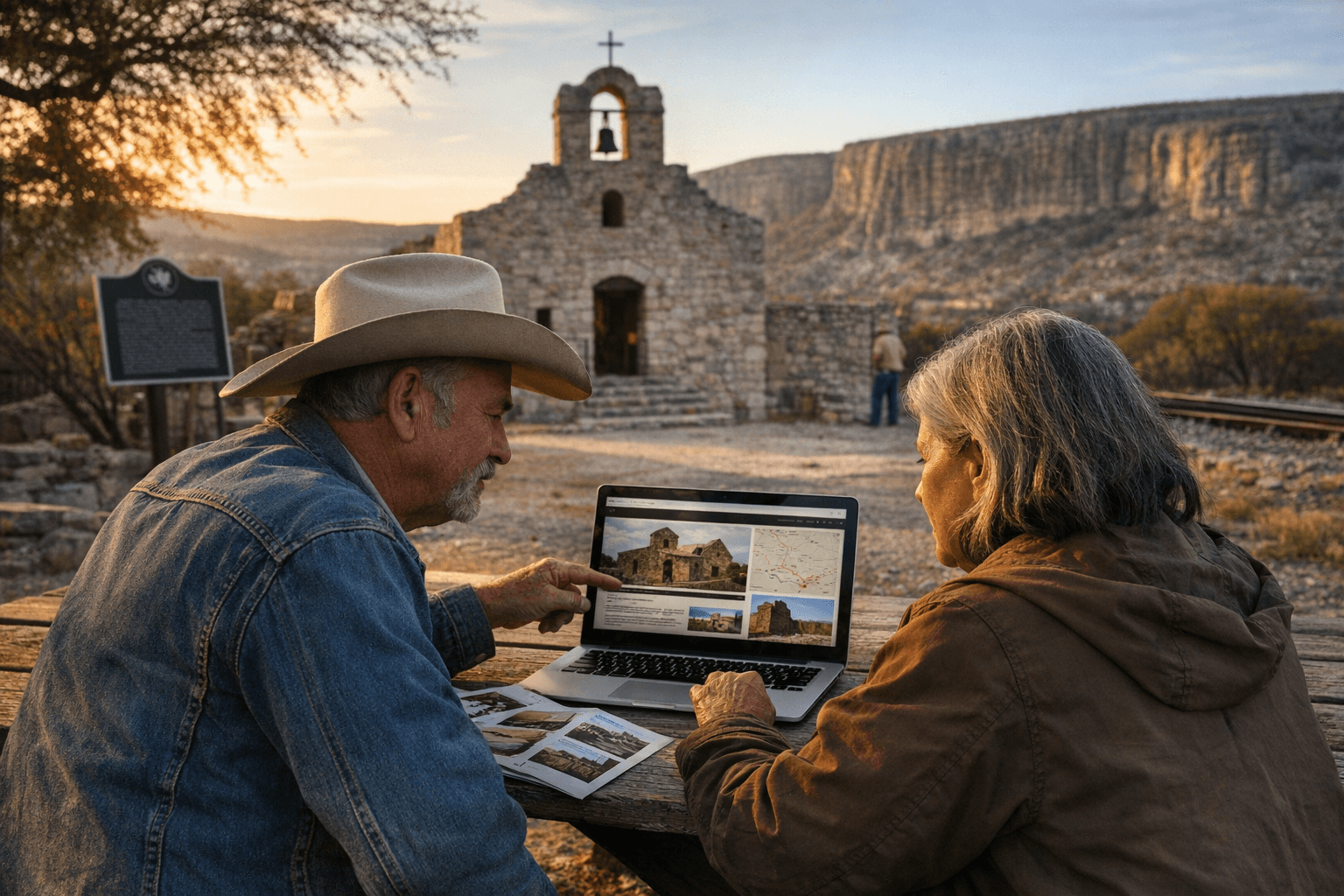
- Print copies for visitor centers and libraries to increase accessibility
- Use digital brochures on phones for eco-friendly, GPS-enabled navigation
- Share brochures through schools and service organizations to broaden reach
8. Brochures and tourist resources
The website hosts downloadable brochures designed for self-guided tours and multi-site itineraries; these are practical tools for residents hosting out-of-town family or for tourism operators. Brochures distill marker texts, map routes, and suggest timeframes so locals can promote heritage tourism with confidence. Tips:
9. Preservation information and support
The guide compiles preservation guidance and resources that help homeowners, nonprofits, and the county coordinate conservation efforts. This includes basic maintenance advice, pointers on how to document a site, and how to connect with local preservation bodies for technical help or grants. Preservation is framed as both cultural stewardship and community health infrastructure, protecting sites lowers stress about neighborhood decline and preserves gathering places that sustain social ties.
10. Using the guide for heritage tourism and research
Residents can use the online materials to plan heritage tours, prepare lesson plans, or conduct oral-history projects that complement the marker texts. For researchers, the site is a steady reference that centralizes dispersed documentation, helping to reduce travel and repeated data collection. The guide empowers local storytellers to build narratives that reflect Val Verde County’s diversity and lived experience.
11. Community impact, public health, and equity
Accessible heritage resources have public health and social equity dimensions: they foster community pride, offer safe outdoor activities, and can ease social isolation by creating shared cultural routines. Equitable preservation means ensuring markers and materials tell inclusive stories and that sites are physically accessible to older adults and residents with disabilities. Policy attention and local funding will be necessary to expand ADA access, transport options, and multilingual materials so all residents benefit.
- Volunteer for marker maintenance or guided walk programs
- Advocate for county funding to improve site accessibility and interpretive signage
- Partner with schools to integrate local sites into curricula
12. How to get involved and next steps
The site is a springboard for volunteerism, civic advocacy, and small-scale entrepreneurship tied to heritage tourism. Residents can:
Getting involved connects personal histories to county-wide decisions and strengthens civic voice over how shared spaces are cared for.
Practical closing wisdom Treat the online guide as a living map: use it to plan your next walk, support a neighbor’s preservation effort, or bring a class to a plaza for a history lesson. When residents turn these digital texts into on-the-ground stewardship, the county’s past becomes a resource for present-day health, livelihoods, and community resilience.
This article was produced by Prism’s automated news system from verified source data, official records, and press releases, then run through automated quality and moderation checks before publishing. The system is built and supervised by the people who set the standards it runs under. Read our full AI policy.
Did this article answer your question?