Whitehead Memorial Museum preserves Del Rio history across historic buildings
Whitehead Memorial Museum turns one Del Rio campus into the county’s memory book, from Roy Bean’s grave to Black Seminole Scouts and the San Felipe canal.
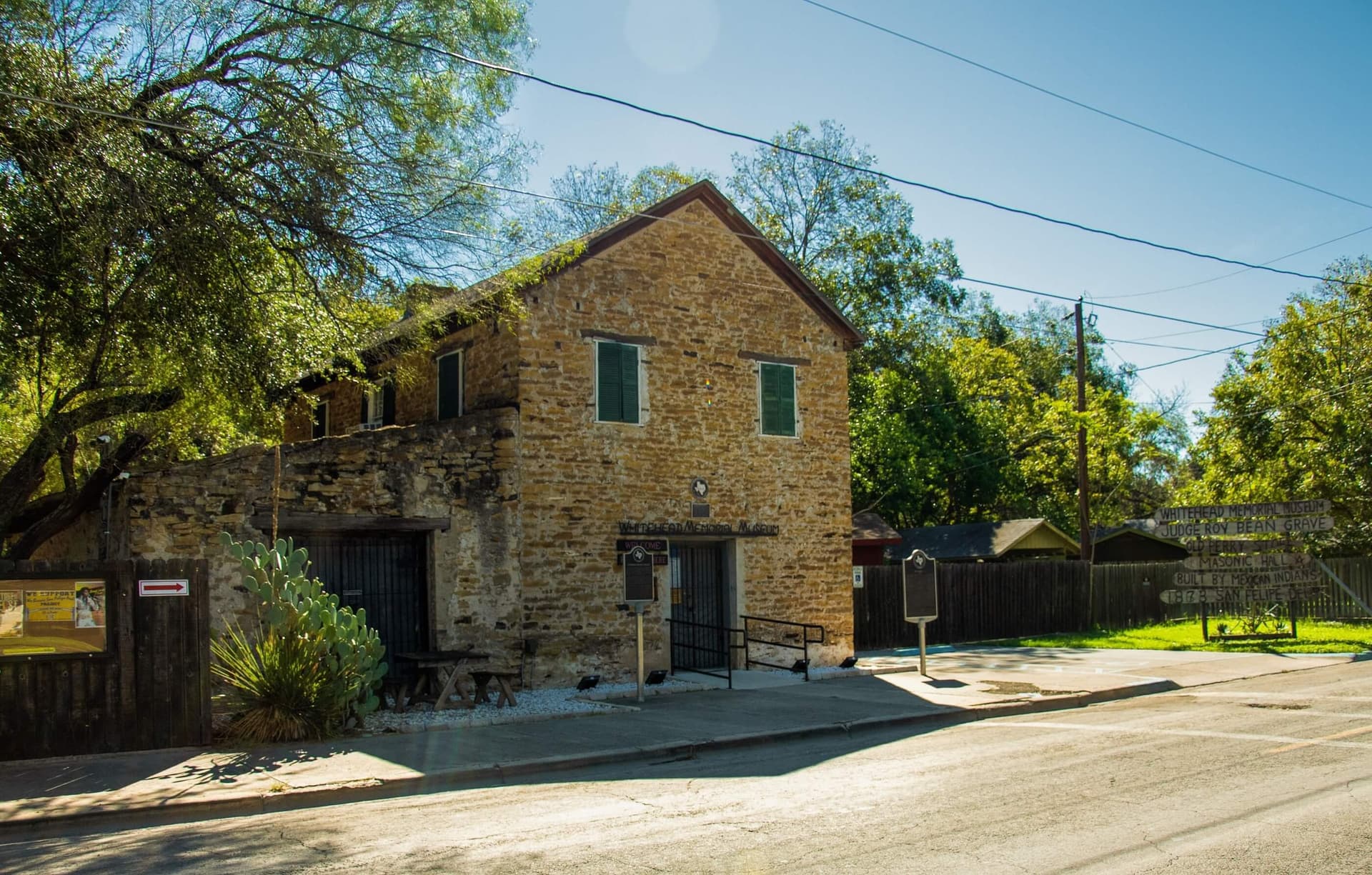
Whitehead Memorial Museum is where Del Rio keeps its own history within walking distance of historic downtown. On one compact campus, families can move from frontier law and ranching to border radio, irrigation, school history, and the stories of early local names that still shape Val Verde County.
A museum built from Del Rio memory
The museum traces its start to Del Rio’s 1958 Diamond Jubilee, when families gathered relics for display and Della Whitehead pushed for a permanent home for the collection. That home became the old Perry building, the first two-story building in Del Rio, built around 1870 and originally used as a general store. Whitehead Memorial Museum officially opened on October 9, 1962, and it remains the county’s only full-time public museum.
Today the institution describes itself as a nonprofit history museum that houses and displays the early history of Del Rio and Val Verde County. Its address, 1308 South Main Street, places it just south of historic downtown Del Rio, and the main entrance is at the two-story stone Perry Mercantile building. That location matters because the museum is not separated from the city’s older footprint; it sits inside it.
A walkable campus of buildings and artifacts
What makes the museum especially useful for local readers is the way it spreads history across the grounds rather than confining it to a single gallery. The campus has grown to more than two acres and more than 30 exhibit sites, and a 2025 account described it as holding 19 buildings and more than 1,500 artifacts. The result feels less like a standard museum and more like a small historic village built from Del Rio’s own past.
The oldest structure on the grounds is the 1870 Perry Store, and that alone gives visitors a direct link to the town’s earliest commercial life. A 1905 wood-frame office on the campus adds another layer, with exhibits on Black Seminole Scouts and 1920s border radio stations. Those subjects widen the museum’s reach beyond the best-known frontier names and into military service, communications, and the cross-border world that shaped the region.
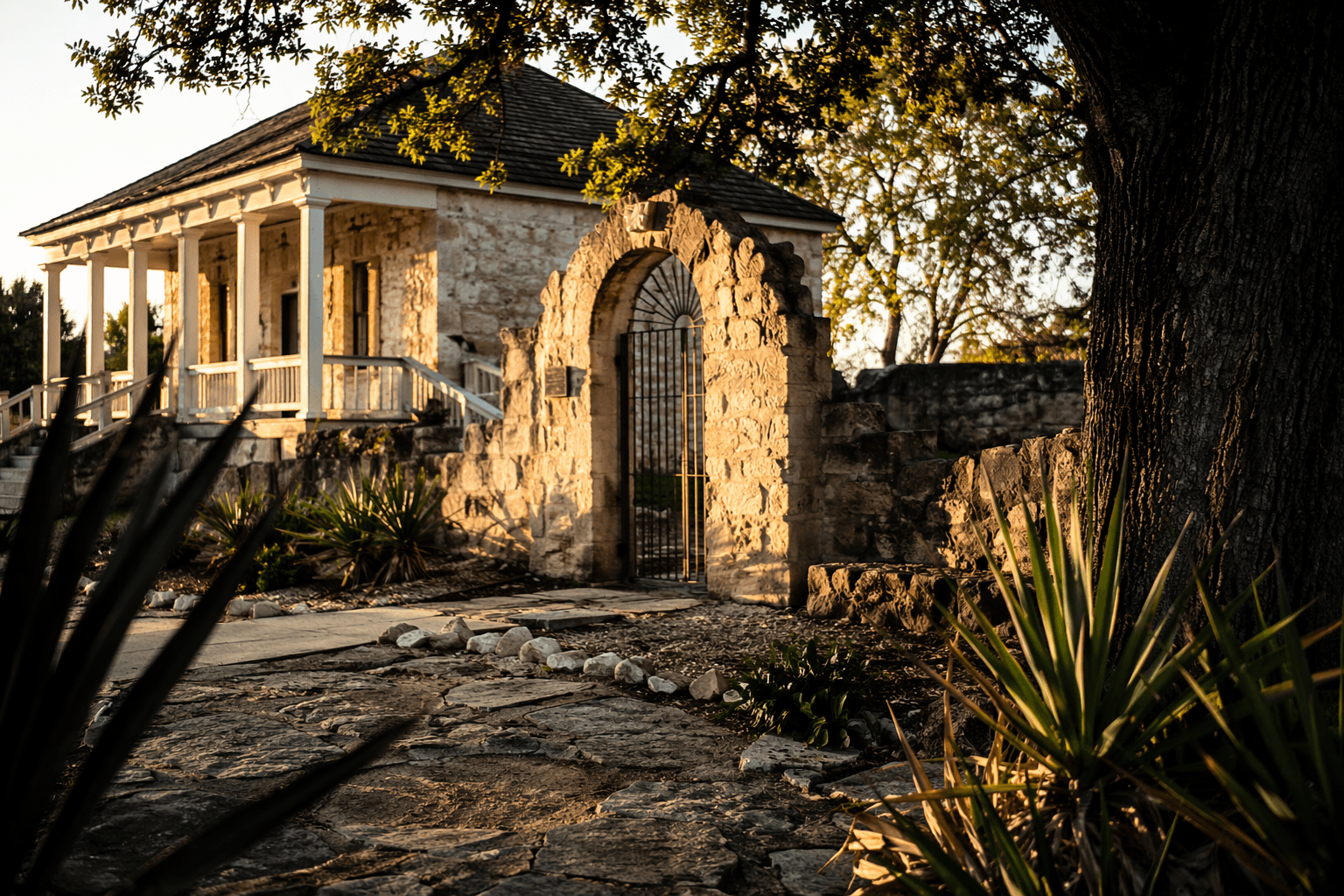
One of the most surprising details on the property is that the burial site of Judge Roy Bean and his son Sam is part of the museum grounds. Another is the San Felipe irrigation canal, which runs through the back of the property and ties the campus to the 1871 acequia system that helped sustain local agriculture. Together, those features turn the museum into a place where Del Rio’s story is not just displayed, but physically underfoot.
What to look for inside and around the grounds
The museum’s exhibits cover the range of Val Verde County life in a way that makes the visit feel specific to place rather than generic to Texas. A School House exhibit explains early education in the county, while the Hall of Fame honors hometown names including Radney Foster, George Paul, Blondie Calderon, and Julio Garcia. That mix gives the campus a civic dimension, recognizing not just famous figures from frontier legend, but local people whose work and reputation carried into later generations.
The museum also preserves the stories that define Val Verde County’s deeper identity. Ranching appears in the historic buildings and collections. Border culture shows up in the radio station exhibits and in the broader setting just south of the international border. Early Del Rio families are present in the museum’s origin story itself, which began when local residents brought in relics for that first Jubilee display. The collection therefore works on two levels: as a repository of objects and as a record of the people who decided those objects mattered enough to save.
The oral history project keeps the archive alive
Whitehead Memorial Museum does not treat history as finished. Its oral-history project is designed to gather, preserve, and interpret the voices and memories of Del Rio and Val Verde County, and the museum says the goal is to connect current and future generations with local stories. That makes the project more than a side activity. It is a living extension of the museum’s purpose.
The project reaches beyond family anecdotes and into the major turning points that reshaped the area. It references the building of Amistad Dam and local school consolidation, two developments that altered daily life and community structure in Val Verde County. By collecting those memories now, the museum is preserving testimony that will not be available forever, which gives the project a civic urgency as well as a historical one.

How to plan a visit
The museum is open Tuesday through Saturday from 10 a.m. to 6 p.m. and Sunday from 1 p.m. to 5 p.m. Admission is listed at $5 for adults, $4 for seniors and military with ID, $3 for children ages 6 to 17, and free for children 5 and under. For anyone heading in from downtown, the route is straightforward, though South Main Street from Strickland Street to Nicholson Street became one-way southbound on April 28, 2023.
That one-way change makes the museum a little easier to reach if you are coming from the historic core and a little harder to miss once you are on South Main. The location, the entrance at the Perry Mercantile building, and the compact layout all make it practical for a short visit or a longer walk through the grounds.
Why revisit it now
Whitehead Memorial Museum has the rare advantage of being both intimate and expansive. It preserves military history through the Black Seminole Scouts exhibit, ranching and irrigation through the canal and historic buildings, border culture through the radio collection, and family memory through the oral-history project. Add the burial site of Judge Roy Bean and Sam Bean, the oldest Perry Store, and the names of local figures in the Hall of Fame, and the campus becomes one of the clearest places in Del Rio to understand how the county was built.
Its annual Cajun Fest fundraiser, which began as a crawfish boil in 2002, shows how the museum still relies on community support as much as preservation skill. That combination of public memory, local participation, and physical history is why the museum remains more than an attraction. It is one of Val Verde County’s most concentrated records of who lived here, what they built, and what they chose to leave behind.
This article was produced by Prism’s automated news system from verified source data, official records, and press releases, then run through automated quality and moderation checks before publishing. The system is built and supervised by the people who set the standards it runs under. Read our full AI policy.
Did this article answer your question?