Belen board guides review of historic districts and landmarks
Belen’s five-member board helps decide when a building or district can gain historic protection before changes are approved. That can affect owners, developers and nearby neighbors.
Belen’s historic-preservation rules are a land-use decision about power, not just memory. Before a building, block or district in Belen can be treated as historic, the city’s review board helps identify what deserves protection and then sends its advice to the mayor and city council. That matters in a town where one designation can shape what a property owner may alter, what a developer may propose, and how much say nearby residents have before a project moves ahead.
How the board fits into city government
The City of Belen says its Historic Properties Review Board acts in an advisory capacity to the mayor and city council. Its job is to identify potential historic districts and potential historic landmarks, which puts the board in the middle of the city’s preservation pipeline rather than at the ceremonial edge of it. Belen’s ordinance materials also say the board is a five-voting-member body, and members must have a demonstrated positive interest in historic preservation.
That structure matters because the board does not stand alone. It is one step in a decision chain that connects research, ordinance language and elected action. For owners and developers, that means historic protection is not something that appears by accident after construction starts. It comes through a local review system that can slow down a proposal, narrow the choices for materials or design, and bring the mayor and council into the final decision.
What Chapter 15.16 actually covers
Belen’s Chapter 15.16 Historic District ordinance lays out the city’s framework for the existence and preservation of historic areas and buildings and for the designation of historic districts. It also ties review of historic districts and landmarks to design guidelines contained in the local documents used to designate them. In practical terms, that means the city is not just deciding whether a place is old enough to matter. It is deciding which features, materials, streetscapes and historical contexts should guide future changes.
That approach gives Belen a way to preserve character while still allowing maintenance and development to continue under clearer rules. A facade repair, a new sign, or a larger redevelopment proposal may all be measured against the same local standards if a building or area has been designated. For nearby residents, that can affect how much a block changes and how quickly it changes. For property owners, it can mean more predictability before spending money on a project, but also more limits on what can be altered without review.
Why the standards matter to owners and developers
Historic designation is not just a label. Under Belen’s ordinance structure, the city is using design guidelines attached to designation documents to decide whether a proposed change fits the historic district or landmark. That gives the city a tool to weigh whether a project respects the area’s defining look and feel, including the things that make a streetscape recognizable from one block to the next.
For a property owner, that can affect façade work, exterior materials, rooflines, signage, or additions. For a developer, it can influence whether a project needs to be redesigned before it reaches approval. For neighbors, it can mean a say in whether a change to one parcel is likely to affect the character of the surrounding block. The point of the system is to make those tradeoffs visible before construction or demolition decisions are locked in.
The state law behind local authority
Belen’s board sits inside a statewide legal framework. New Mexico’s Historic District and Landmark Act is in NMSA 1978 Chapter 3, Article 22. The law was enacted by Laws 1965, chapter 300, and later amended in 1983. That history shows local preservation rules in New Mexico are not a recent invention or a one-city experiment. They are part of a long-standing municipal power structure that lets local governments adopt preservation regulations and ordinances.
The New Mexico Historic Preservation Division says the state historic preservation office assists local governments in developing those regulations and ordinances. In Belen, that state-local relationship means the city is not acting in isolation when it sets historic standards. The local board and ordinance operate within a larger legal system that gives municipalities the authority to decide what can be designated and how that designation is enforced.
Why Belen’s downtown is part of the conversation
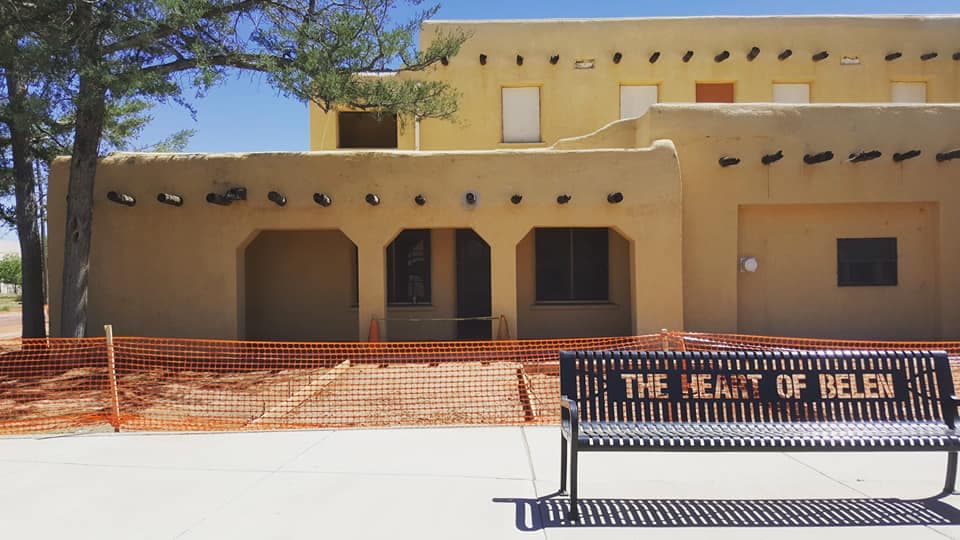
Belen’s preservation process also carries an economic-development angle. New Mexico MainStreet lists a FY24 Belén Historic Downtown Partnership and Arts & Cultural District project, linking downtown identity with wider revitalization work. That makes the preservation system part of the city’s broader effort to shape how the Hub City of New Mexico presents itself and attracts activity.
For Belen, preservation can affect more than one building at a time. It can shape how downtown looks to visitors, how investors read the city’s core, and how local businesses think about exterior changes and long-term branding. A historic district can protect a recognizable downtown scale, but it can also add another layer of review before business owners move ahead with renovations or redevelopment.
What this looks like when preservation becomes a fight
The stakes become clearer when a review board says no. In Santa Fe, the City of Santa Fe Historic Districts Review Board denied demolition requests for four buildings at 402-414 Don Gaspar Ave. on March 26, 2024. By June 26, 2024, city staff were describing a state-local disagreement over that denial. That dispute shows how a preservation board can directly affect whether a building stays standing and how a city balances local review with outside pressure.
Santa Fe’s case is a reminder that historic-district decisions are often about more than architectural taste. They can become disagreements over demolition, redevelopment rights and who has the final word when public process collides with private plans. Belen’s system is smaller, but the same basic question applies: once a property is identified as potentially historic, how much control stays with the owner, and how much shifts to the city?
What Belen’s process gives the public
Belen’s board, ordinance and state law together create a clear chain of authority. The five-member Historic Properties Review Board identifies potential historic districts and landmarks, Chapter 15.16 ties review to local design guidelines, and the mayor and city council remain part of the final decision-making structure. That gives residents a path for understanding how protections are created before a place is altered.
It also gives property owners and developers a framework to read before they draw plans. In a city where downtown identity, neighborhood character and redevelopment all compete for the same space, the real issue is who gets to decide early enough to shape the outcome. Belen’s preservation rules answer that question by putting design review, ordinance standards and elected oversight in the same process.
This article was produced by Prism’s automated news system from verified source data, official records, and press releases, then run through automated quality and moderation checks before publishing. The system is built and supervised by the people who set the standards it runs under. Read our full AI policy.
Did this article answer your question?