Bosque Farms reviews fences and buildings before construction begins
A fence or building in Bosque Farms can trigger village review before work starts, with state permit oversight and rules meant to keep density low.
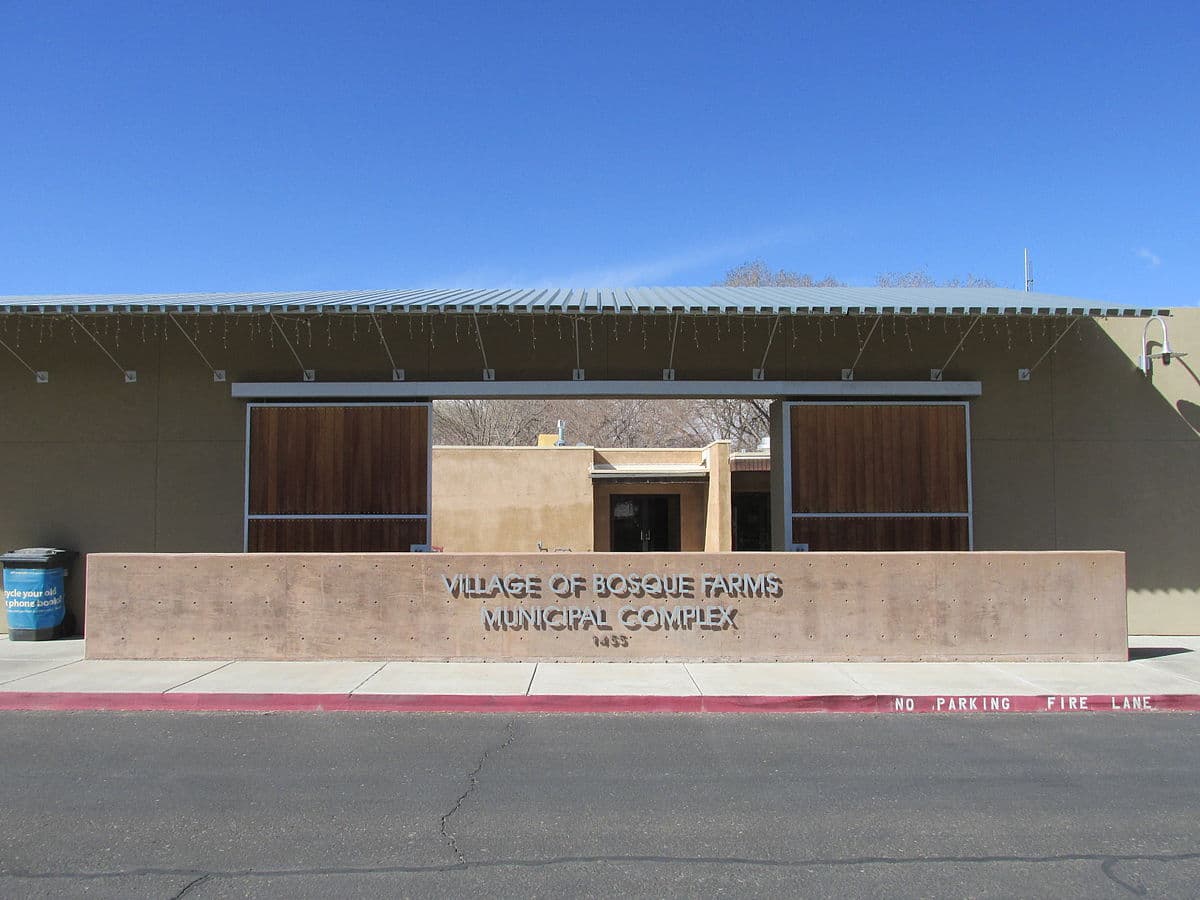
In Bosque Farms, a ribbed metal fence is not a small afterthought. Under village code, it can trigger development review before the first post is set, and so can a new building or a substantial change to an existing structure. That is how the village keeps development tied to its rural character instead of letting projects move forward first and ask questions later.
How the review process works
Village Ordinance 10-1, Section 18 requires a development review before any building, structure or ribbed metal fence may be erected or substantially improved on a lot in the village. The rule is broader than a simple building permit check: if a building changes in character or use, the owner must obtain a Development Review Permit as well as a Building Permit from inspectors with the New Mexico Construction Industries Division.
That makes Bosque Farms a front-end review village, not an after-the-fact one. A homeowner planning a workshop, an addition or a taller fence has to clear local land-use review before construction starts, while the state layer handles building oversight through the New Mexico Regulation and Licensing Department’s Construction Industries Division. The division says its job is to protect New Mexico consumers by licensing and regulating the state’s industry.
For property owners, that means the village is not just checking whether a project is safe. It is also checking whether the project fits the place.
Where Bosque Farms draws the line
The village’s zoning code says the R-1 Conventional Single-Family Residential Zone is meant to provide rural residential neighborhoods compatible with the rural residential character of the area. Another zoning provision says minimum lot sizes and open space requirements are intended to protect and preserve the established low-density rural character of the zone districts. Those are not abstract planning phrases. They are the rules Bosque Farms uses to decide how much intensity belongs on a parcel, how close structures can be, and how much of a lot must stay open.
The subdivision regulations sharpen that approach with exact street standards. Bosque Farms uses right-of-way widths of 80 feet for arterial streets, 55 feet for collector streets, 40 feet for local streets and 20 feet for alleys. The code also sets curve radii at 400 feet for arterial streets, 200 feet for collector streets and 50 feet for local streets. Those numbers shape how roads fit into new development, how traffic moves through a subdivision and how much land is consumed by public access.
In practical terms, the village is not only trying to control what gets built. It is trying to control how development sits on the land, how much space it takes up and whether it starts to look like a denser suburban pattern instead of a rural one.
Why fences matter as much as houses
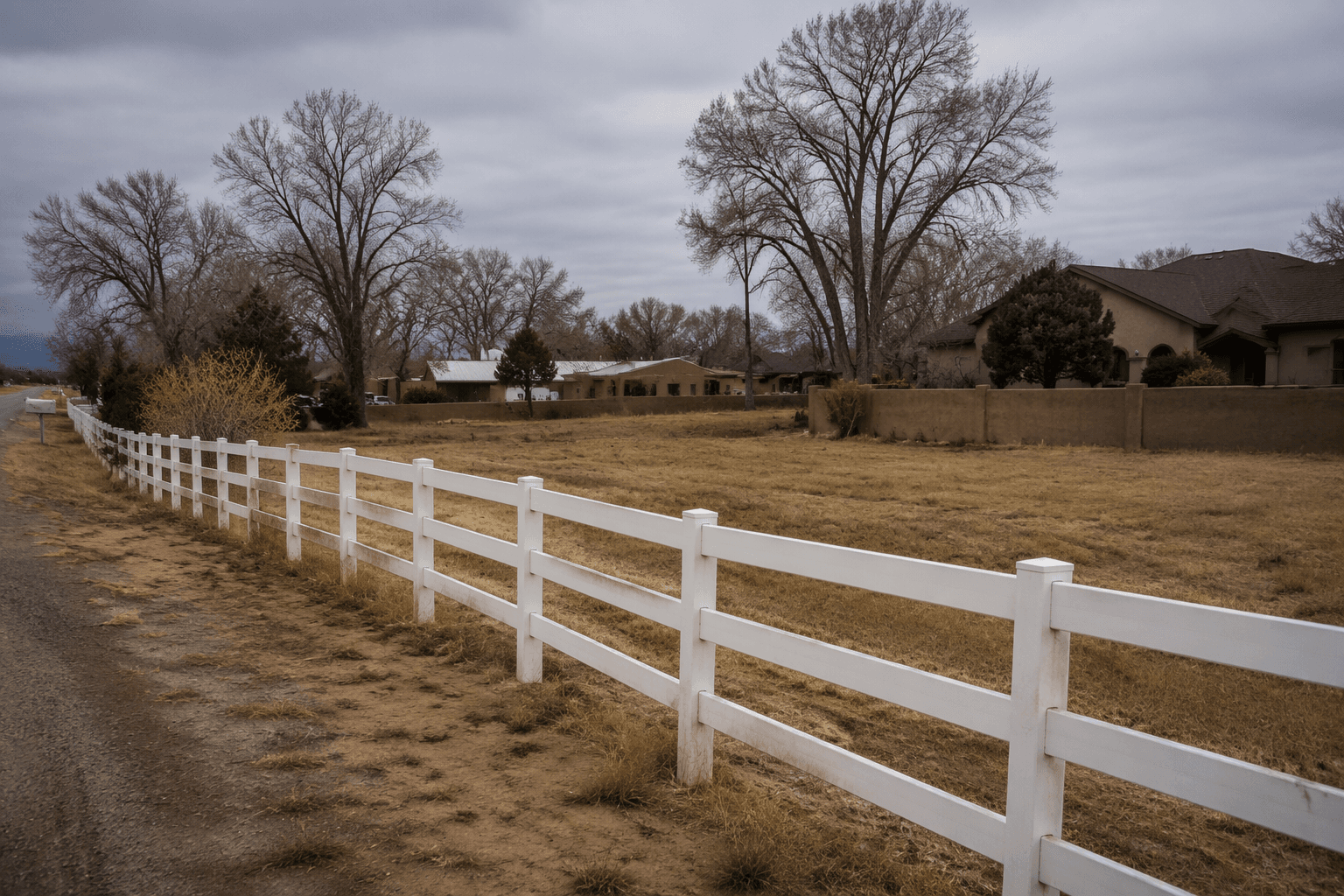
A fence can sound minor in a larger city, but Bosque Farms treats it as part of the landscape of growth. A ribbed metal fence may seem like a property owner’s private choice, yet in a village built around open views and low density, fencing can change sightlines, property access, drainage patterns, agricultural use and the look of a neighborhood.
That is where the tradeoff becomes most visible. Rural homeowners gain a layer of protection against incompatible growth, because the village can review changes before they alter a block or a parcel. At the same time, applicants face real limits on property rights: they cannot simply add a structure, expand use or put up certain fencing without clearing village review first.
For people trying to add housing, that same protection can feel restrictive. The village’s standards can slow projects, narrow design options and make it harder to fit more units into the land available. In Bosque Farms, the rules are doing exactly what they were written to do: hold down density and preserve open space, even when that makes new construction more complicated.
The state layer on top of village rules
Bosque Farms does not regulate development in isolation. Its review process sits alongside the New Mexico Construction Industries Division, which licenses and regulates the state’s construction industry. That matters because a project in the village can need both local approval and state permit oversight before work begins.
The village’s system creates two checkpoints with different jobs. Bosque Farms looks at land use, neighborhood fit and the rural pattern it wants to keep. The state looks at construction standards and consumer protection. For anyone building in the village, both layers can apply to the same project, even when the work seems straightforward from the outside.
That dual structure helps explain why a fence, a new structure or a change in use can move through more than one office. In a small village, land-use control and building oversight are not merged into one easy approval. They are separate filters.
A village built around rural identity
Bosque Farms was incorporated in 1974, and the village’s planning materials still reflect the same goal residents have long tied to it: maintaining a rural lifestyle. Its logo proclaims “Preserving Rural America,” a slogan that matches the village’s code language about low-density rural character and compatible neighborhoods.
The village also sits in a pressure zone of regional growth, about 20 miles south of Albuquerque in the Rio Grande Valley. That location helps explain why the rules are written so tightly. Bosque Farms is close enough to the metro area to feel development pressure, but far enough from the city to insist on a different pattern of land use.
The village’s most recent land-use plan was created in 2023, and its planning materials name the people who have shaped that framework: Mayor Wayne Ake, council members Bill Kennedy, Bob Knowlton, Virgil Proctor and Dolly Wallace, former councilors Ginger Eldridge and David Linthicum, and Planning and Zoning Commission members Sharon Eastman, Dan Garrison, Rick Babcock, Margaret Chavez and Steve Thompson. The Mid-Region Council of Governments of New Mexico is also named in those materials.
That roster matters because Bosque Farms’ development rules are not just paperwork. They are the current expression of a long-running local decision about what kind of village this should be. For builders, that means every fence line and building plan starts with the same answer: in Bosque Farms, growth is allowed, but only on the village’s terms.
This article was produced by Prism’s automated news system from verified source data, official records, and press releases, then run through automated quality and moderation checks before publishing. The system is built and supervised by the people who set the standards it runs under. Read our full AI policy.
Did this article answer your question?