Prohibition Fails in Belen as Moonshiners Hide Stills in Bosque
Moonshiners in Belen hid copper stills in the bosque and behind a downtown store, leading to the 1922 arrest of prominent merchant Adolph Becker - a reminder of enforcement limits and local reputations at stake.

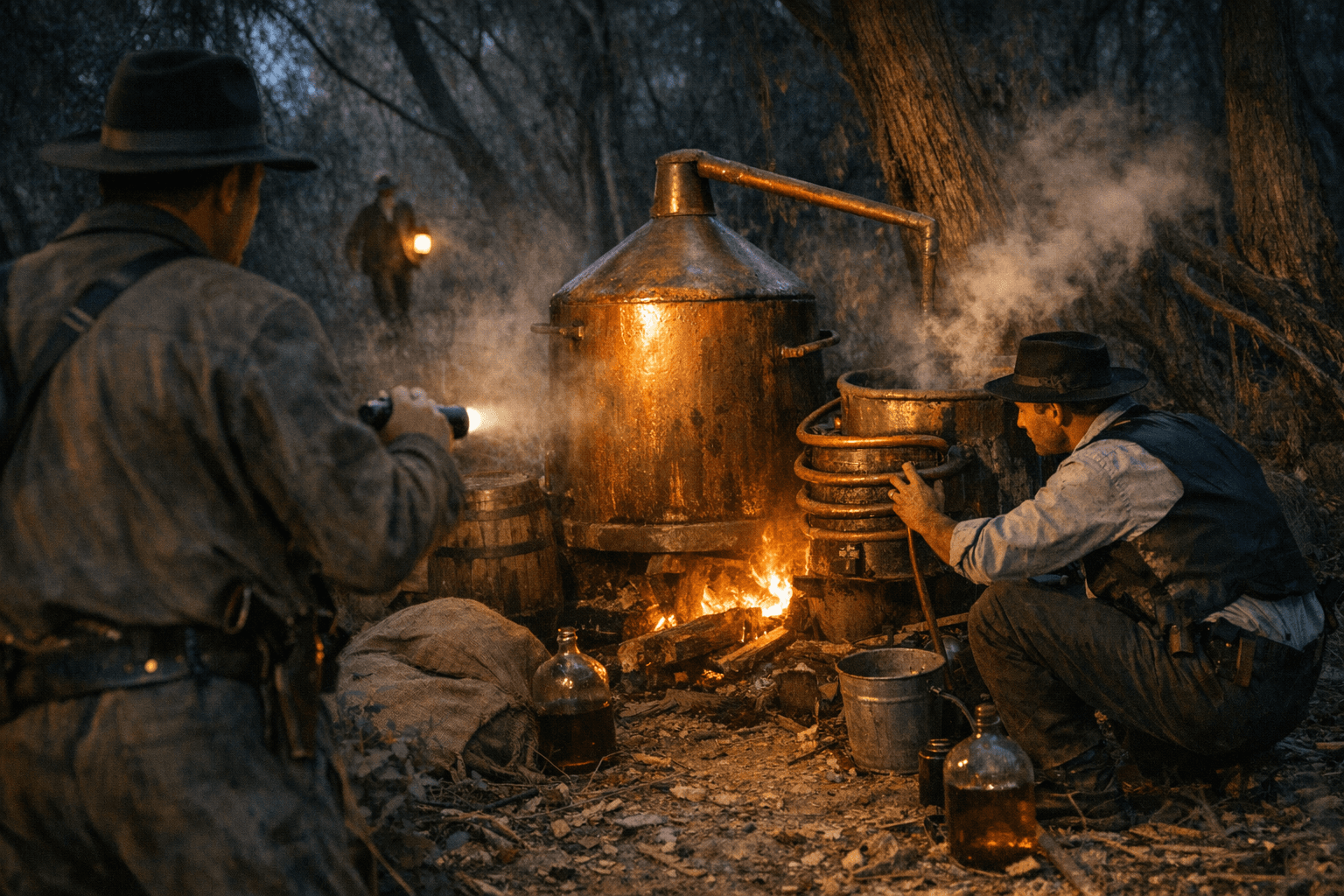
Moonshiners turned the bosque and Belen alleys into hiding places for illicit stills, a reality that culminated in the 1922 arrest of Adolph Frederick Becker, a local merchant and member of one of the town’s leading families. The case shows how Prohibition drove production into rural and urban edges of Valencia County and how enforcement and reputation collided in Rio Abajo.
Adolph Becker, born in Belen on Sept. 23, 1881, ran the Golden Eagle general store and belonged to a family long tied to local commerce. By 1922 Becker was 40, married to Charity Belle Bowen, and father to four children. Prosecutors accused Becker of illegally owning copper stills, manufacturing alcoholic liquor, and possessing contraband. Federal agents took him into custody at the home of his hired distiller, George Washington Wise, after listening at a slightly ajar door and then entering with the question, "May we come in?"
George Washington Wise was a former Buffalo Soldier who served at Fort Wingate from 1875 to 1880 and by 1922 was in his eighties. Wise told investigators he had worked as Becker’s hired moonshiner, producing roughly 100 gallons of liquor in one small and two large stills. He explained that it took 18 days to make "hooch" if you wanted "good stuff." Becker had purchased equipment and supplies, likely through regular store orders, and Wise did the labor for a wage and to work off a store debt.
Becker was held on a $1,000 bond after the Feb. 15, 1922 arrest and pleaded not guilty, retaining Albuquerque lawyer William A. Keleher. Becker asked that his arrest be kept quiet because he hoped the Becker name would not be tarnished, but the case entered the public record and drew attention across the region. The arrest exposed a tension between local standing and federal enforcement that mattered in small towns where family names and business ties shaped civic life.
The practical fallout for residents included an awkward public reckoning: a well-known merchant accused of running a clandestine operation that relied on the bosque and nearby properties for concealment. The episode illustrated how easily manufacturing could be shifted out of plain sight - in the bosque, the mountains, the desert, canyons, and remote farms - complicating enforcement for federal and local authorities alike. It also underscored racial and economic dimensions; Becker’s partnership with a Black veteran and laborer, George Washington Wise, reflected arrangements built around debt, wages, and local patronage.
For readers in Valencia County, the Becker story is more than a century-old curiosity. It is a local case study in how law, economy, and reputation intersect in small communities. The trial that followed tested legal remedies available under Prohibition and left questions about accountability, local commerce, and enforcement capacity. Expect further reporting that traces Becker’s trial outcome and the broader social consequences for Belen families and institutions.
This article was produced by Prism’s automated news system from verified source data, official records, and press releases, then run through automated quality and moderation checks before publishing. The system is built and supervised by the people who set the standards it runs under. Read our full AI policy.
Did this article answer your question?


