Valencia County Offers History, Recreation and Small-Town Charm Worth Exploring
Tucked along the Rio Grande south of Albuquerque, Valencia County blends living-history museums, agricultural fairs, and river recreation across five distinct communities.
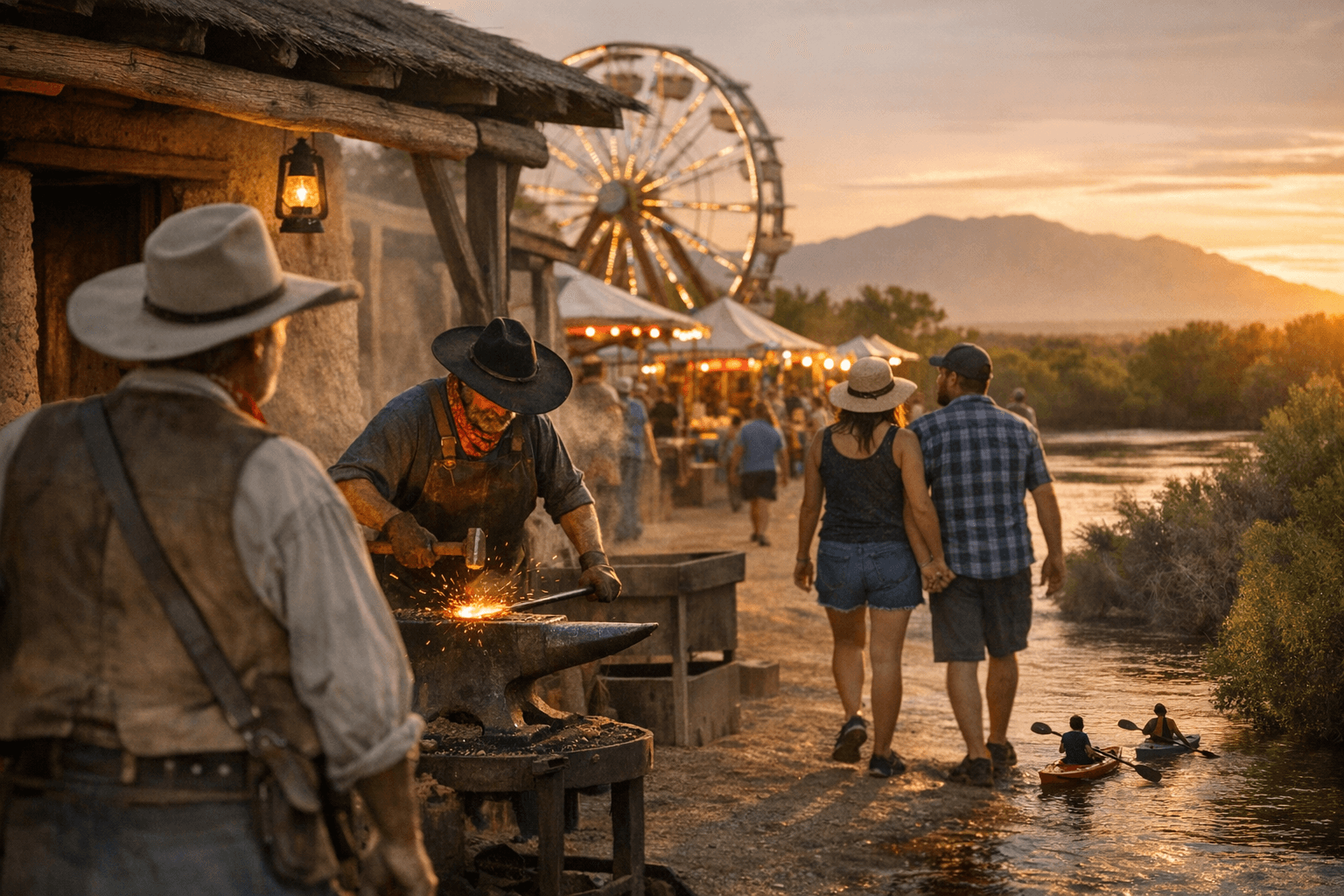
Sandwiched between the Manzano Mountains to the east and the Rio Grande to the west, Valencia County occupies a stretch of central New Mexico that most travelers pass through on I-25 without realizing what they're missing. The county's five communities, Los Lunas, Belen, Bosque Farms, Peralta, and the Rio Communities, each carry their own character, and together they form a corridor rich in agricultural heritage, outdoor access, and the kind of unhurried main-street culture that has largely disappeared elsewhere in the state.
A County Built Around the River
The Rio Grande isn't just a backdrop here; it is the reason these communities exist. Generations of farming families settled the fertile bottomlands, and that connection to the land still shapes daily life throughout Valencia County. Whether you're walking a bosque trail in Bosque Farms, watching the river from a levee road in Peralta, or fishing a quiet stretch near the Rio Communities, the water remains central to what makes this place distinctive. The agricultural roots run deep enough that the county's fairgrounds still draw crowds every summer, offering visitors an authentic glimpse into a way of life that predates statehood.
Los Lunas: The County Seat and Its Layers of History
Los Lunas serves as the administrative heart of Valencia County, and it wears that role comfortably without sacrificing small-town scale. The historic Luna-Otero Mansion, one of the most recognizable landmarks in the county, stands as a reminder of the powerful land-grant families who once shaped territorial New Mexico politics and commerce. Dining and retail along Main Street have grown steadily in recent years, giving the town a livelier feel while preserving the low-slung architecture that defines its streetscape. For anyone arriving from Albuquerque, Los Lunas makes a natural first stop before venturing deeper into the valley.
Belen: Rails, Art, and a Main Street Worth Walking
Belen built its identity around the railroad, and the Harvey House Museum on Reinken Avenue keeps that story alive with exhibits on the Fred Harvey Company's role in opening the Southwest to tourism. The depot, a handsome Mission Revival structure, anchors the downtown and gives Belen a sense of architectural dignity that rewards a slow walk. Beyond the railroad heritage, Belen has cultivated a modest arts presence, with galleries and murals scattered through the downtown core. The combination of a walkable main street, accessible museum, and genuine working-town atmosphere makes Belen one of the more complete day-trip destinations in the county.
Bosque Farms and Peralta: Quiet Communities with Outdoor Appeal
Bosque Farms and Peralta sit closer to the Albuquerque metro than Belen but feel distinctly removed from suburban sprawl. Bosque Farms, as the name suggests, is defined by its proximity to the riparian woodland along the Rio Grande, and the bosque trails here offer some of the most peaceful walking in the county, particularly during fall when cottonwoods turn gold. Peralta's rural roads and open acreage attract cyclists and equestrians looking for routes without heavy traffic. Both communities represent the quieter, residential side of Valencia County life, the kind of places where agricultural plots still abut subdivision fences and neighbors know each other by name.
The Rio Communities and the Agricultural Fair Tradition
The Rio Communities, which include the smaller villages and settlements along the river corridor, carry on Valencia County's farming traditions most visibly through the county fair, an annual event that draws competitive exhibits in livestock, produce, and traditional crafts. The fair is not a nostalgia exercise; it reflects an active agricultural economy where local growers still bring their best work to be judged. Attending the fair offers a compressed version of what Valencia County is at its core: competitive pride in the land, multigenerational family participation, and a social calendar that revolves around the seasons rather than the news cycle.
Living-History Museums and Cultural Memory
Valencia County's living-history attractions go beyond plaques and display cases. The county has made a sustained effort to present its past as something participatory, where visitors can engage with the tools, crafts, and structures that shaped life along the Middle Rio Grande valley. These experiences are particularly valuable for school groups and families seeking context for New Mexico's layered history, which encompasses Indigenous, Spanish colonial, Mexican, and territorial American periods in close succession. The museums and heritage sites scattered across the county don't compete with one another so much as they reinforce a single, coherent story about how people have worked and lived in this valley for centuries.
Planning a Visit
Valencia County is compact enough to explore meaningfully in a weekend, and its communities are spaced conveniently along the U.S. 47 and I-25 corridors.
- Start in Los Lunas to orient yourself with the county's history and pick up local information at the courthouse area.
- Drive south on U.S. 47 through Peralta and the Rio Communities to reach Belen, stopping at farms, roadside stands, or bosque access points along the way.
- Allow at least two hours for the Harvey House Museum in Belen, especially if railroad history is of interest.
- Check the Valencia County Fair schedule in advance if an agricultural fair experience is a priority, as dates shift slightly year to year.
- Bosque trail access in Bosque Farms is best in early morning or late afternoon when wildlife activity peaks and temperatures are manageable.
The county's appeal rests precisely on what it hasn't become: a packaged tourist destination with admission gates and gift shops. What Valencia County offers instead is direct access to a living agricultural landscape, genuine small-town institutions, and a history that hasn't been smoothed into abstraction. That combination is rarer than it sounds in modern New Mexico, and it's worth the short drive south from Albuquerque to experience it firsthand.
This article was produced by Prism’s automated news system from verified source data, official records, and press releases, then run through automated quality and moderation checks before publishing. The system is built and supervised by the people who set the standards it runs under. Read our full AI policy.
Did this article answer your question?


