Valencia County planning system shapes land use and development decisions
A 2.68-acre split on Calle de Zamora shows how Valencia County decides what gets built, from homes to industrial sites, long before shovels hit dirt.
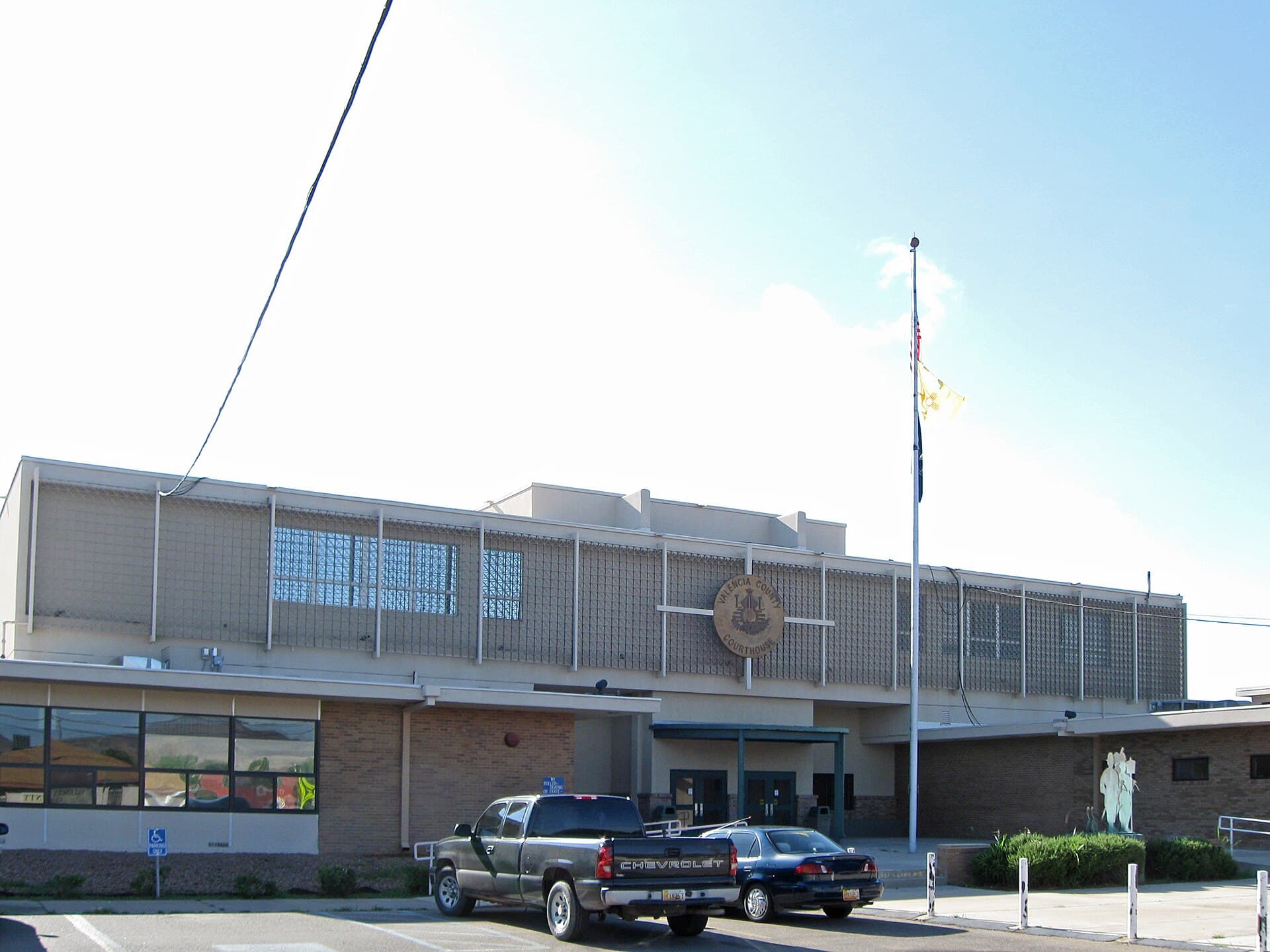
A 2.68-acre split on Calle de Zamora, carved into 1.68 acres and 1.0 acre so a retirement home and a caregiver son’s home could be built, is the kind of decision that quietly shapes Valencia County’s future. Before a subdivision, solar field, warehouse, or new storefront ever reaches a back road, the county’s planning system decides whether the use fits the map, the zoning, and the comprehensive plan.
The county’s hidden gatekeeper
Valencia County gives Planning & Zoning a broad but specific job: develop and update the Comprehensive Plan and help the Planning and Zoning Commission with land-use issues. That matters because the commission holds public meetings and hearings, writes recommendations, and sends them to the Board of County Commissioners, which has final approval authority on most land-use and development decisions. In practice, that makes the county’s planning system the gatekeeper for growth in unincorporated Valencia County.
The county’s 2022 Comprehensive Plan makes the purpose explicit. It describes itself as a policy guide that documents current conditions across the county, along with long-term needs and priorities, and says it can inform investment choices and land-use and development proposals. The plan focuses primarily on the unincorporated parts of Valencia County and the services county government provides there, which is where planning decisions have the clearest day-to-day effect on roads, utilities, and neighborhood scale.
That 2022 plan also preserves a snapshot of who was shaping policy when it was assembled during the COVID-19 pandemic. It names the January 2022 commission as Gerard Saiz, Troy Richardson, David Hyder, Joseph Bizzell, and Jhonathan Aragon, and identifies Community Development Director Nancy Jo Gonzales and Land Use Planner Gabriel Luna, with consulting support from Bohannan Huston, Inc. The older framework matters too: the county adopted its 2005 Comprehensive Land Use Plan on October 7, 2005, and that document was prepared by the Mid-Region Council of Governments of New Mexico with support that included the New Mexico Department of Finance and Administration’s Local Government Division and HUD cooperation.
Maps, addresses, and the mechanics of growth
Planning in Valencia County is not just about hearings and ordinances. It also runs through mapping, addresses, and data systems that decide whether land can function as a buildable site or remains too hard to serve. Valencia County GIS says it creates maps for voting districts, flood zones, jurisdictional boundaries, and other uses based on statistical data from multiple sources.
Rural Addressing adds another layer. The county says the Rural Addresser uses GIS and GPS to map roads and structures, assigns E-911 physical addresses to every residential and commercial structure in unincorporated areas, and maintains road and address data used by the Valencia Regional Emergency Call Center for 911 response. That is not background bureaucracy, it is part of the county’s development math, because a property with unclear access, poor mapping, or weak emergency response is harder to build on, insure, and sometimes even sell.
The mapping system also explains why land-use arguments often turn into arguments about water, flooding, and traffic. If a parcel sits in a flood zone, near a jurisdictional line, or on a road system that cannot handle more trips, the county can see that before a project is built. That is why GIS is tied to planning, rural addressing, and emergency response rather than sitting off on its own.
How a proposal moves through the county
The public process is visible if you know where to look. The county’s Applications and Forms page includes a Permit Request, a Valencia County Permit Application, a Business License Registration form, a Planning and Zoning Land Use Application Template, a Request for Verification of Legal Non-Conformance, and a Summary Review or Claim of Exemption Application. Those forms are the starting point for many land-use questions, whether the issue is a new business, a lot split, or whether an existing use is legal under current rules.
From there, the Planning and Zoning Commission becomes the first public stop for many proposals. The county lists current commissioners as Mark Aguilar, Ralph (Butch) Freeman, Sue Moran, Rick Chavez, and Philip Sublett, and the commission page posts agendas and minutes. That is where residents can see whether a request is moving, what staff has recommended, and whether a hearing is coming before the Board of County Commissioners.
Timing matters. County commission agenda requests must be submitted by 9 a.m. on Monday, 10 days before the BOCC meeting where they will be presented. If a proposal is already on the agenda, the important public moments are the Planning and Zoning hearing, any BOCC hearing that follows, and the final vote. That sequence is the difference between being heard early, when a proposal can still change, and reacting after the shape of the project is already fixed.
A simple resident roadmap looks like this:
- Watch the Planning and Zoning Commission agenda and minutes for the first sign of a change.
- Read the county’s maps alongside the application, especially if flood zones, district lines, or access roads are involved.
- Track the BOCC agenda deadline, which falls 10 days before the meeting and requires requests by 9 a.m. on Monday.
- Speak at the Planning and Zoning hearing if the proposal affects traffic, water, neighborhood scale, or emergency access.
- Follow the BOCC meeting through the final vote, because that is where most land-use and development decisions are completed.
Recent Valencia County examples show what is at stake
The county’s own records show how local land-use rules change in real time. In September 2024, the Planning and Zoning minutes recorded a request to split the 2.68-acre parcel on Calle de Zamora into two lots, one 1.68 acres and one 1.0 acre, so a retirement home and a caregiver son’s home could be built. That is the sort of small-scale decision that can determine whether a family can stay put, how a street evolves, and whether nearby lots keep their current character.
The county’s ordinance record shows larger policy shifts too. In 2022, Valencia County adopted a Natural Resource Overlay Zone ordinance, and in 2023 it repealed the Rio Communities Industrial Park moratorium. Those actions show that the planning system is not frozen in place. It can open land for new uses, tighten rules around sensitive areas, or remove temporary restrictions when county leaders decide the land is ready for something different.
The Natural Resource Overlay Zone ordinance is especially revealing because it states the county’s reasoning in plain terms. It says zoning is meant to reduce traffic congestion, prevent flooding and fire dangers, promote health, safety, and welfare, safeguard light and air quality, prevent overcrowding, and facilitate transportation, water, sewer, schools, parks, and other public facilities while advancing the comprehensive plan. In other words, the county is not just deciding where buildings go. It is deciding whether infrastructure, emergency services, and nearby neighborhoods can absorb them.
Why these rules shape daily life
For homeowners, the planning system affects the pace and pattern of growth near a house in ways that are often more immediate than they first appear. A zoning change can alter traffic on a local road, affect flood exposure, influence how quickly water and sewer service have to expand, and change what a buyer is willing to pay for a nearby lot. For builders and businesses, the same system determines whether a project is even legally possible in unincorporated Valencia County.
That is why the county’s comprehensive plan, GIS maps, address database, and hearing schedule matter together. The board vote is the final step, but the real decision-making starts earlier, when a use is mapped, a lot is created, an overlay applies, or a commission agenda goes out. In Valencia County, land-use control is not abstract policy. It is the framework that decides which ideas become buildings, and which remain lines on a map.
This article was produced by Prism’s automated news system from verified source data, official records, and press releases, then run through automated quality and moderation checks before publishing. The system is built and supervised by the people who set the standards it runs under. Read our full AI policy.
Did this article answer your question?

