Valencia County's Route 66 History, Attractions Highlighted Ahead of 2026 Centennial
Los Lunas and Belen sat on Route 66's original 1926 alignment for just 11 years before a 1938 realignment cut them off. Now the centennial is putting Valencia County's Mother Road story back on the map.
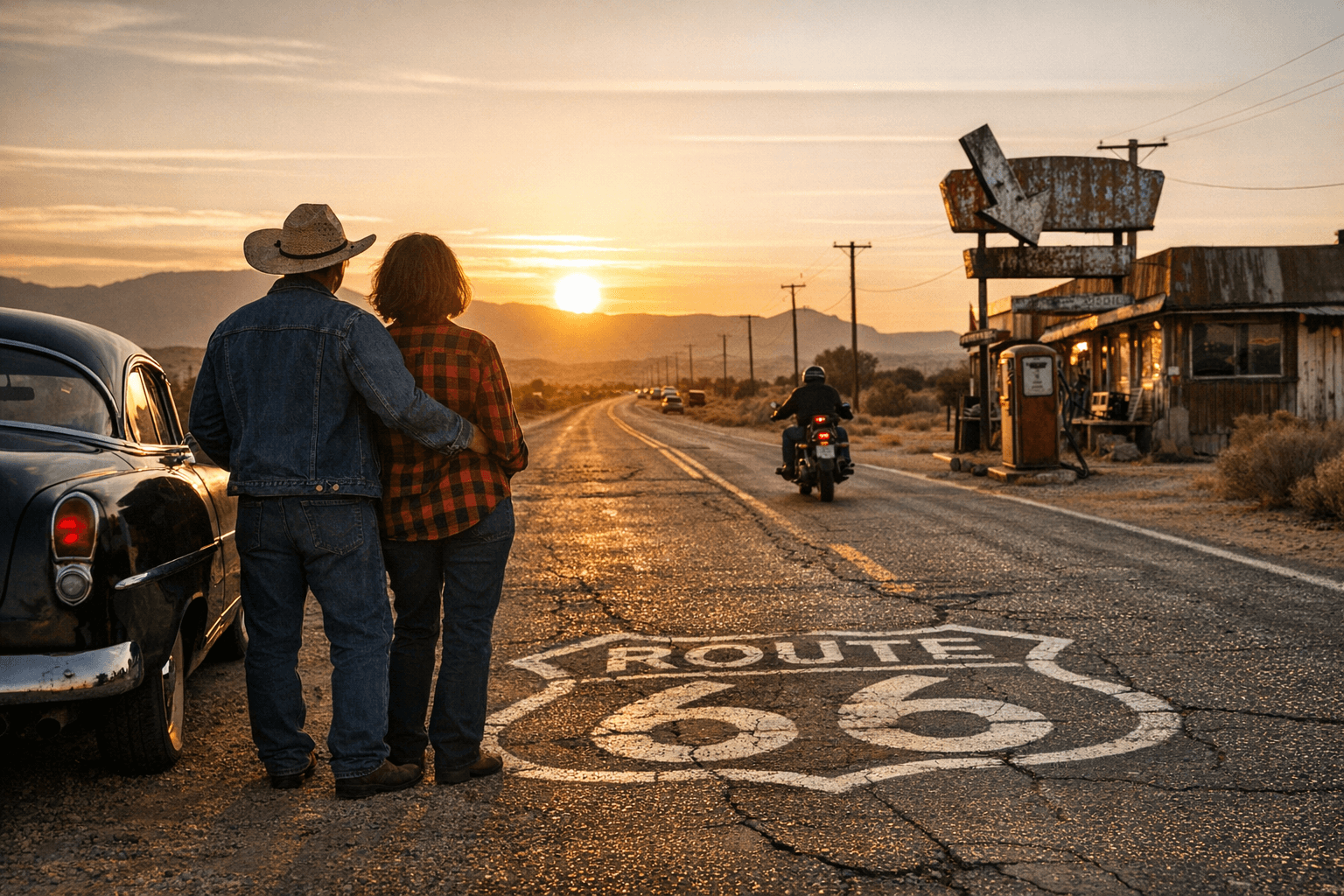
Route 66 was officially designated on November 11, 1926, creating one of the first coast-to-coast highway links from Chicago to Santa Monica. A century later, communities along its historic path, including New Mexico, are marking this once-in-a-century milestone with Route 66 centennial celebrations, preservation, art, tourism programs, and special events. For Valencia County, the centennial is more than a statewide occasion: the original pre-1937 United States Route 66 runs through the heart of Valencia County, linking it to a rich history of trade, transportation, and cultural exchange.
How the Mother Road Came to Valencia County
The story of Route 66 in New Mexico begins not with asphalt but with dirt. The Village of Los Lunas was once part of Route 66 between the years of 1927 and 1938, before the road was changed in favor of a straighter throughway to California. The road not only brought trade and economic growth, it also transformed the identity of the community and region, introducing a new way of life to the people of Los Lunas.
According to Kathy Alexander writing for Legends of America, the original roadway was "little more than 500 miles of gravel," assembled by "slicing together many former wagon-train and railroad trails." That patchwork path had immediate consequences for New Mexico's economy and workforce. When New Mexico's economy struggled during the early decades of the 20th century, "the Mother Road put hundreds of unemployed men to work as the state began paving the road."
The first iteration of Route 66 entered New Mexico via Texas and shot northward to Santa Fe through Santa Rosa and Tucumcari, before dropping to Albuquerque through Los Lunas, heading back toward Laguna Pueblo and entering into Arizona just past Gallup. Legends of America describes this in more specific geographic terms: from 1926 to 1937, historic 66 "meandered north through the upper Pecos Valley to Santa Fe, then turned south through Sandoval County to Albuquerque, and into Valencia County and Los Lunas."
That alignment did not last. Depression-era public works spending allowed the route to be straightened, eliminating the Los Lunas section, and paved. When the fully paved alignment was completed in 1938, Legends of America notes that "126 miles had been shaved from the route, bypassing the many small towns of the Pecos Valley and Santa Fe." US 66 was realigned further north, with a westward course from Albuquerque to Laguna. This "Laguna cutoff" shortened the road toward Gallup, bypassing Los Lunas.
New Mexico Highway 6 runs through town, which ninety years ago was a stretch of unpaved road designated as Route 66, the Mother Road connecting Chicago, Illinois, to Santa Monica, California.
What the Road Looked Like
Legends of America paints a vivid picture of what travelers encountered along New Mexico's vintage pavement: "mountain ranges and sandstone mesas to desert sagebrush, ponderosa pines, and ghost towns." Alongside those natural landscapes, drivers also encountered "ancient pueblo cities, abandoned motels, neon signs, and an eclectic mix of ancient and contemporary cultures." That layered sense of time is central to the road's identity in this part of the state. As Legends of America puts it: "Dating back thousands of years, you will enjoy New Mexico's rich history, beginning with the Native Americans, continuing through the Wild West days, into the era of the Mother Road, and beyond."
Within town and the immediate vicinity, visitors can enjoy and explore historic and cultural sites such as Cerro de Tomé and Cerro de Los Lunas Preserve, hiking trails and state parks in the Manzano Mountains, and Spanish Colonial-era ruins at the Salinas Pueblo Missions National Monument.
Los Lunas: Roots on the Route
Los Lunas, the county seat, stands along both banks of the Rio Grande and is located about twenty miles south of Albuquerque. Outdoor enthusiasts and wayfarers along old Route 66 will find plenty of soul-replenishing activities in and near the Village of Los Lunas.
Vestiges of Los Lunas' rich past are evident in historic buildings such as the Huning Mercantile Building and Residence, established and built in 1859; the Atchison, Topeka, and Santa Fe Railroad Depot (1879); the Luna-Otero Residence (1880-1881); Dr. William Frederick Wittwer's home (1904-1917); the Los Lunas Public School (1912); and the Solomon Luna High School (1926). That final date is no coincidence: the high school opened the same year Route 66 was designated, and the road arrived in Los Lunas following the National Old Trails Road corridor.
Los Lunas 1926 Route 66 sights include an old trading post, a historic Phillips gas station, the Historic Luna-Otero Mansion, the mysterious Decalogue Stone, and sacred Tomé Hill. Valencia County is home to the Decalogue Stone, which contains an inscription interpreted to be an abridged version of the Ten Commandments in Paleo-Hebrew, adding to its historical significance.
The centerpieces of historical collection, preservation, and presentation in Valencia County are two museums: the Belen Harvey House Museum and the Los Lunas Museum of Heritage and Arts. Though neither facility is owned by the Valencia County Historical Society, VCHS is closely involved with the oversight, planning, and curating of exhibits in these facilities. Exhibits have included locally produced material as well as material from national and international traveling exhibits. In addition, the Society directly assists in the maintenance of several historical collections of artifacts, photographs, genealogical information, and documents in these facilities.
The Village of Los Lunas wishes to reconnect to its past with a Route 66 Museum and Visitors Center that celebrates the early years of Route 66 that transformed the village and region. The Route 66 Museum has been in the village's plans for several years to commemorate when the route dipped down into Los Lunas between 1926 and 1937 before heading west to California. The focus will be on the under-told local stories of the area's mostly Hispanic agricultural communities and how the route impacted them. The museum will eventually be built on property the village of Los Lunas bought in 2015, directly west of the Luna Mansion on Main Street.
Belen: Railroad Town, Harvey House, and Route 66
The city of Belen, officially known as "Nuestra Señora de Belén," was a strategic point along the Camino Real, also known as "the Royal Road," which carved a trade route south into Mexico. Belen later became known as "the hub city" due to the Belen cutoff of the Atchison, Topeka and Santa Fe Railway, now known as the BNSF Railway.
The crown jewel of Belen's historic landscape is the Belen Harvey House Museum. The building served as a restaurant for Santa Fe Railroad passengers from 1910 to 1939, and exhibits depict railroad and town history, including a model train display and changing exhibits. To ensure its preservation, the building was repurposed and became completely devoted to the Harvey House Museum, which features a strong collection of railroad and Belen historical artifacts and information. In 2013, the Valencia County Historical Society turned over management of the museum to the City of Belen. Today the Harvey House Museum specializes in Harvey House, railroad, and Southwest history as a branch of the Belen Public Library, and boasts the best view of Belen's incredible railyard and rail history.
At the museum, visitors can explore exhibits on Fred Harvey history, the lives of Harvey Girls (including dorm-style living), the dining and kitchen areas, and admire the Mission Revival architecture. Belen is also the southern end of the Rail Runner, New Mexico's commuter line beginning in Santa Fe and passing through Albuquerque, making it reachable without a car for those coming from either city.
Belen's Route 66 heritage also extends beyond the museum walls. Belen Route 66 Park is a family destination that celebrates America's iconic highway, featuring vibrant murals and signage that pay tribute to the history of Route 66, with photo opportunities for children and adults alike.
The 2026 Centennial and Valencia County's Place in It
Los Lunas will proudly celebrate its role in the pre-1937 United States Route 66 alignment as part of the United States Route 66 centennial observance in 2026, recognizing its impact on local businesses and community growth.
That recognition carries real institutional weight. One centennial celebration is the Route 66 Centennial Speaker Series, a year-long lecture program running in 2026 to celebrate the centennial of historic Route 66 in the Albuquerque area and broader New Mexico context. Both the Belen Harvey House Museum and the Los Lunas Museum of Heritage and Arts are listed as participating partner institutions in that program, placing Valencia County's two flagship museums at the center of the region's centennial scholarly programming.
In 2026, the road turns 100 as New Mexico celebrates its centennial; projects are already taking place in preparation for the big year and celebrations are in the works. The NM MainStreet Route 66 Centennial Passport program offers a way to celebrate 100 years of Route 66 as part of an adventure along the Mother Road. Travelers can pick up a rack card and sticker at participating businesses, collecting stickers from all ten districts for a keepsake of this historic celebration; the program runs January through December 2026.
For a county whose communities spent just eleven years on the officially designated Mother Road, the depth of Route 66's imprint on Los Lunas and Belen is striking. The highway reshaped Main Street commerce, employed entire communities during an economic crisis, and left a built environment of depots, mansions, gas stations, and trading posts that still anchor both towns. The centennial year offers a rare moment to trace all of that, from the gravel wagon trails that became a highway to the preserved Harvey House where railroad passengers once dined in the shadow of the Manzano Mountains.
This article was produced by Prism’s automated news system from verified source data, official records, and press releases, then run through automated quality and moderation checks before publishing. The system is built and supervised by the people who set the standards it runs under. Read our full AI policy.
Did this article answer your question?


