Whitfield Wildlife Conservation Area offers free nature, conservation education in Belen
Whitfield in Belen is free to visit, but its bigger value is harder to price: it doubles as a classroom, habitat project, and public green space for Valencia County.
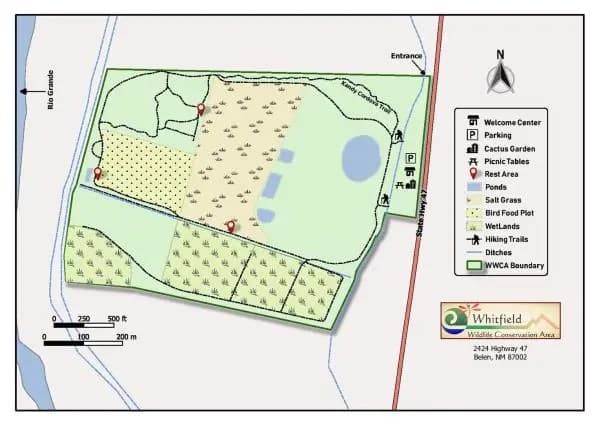
Whitfield Wildlife Conservation Area is one of Valencia County’s rare public assets that does three jobs at once: it gives families a free place to walk and watch birds, it teaches local students about the Bosque, and it protects land that still functions as habitat along the Middle Rio Grande. In Belen, that mix makes the site more than a park. It is a conservation investment with public access built in.
A free stop in Belen that does more than look pretty
The Whitfield Wildlife Conservation Area Visitors’ and Education Center is open to the public free of charge Tuesday through Saturday from 8:00 a.m. to 4:30 p.m. The site is at 2424 Highway 47 in Belen, with a phone number of 505-864-8914 and an email contact at public-input@valenciaswcd-nm.gov. Visitors can birdwatch, look for wildlife, read in the Dr. Richard Becker Library, hike a one-mile flat dirt trail, and visit the Rio Abajo Botanical Garden.
That free access matters because the site is not just a place to pass through. It gives Belen and the rest of Valencia County a no-cost outdoor destination that works for solo visitors, families, school groups, and volunteers alike. In a county where many recreation options require a fee, a free conservation area has real public value simply by being open.
What the land is, and why the county kept it
Whitfield’s current footprint grew from a conservation decision made more than two decades ago. In April 2003, the Valencia Soil & Water Conservation District acquired a 97-acre tract historically known as the Whitfield-Trammell Property, also described as the old Curran’s dairy. The land was placed under a permanent conservation easement through the USDA Natural Resources Conservation Service Wetlands Reserve Program, which means the site was not simply set aside for public use but protected as conservation land.
The complex expanded again in December 2015, when the Stacey Unit was added and contributed about 42.9478 acres. Today, the district describes Whitfield as part of the Whitfield Conservation Area Complex, which also includes the Stacey Unit and the Rio Abajo Conservation Area. That larger network gives the site a regional role, not just a neighborhood one, because it sits inside a connected stretch of habitat and restoration land.
Why habitat protection here matters
Whitfield sits on the Middle Rio Grande bosque, and the district frames it as part of a restoration corridor meant to support wildlife habitat, environmental education, and outdoor recreation. Its long-range plan calls for restoring the site to mimic the historic ecosystem mosaic of the riparian corridor, with salt grass meadows, greater biodiversity in the bosque, and enhanced wetlands. Those goals are the difference between land that is merely preserved and land that still performs ecological work.
The district also describes the Rio Abajo Conservation Area as prime Bosque along the Middle Rio Grande and a valuable link for migratory fowl. That makes Whitfield part of a chain of conservation land that helps birds move through the region. If support for the site declined, what would be at risk is not only a trail or a picnic opportunity, but also the restoration work that keeps wetlands, meadow habitat, and bird-friendly Bosque functioning in place.
The classroom side: who uses Whitfield and what they learn
Whitfield is also a working outdoor classroom. The 2025-2026 outdoor education program offers free field trips for fourth- and fifth-grade students from August through May, with tours, nature journaling, ecosystem lessons, and hands-on field activities. Students and teachers leave with knowledge of ecosystems, Bosque plants and animals, and interactive field experiences, and students may bring sack lunches to eat outdoors during the visit.
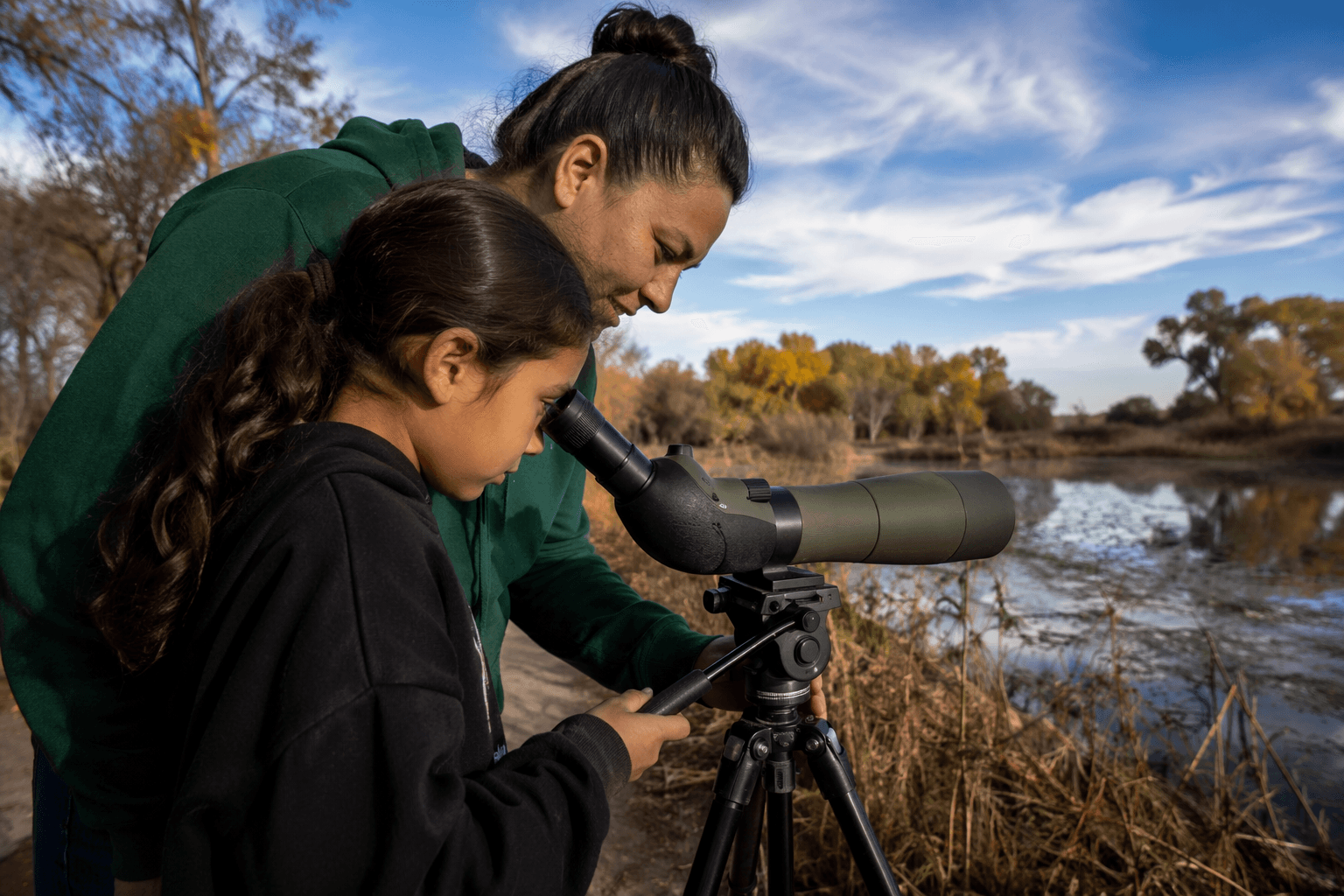
That makes the site one of the clearest examples of public education infrastructure in the county. The Valencia Soil and Water Conservation District says Whitfield gives Valencia youth an opportunity for conservation education and can bring added economy through ecotourism. Put plainly, the site does not only serve students on the day of a field trip. It builds familiarity with local ecology that can influence how the next generation understands water, habitat, and land use in a fast-changing region.
A public space with a broader county reach
The district says its long-range conservation plan is meant to steward land and water for future generations, and that mission extends beyond Valencia County into northern Socorro County and the Pueblos of Isleta and Laguna. That wider footprint helps explain why Whitfield should be read as regional infrastructure, not a standalone amenity. It is one part of how the district links land stewardship, education, and public access across the Middle Rio Grande corridor.
The Friends of Whitfield Wildlife Conservation Area also plays a role. It is an independent, tax-exempt 501(c)(3) nonprofit that supports the site through environmental education, research, and restoration. A 2025 district release said a month of volunteer work by Friends of Whitfield, Youth Conservation Corps members, soil-health trainees, district staff, and board members helped prepare for a camel event, showing that the site depends on organized civic labor as much as agency planning.
History gives the site an unusual second story
Whitfield also carries a historical hook that reaches far beyond conservation. A 2025 district Earth Day release said the site may have been the campsite of the U.S. Army Camel Corps on Aug. 7, 1857, because the land lay along the Camino Real. The district connected that idea to a camel reenactment and traced the route through La Joya, a site north of Belen, Connelly’s General Store in Peralta, and a priest’s home in Isleta.
That kind of history matters because it gives Whitfield a place in the county’s broader story, not just its present-day recreation map. The site is not only where people walk a trail today. It is also tied to the trade routes, settlements, and travel patterns that shaped the Middle Rio Grande long before the conservation district bought the land.
Why this site is bigger than a typical community amenity
The Valencia Soil and Water Conservation District was formed on May 1, 1947, and its long-range plan says it leads in Soil Health Champions among New Mexico SWCDs. The plan also notes the district received $2.1 million in federal disaster funding after the 2022 New Mexico fires. That context shows Whitfield sits inside a district that is managing land, recovery, education, and resilience at the same time.
For Belen and the rest of Valencia County, the value of Whitfield is easy to see in pieces and harder to replace as a whole. It is free access for visitors, free science exposure for children, protected habitat for birds and wetlands, and a public green space with a history attached to it. If the site lost support, the county would not just lose a pleasant stop on Highway 47. It would lose one of its few places where conservation, education, and recreation are all happening on the same stretch of land.
This article was produced by Prism’s automated news system from verified source data, official records, and press releases, then run through automated quality and moderation checks before publishing. The system is built and supervised by the people who set the standards it runs under. Read our full AI policy.
Know something we missed? Have a correction or additional information?
Submit a Tip

