Hotel McArthur, Vinton County’s oldest surviving building, still in use
Hotel McArthur is still part of downtown life in McArthur, and its planned restoration ties Vinton County’s oldest building to tourism, jobs, and civic identity.
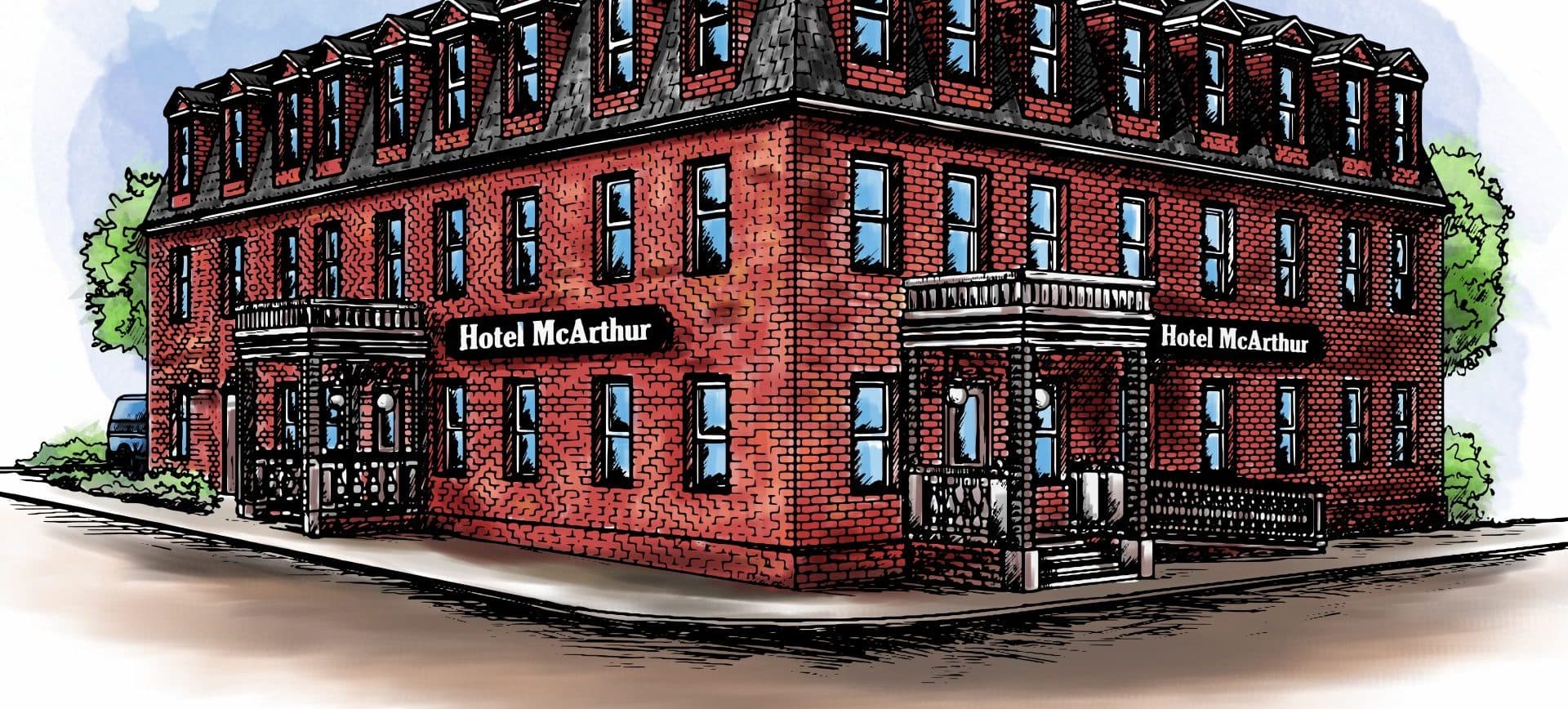
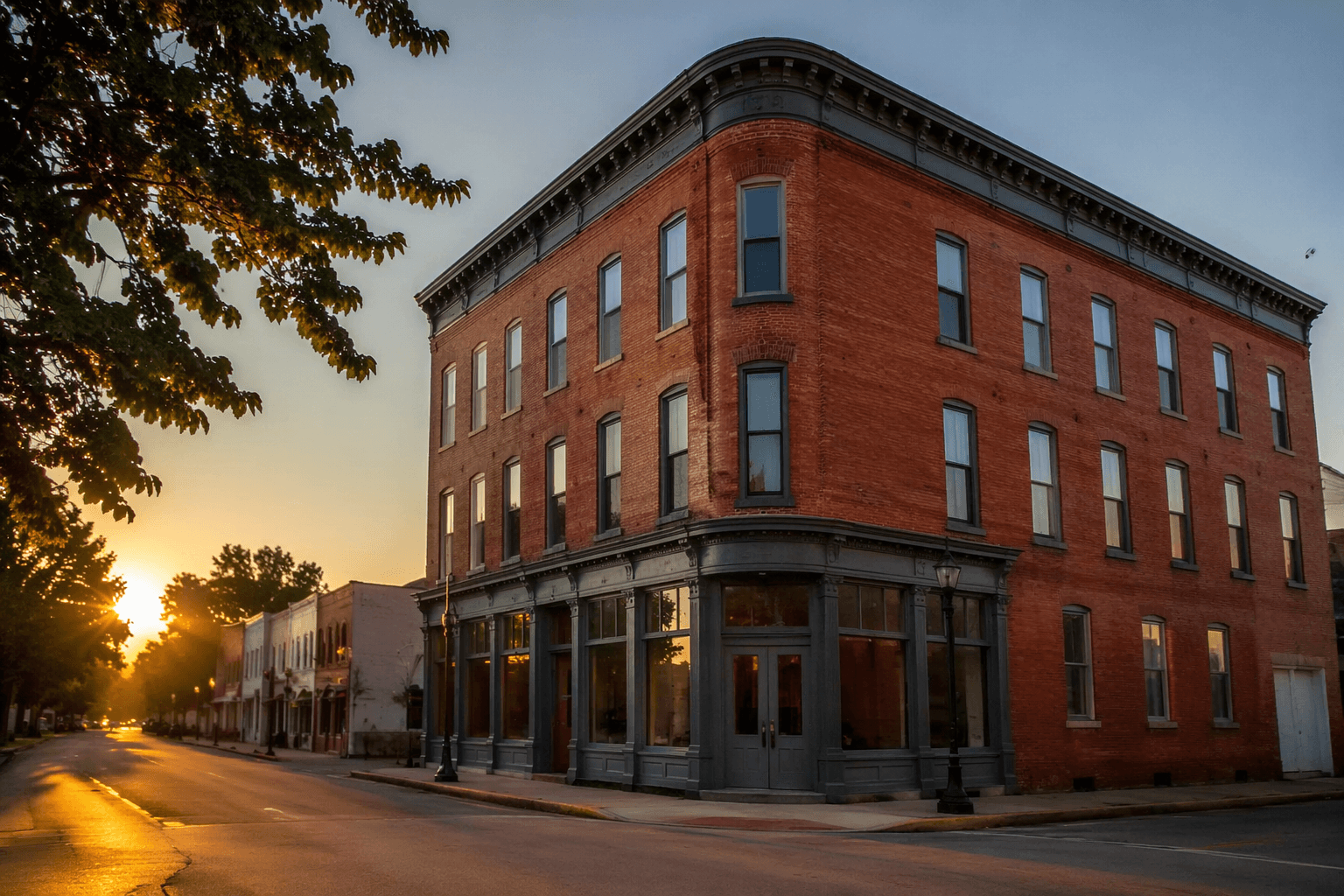
Hotel McArthur still stands at 101 East Main Street as more than a relic of Vinton County’s past. Built in 1839, it is the county’s oldest surviving building still in use, and it sits in the center of McArthur, the county seat of Ohio’s least populous county.
A building older than the county itself
Hotel McArthur was built 11 years before Vinton County was formed in 1850, which gives the building a rare place in the county’s story. McArthur had 1,783 residents in the 2020 census, and the county had 12,800, a scale that helps explain why a single downtown structure can carry so much local identity. In a county described as one of the most rural in Ohio, the hotel works as a visible marker of continuity in a small county seat where buildings, businesses, and public memory matter.
The structure also reflects how downtown McArthur changed over time. Over the years it has held saloons, restaurants, barbers, newspapers, and hotel operators, which makes it a record of daily life as much as of architecture. That long list of uses is why the building still resonates: it has not been frozen as a museum piece, but folded into the working life of the street around it.
Why locals keep returning to it
The hotel carries layers of local lore that keep it in the public conversation. Tunnels reportedly connected the building to houses across the street, and those passages have long been linked in local memory to Underground Railroad activity. The building is also said to be haunted, with reports of footsteps and objects moving upstairs, a detail that adds human interest without replacing the stronger story of survival, reuse, and place.
Those stories matter because they give the building a presence beyond its walls. In downtown McArthur, where the courthouse area and Main Street shape the public face of the county seat, Hotel McArthur is one of the clearest links between the older town and the one that exists now. Its history is visible, but so is the way residents still attach meaning to it.
How the county bought the building back
The Vinton County Convention and Visitors Bureau bought Hotel McArthur in December 2021 for $275,000 from Kathryn Matteson after more than a year of negotiations involving lienholders, banks, and contractors. At the time, the property had fallen into disrepair and faced possible tax foreclosure because of unpaid property taxes. That purchase turned the building from a deteriorating private property into a public preservation project tied directly to the county’s tourism strategy.
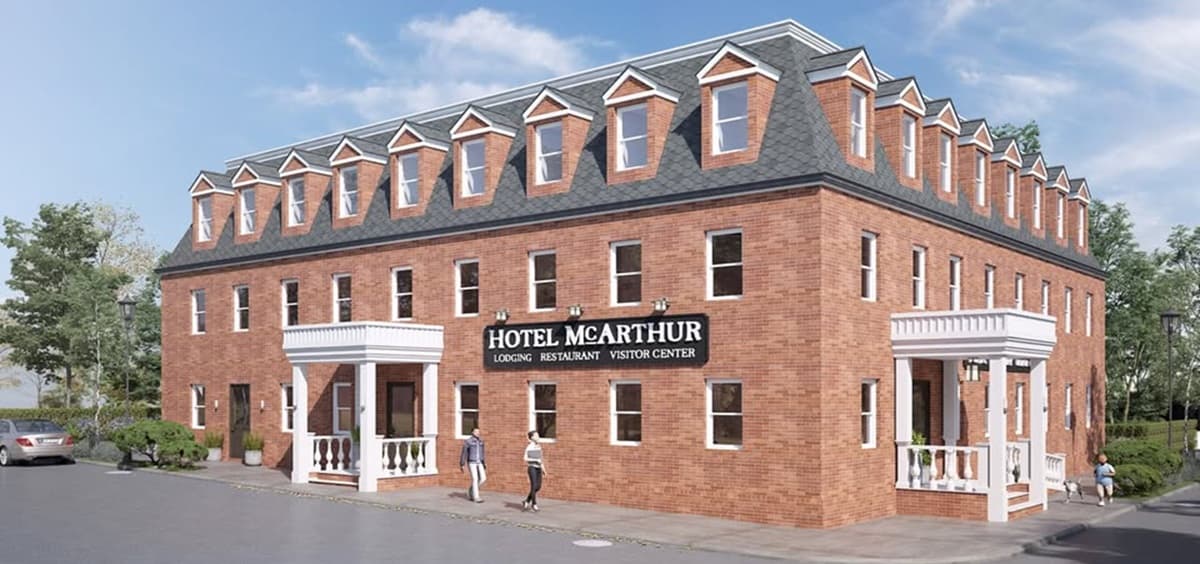
The bureau has said the renovation plan is about more than repairing a shell. It calls for removing later additions and restoring the hotel to the appearance it had during its 1840 to 1940 heyday. The work includes replacing faux-stone exterior treatments with historically accurate brick veneer, rebuilding a mansard roof, and restoring the 1940s Hotel McArthur neon sign, which is planned to be relocated near a new swimming pool.
The building itself offers the kinds of details that make that restoration feel concrete rather than symbolic. The bureau has pointed to four layers of brick covered with horsehair plaster, massive log beams visible in the basement, a grand wooden staircase, and a flat roof that replaced the original mansard roof after a fire in the late 1800s. Those features make the hotel not just old, but legible, because each layer shows how the building adapted across generations.
What the future use is meant to be
The county’s plan is not to preserve Hotel McArthur as an empty landmark. The bureau says the future use would include a visitor center in the lobby, a restaurant and bar area, office suites, and guest rooms themed around local historic sites and people. That approach keeps the building active, while also tying it to the wider civic and economic life of downtown McArthur.
Rural Action has described the project as a boutique hotel with fewer than 20 rooms, and as the only hotel in the area. That matters in a county where lodging options are limited and where travelers now rely heavily on short-term rentals. Tiffany Cline, vice president of the Vinton County Convention and Visitors Bureau, has said the county has few lodging options outside of Airbnb, which gives the hotel project a practical purpose as well as a preservation one.
The fire changed the timeline, not the stakes
A fire on July 8, 2025 severely damaged the building and altered the project’s pace. WOUB Public Media reported that the blaze destroyed the roof and second floor, while the first floor and basement also suffered damage. Even after that loss, the restoration effort did not stop, and public funding kept the project moving.
The county commissioners allocated $880,000 from a Brownfield Remediation Grant in December 2025 for hazardous materials cleanup. In January 2026, Sen. Jon Husted announced $5 million in federal funding for the restoration. WOUB also reported that environmental assessments were planned for spring 2026, with construction hoped to begin in the summer of 2026.
That sequence shows how a preservation project becomes a public-policy issue in a small county. It involves county government, federal support, environmental remediation, and tourism planning all at once, which is part of why the building draws attention beyond its age. A structure that once housed newspapers and saloons is now tied to grant funding, cleanup work, and the future of downtown lodging.
Why the hotel still defines McArthur
Hotel McArthur remains important because it is still in use, still visible, and still connected to the county seat around it. The building predates Vinton County itself, yet the current plan gives it a role in the county’s next chapter through lodging, visitors, and public space. In a county of 12,800 people, the oldest surviving building is not just a historical marker, it is part of the way McArthur presents itself now.
This article was produced by Prism’s automated news system from verified source data, official records, and press releases, then run through automated quality and moderation checks before publishing. The system is built and supervised by the people who set the standards it runs under. Read our full AI policy.
Did this article answer your question?