Lake Hope State Park blends outdoor recreation with iron history
Lake Hope gives Vinton County families one base camp for boating, biking, cabins, and iron history, with Hope Furnace and Hope Schoolhouse still in view.

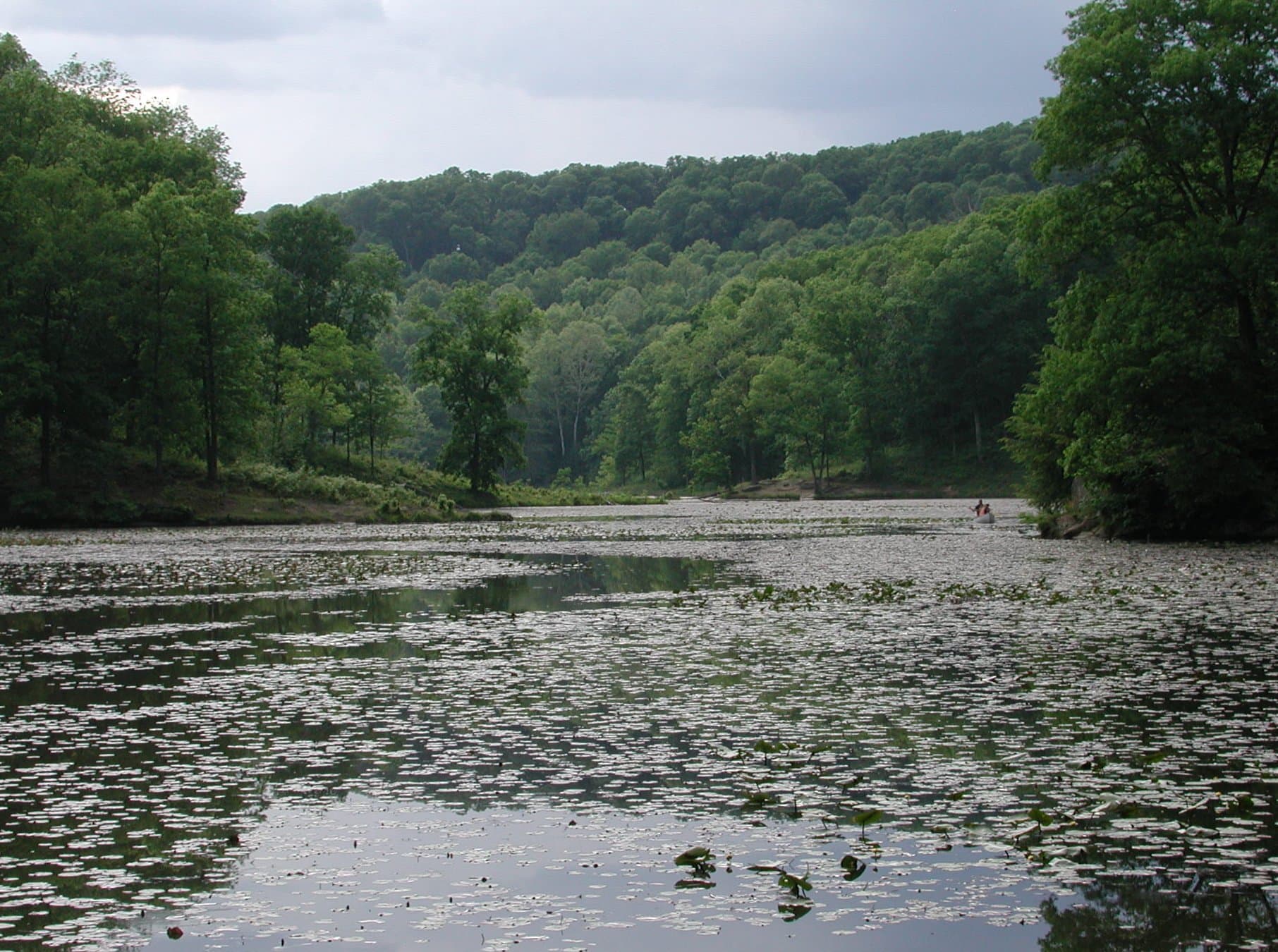
Lake Hope State Park covers 2,983 acres inside Zaleski State Forest, in the valley of Big Sandy Run, where steep gorges and narrow ridges still frame the old mining and iron-producing landscape. It gives Vinton County one place to hike, paddle, swim, sleep over, and stand inside the county’s iron-making past.
A park that works in every season
Families can build a weekend around the lake and trails in warm weather, then return for cabin stays, furnace visits, and quieter winter outings when the camp crowd thins. The main attractions are spread across the same forested basin rather than across separate destinations.
Zaleski State Forest stretches across 27,822 acres and is the second-largest state forest in Ohio. It is also home to the state’s only state-owned sawmill, which ties the park to a working forest landscape rather than a purely preserved one.
What the lake offers
The center of the park is a 120-acre lake with a boat ramp off State Route 278. Only hand-powered boats and electric-motor-only boats are allowed, which keeps the water oriented toward quiet paddling and low-impact use rather than larger gas-powered traffic.
In spring, summer, and fall, the Lake Hope Boathouse rents canoes, kayaks, paddleboards, pedal boats, and pontoon boats. A 600-foot swimming beach near the dam adds another warm-weather option, especially for school breaks and family weekends when different ages need different activities in the same place.
The park also keeps nine picnic areas with tables and grills, plus a shelterhouse that can be reserved. A nature center near the campground rounds out the day-use side of the park, so visitors can move from the water to lunch to a short indoor stop without leaving the property.
Cabins, campground, and group stays
The park has a wooded family campground with electric and non-electric sites, camper cabins, and Laurel Lodge, which can sleep up to 24 guests for reunions and larger groups. In Ohio Department of Natural Resources materials, Lake Hope offers the widest variety of cabin options of any Ohio state park, and all of the cabins are smoke-free.
A couple can book a cabin for a quiet weekend, a family can use the campground during summer break, and a larger group can gather at Laurel Lodge without splitting across multiple properties. Reservations may be made up to six months in advance online or by calling 866-644-6727.
Trails, bikes, and the forest next door
The park has eight biking trails that total more than 25 miles, and the system is geared toward intermediate and advanced cyclists.
The park maintains seven hiking trails, so a family can split up for different abilities or time limits and still regroup at the beach, campground, or picnic areas. Ohio’s trail system ranges widely across parks and forests, from nationally rated routes to paths designed for beginners and younger cyclists, and Lake Hope sits in the part of that system built for more experienced riders.
Hunting is not allowed inside the park, but it is permitted in adjacent Zaleski State Forest. The park can serve as the overnight and day-use base while other recreation happens just outside the park line.
Hope Furnace gives the park its historical depth
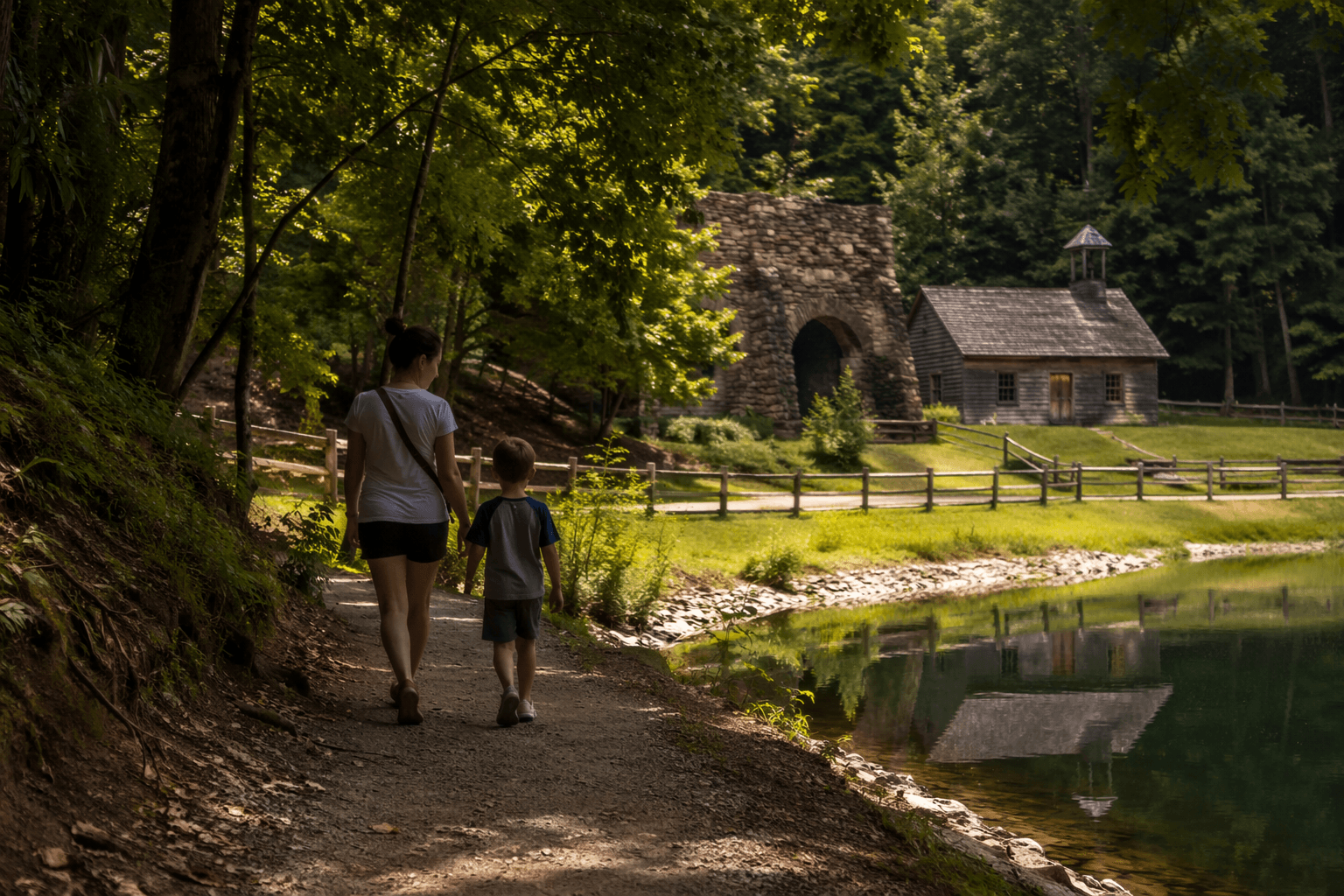
The park’s main history stop is the Hope Furnace ruins. The furnace was built in 1853 to 1854 and shut down in 1874, and what remains today is a chimney, foundation, and scattered slag. Those remains sit in the northern reaches of Ohio’s Hanging Rock Iron Region, which once ranked among the nation’s largest iron-producing areas.
Hope Furnace supported a community of 300 to 400 people, and the local school district was named after it. A historical marker identifies W.H. Allison as the builder of Big Sand Furnace, the original name before the operation became known as Hope Furnace by the late 1860s.
The nearby Hope Schoolhouse was restored in 1998 and now serves as an interpretive center and special event site.
Why the history feels local, not distant
Only remnants of the Hope, Richland, and Vinton furnaces remain today, while towns such as Wilkesville, Dundas, and Zaleski prospered during the iron era and places like Hope and Ingham Station largely disappeared into foundation stones and cellar holes.
This article was produced by Prism’s automated news system from verified source data, official records, and press releases, then run through automated quality and moderation checks before publishing. The system is built and supervised by the people who set the standards it runs under. Read our full AI policy.
Did this article answer your question?