Lake Hope State Park Offers Camping, Trails, and History in Vinton County
A drowned Civil War-era iron town lies beneath Lake Hope's surface — and above it, 2,983 acres of trails, cabins, and wildlife await in Vinton County's largest public park.
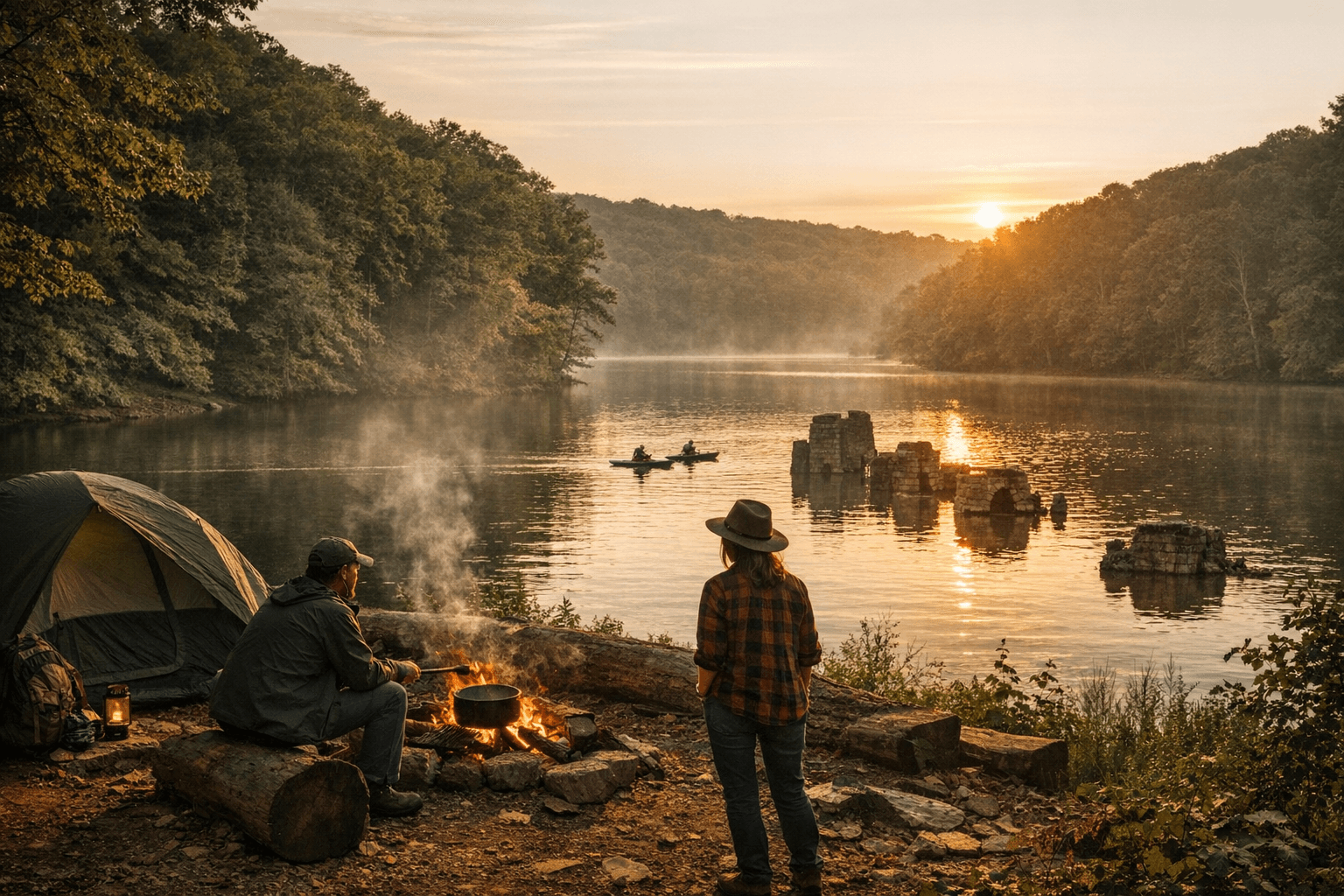
Beneath the calm surface of Lake Hope, an entire town sits submerged. The original village of Hope, Ohio, was flooded when the 120-acre impoundment was created, and today its ghost lies under the water while a single relic, the renovated one-room Hope School, still stands in the surrounding forest nearby. That layered sense of time, industrial ambition giving way to quiet woodland, defines Lake Hope State Park and makes it unlike any other destination in Vinton County.
A Park Built on Iron and History
Located five miles northeast of Zaleski within Zaleski State Forest and managed by the Ohio Department of Natural Resources, Lake Hope State Park covers 2,983 acres of forested ridges, steep gorges, and narrow hollows carved along Big Sandy Run. The park sits at the heart of Ohio's historic Hanging Rock iron region, and its industrial past is still visible at the entrance: the Hope Furnace, built more than a century ago to smelt iron ore extracted from the area's sandstone bedrock. The iron produced here fueled the Union Army during the Civil War, supplying ammunition and cannon at a time when Vinton County was a backbone of American industrial output. By around 1900, iron deposits had been discovered elsewhere and the furnaces fell silent, leaving behind a landscape slowly reclaimed by oak, hickory, and wildflowers.
The park itself was established in 1937 as Lake Hope Forest Park, one of President Franklin D. Roosevelt's Works Progress Administration projects, and earned its state park designation in 1949 with the creation of Ohio's Division of Parks and Recreation. Several of the cabins on the property date to the Civilian Conservation Corps era, and their hand-built character remains part of the park's appeal.
Trails for Every Level
Lake Hope offers more than 17 miles of hiking trails threading through the lake's shoreline and the surrounding forested terrain. The Lake Hope Loop Trail provides a scenic walk around the water with shifting views at every bend, while the shorter Hope Furnace Trail leads directly to the preserved furnace remnants, connecting visitors to the park's industrial origins in a matter of minutes. For mountain bikers, 17 miles of dedicated singletrack spread across eight trails ranging from moderate to difficult, a network that readers of Mountain Bike magazine once ranked among the best in Ohio.
Those wanting a longer backcountry experience can access Zaleski State Forest's 21-mile backpacking trail, which offers primitive campsites throughout the forest's 18,200 acres. Backpackers must register upon arrival. An additional 33 miles of bridle trail are available for equestrians who bring their own mounts. The terrain throughout is rugged: steep gorges and narrow ridges demand good footwear, and conditions on higher elevations can shift quickly with the weather.
Camping and Cabins
The campground at Lake Hope accommodates 223 sites suitable for both tents and trailers, with 46 electric hookups and 143 non-electric sites. Facilities include heated shower houses, flush toilets, pit latrines, waste disposal, and laundry, making it a workable base for families and longer stays alike. A limited number of sites are pet-friendly. Camper cabins are available for those who want a roof without the full lodge experience, and a group camp serves organized parties.
For visitors looking for more comfort, the park's legacy cabins, some of them original CCC construction, offer a blend of rustic character and modern convenience. The Laurel Lodge, which reopened in 2013 after the original was destroyed, provides dining in season and serves as a gathering point for the park community. Reservations for cabins and campground sites are handled through the ODNR park page, which also lists current availability and phone contacts.
On the Water
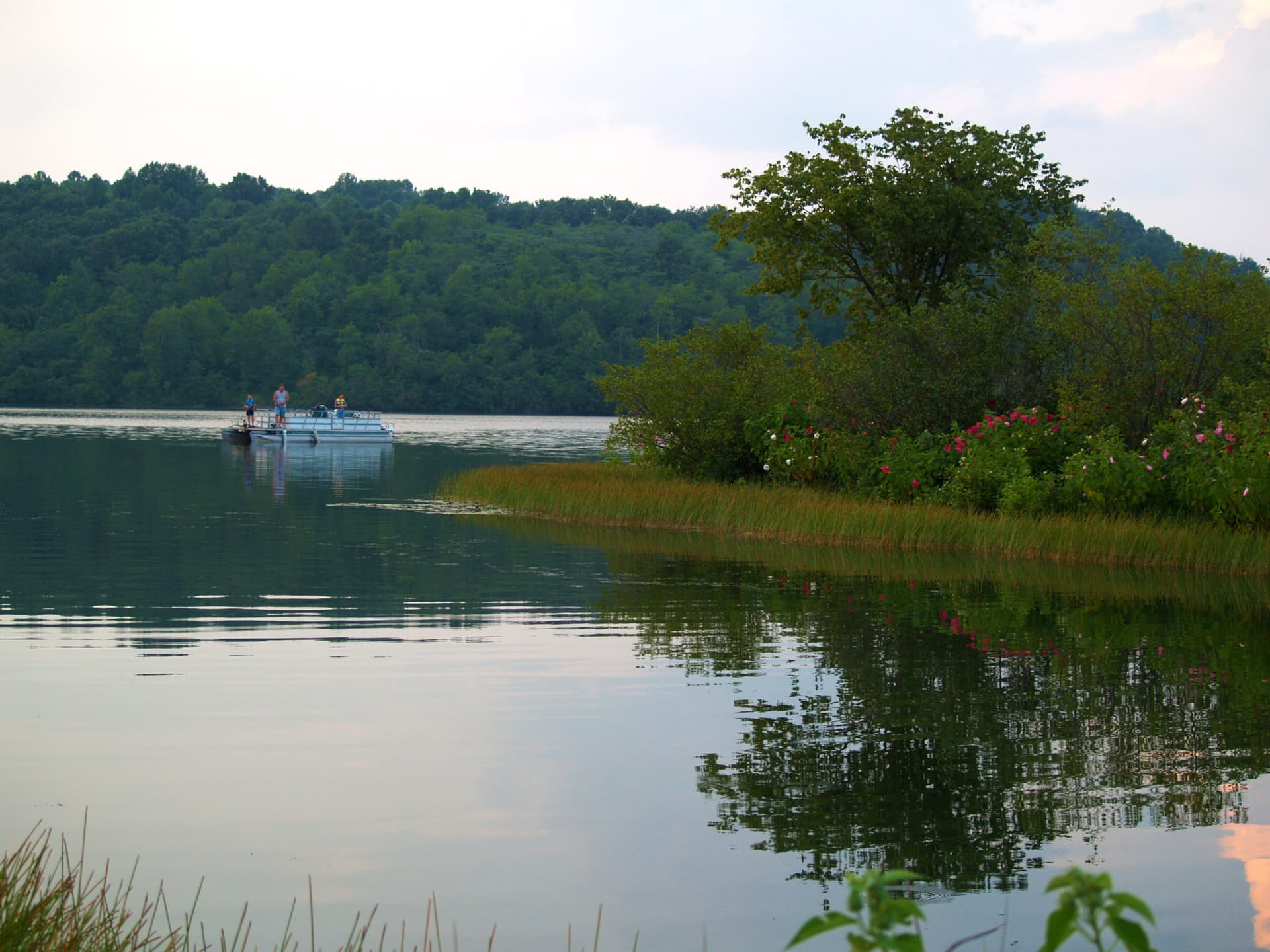
The 120-acre lake is the park's centerpiece, and its rules keep it peaceful: only hand-powered craft and electric-motor boats are permitted. Canoes and rowboats are available for rent at the beach concession during the summer season. Anglers will find largemouth bass, bluegill, crappie, and catfish, and a valid Ohio fishing license is required. A downloadable fishing map is available through the ODNR website for those who want to target the lake's more secluded coves, which are difficult to reach on foot.
A swimming beach near the dam includes a bathhouse with restrooms, showers, and change facilities, along with a concession building. The beach's distinctive backdrop, a cliff face that once marked the edge of the original village of Hope, gives swimmers an unusual sense of standing at the boundary between the present and the park's submerged history.
Wildlife and the Nature Center
The park's wildlife is a significant draw in its own right. Deer and wild turkeys are seen regularly across the property, and beavers, which colonize the quieter inlets of the lake, are among the most popular animals to spot. The spring wildflower bloom brings yellow lady's slipper orchids, one of Ohio's rarest, to secluded hollows alongside blue-eyed mary, bloodroot, and wild geranium. Migratory birds pass through in spring, making the park a productive stop for birders.
The Nature Center runs seasonal educational programming for families and school groups, with interpretive hikes, birding sessions, and programs that connect visitors to both the natural environment and the park's industrial heritage. One of the most distinctive summer offerings runs from July through September: the Nature Center hosts hummingbird feeding events where visitors, including children, can hand-feed the birds directly. Current program schedules, hours, and cancellation notices are posted on the ODNR park page and available by calling the Nature Center directly.
Spring Visits and Practical Planning
Spring is one of the strongest seasons at Lake Hope. Trails recover quickly after winter, wildflowers peak in the hollows, and migrating birds fill the canopy. The Nature Center schedules additional family events during this period, and the combination of low crowds and full natural color makes it an ideal time for photography, day hikes, and fishing.
A few practical notes worth keeping in mind: weather on the park's higher ridges can change rapidly, so layering is advisable even on mild days. Trail conditions are updated on the ODNR website and through the park hotline. Boating and camping rules are enforced under ODNR regulations, and Ohio fishing and hunting licenses are required for those activities. Hunting is not permitted within the park itself but is allowed in the adjacent Zaleski State Forest.
For Vinton County's broader economy, Lake Hope functions as more than a park. Its seasonal programming and steady visitor flow support lodging, restaurants, and outdoor retail in the surrounding area, and the county tourism bureau regularly coordinates with the park on trail projects and regional events. The Moonville Rail-Trail, a popular attraction in its own right, passes close to the park and adds another option for visitors exploring the area on foot or by bike.
Lake Hope carries 170 years of history in its ridges and beneath its water, and the fact that it remains one of Ohio's most accessible and affordable outdoor destinations makes it a resource Vinton County is unlikely to take for granted.
This article was produced by Prism’s automated news system from verified source data, official records, and press releases, then run through automated quality and moderation checks before publishing. The system is built and supervised by the people who set the standards it runs under. Read our full AI policy.
Did this article answer your question?