Vinton County marriage records preserve families, moves and connections
A marriage license can connect McArthur, Zaleski and Wilkesville families in one line of proof. Here is where Vinton County records are kept and why they still matter.
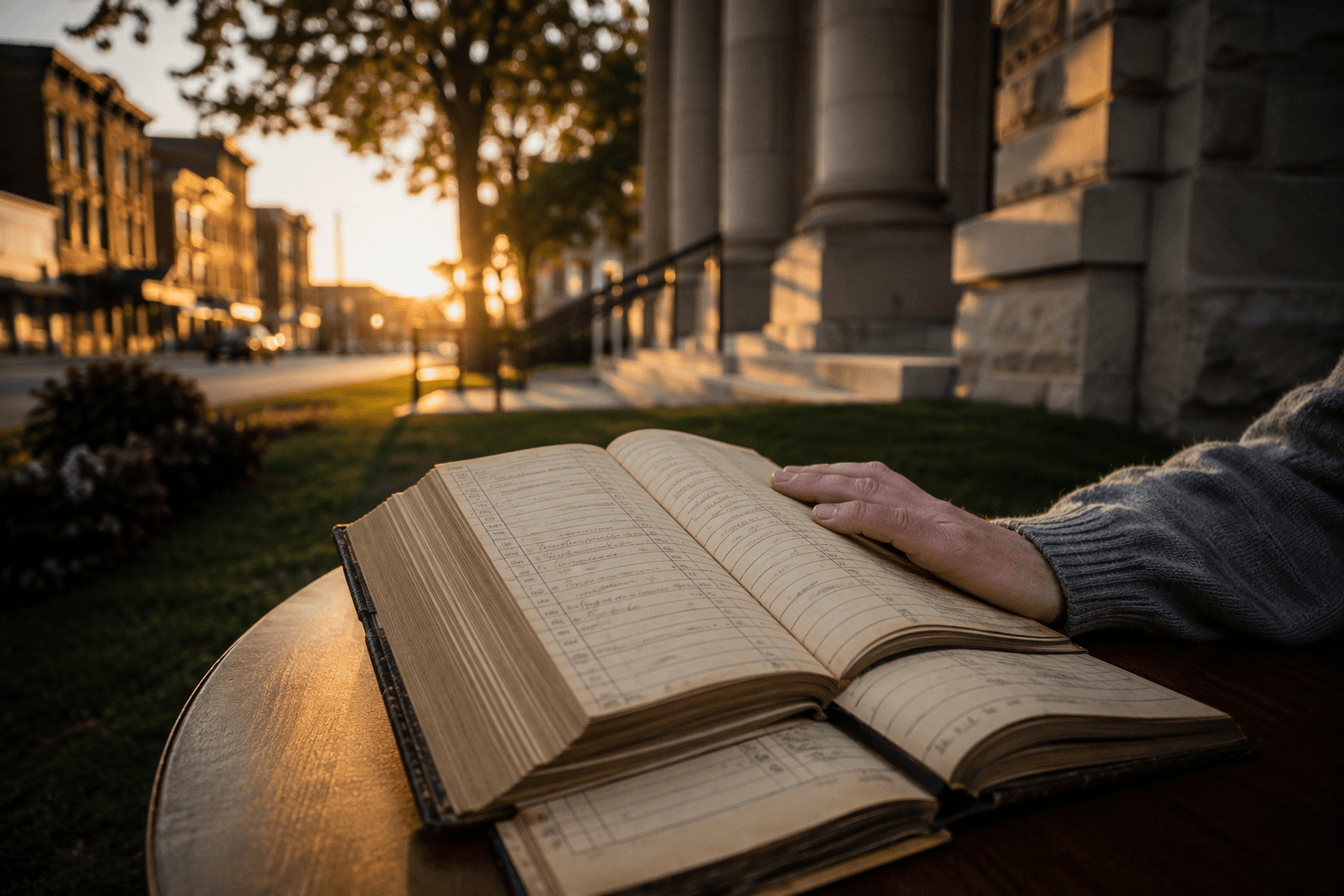
In McArthur, Zaleski, Wilkesville, and nearby townships, a Vinton County marriage entry can tie a bride and groom to a place, identify the officiant, and give researchers the date that a family branch changed course.
What a marriage record can reveal
In Vinton County, the basic marriage license fields are straightforward: the bride’s name, the groom’s name, the official who performed the marriage, and the date of the permit. That may sound thin on paper, but in a county where families often moved between small villages and rural townships, those details can be the first firm anchor for a family timeline.
Marriage records are especially useful when census entries shift from one township to another or when a surname appears in one community and then turns up somewhere else a decade later. A marriage date can also help connect a woman’s maiden name to later records, which is often the missing link in courthouse files, church registers, cemetery transcriptions, and old newspaper notices. For local family research, that one entry can turn a loose name into a documented household.
Where Vinton County marriage records are preserved
The Ohio History Connection preserves a collection titled Vinton County marriages in its ArchivesSpace holdings, and a related subject entry organizes these records as a county-specific vital records resource. Its general marriage-records guide places Vinton County within a broader statewide record system.
Ohio marriage materials are tracked in archives, county-level resources, and microfilm series that reach across decades. An Ohio History Connection subject page lists Ohio marriage-record microfilm series containing records from 1810-1916, with an index for 1810-1930 on positive microfilm, and records from 1922-1951 on negative microfilm.
Why the records carry extra weight in Vinton County
Vinton County’s geography explains why these records matter so much. The county government calls it one of Ohio’s most rural communities; it is over 80 percent wooded and has no cities, only villages. The county had 13,435 residents in the 2010 Census, then 12,800 in the 2020 Census, according to the U.S. Census Bureau. In a place with small settlements and wide stretches of rural land, family ties often cross township and village lines more than they do in denser counties.
Marriage records work especially well as local-history tools. They can show how a McArthur family linked into a Zaleski line, how a Wilkesville surname entered a new household, or how a Hamden connection appears in a later branch of the same family.
A county formed before its paper trail fully settled
Vinton County itself was formed on March 23, 1850, from Gallia, Athens, Hocking, Ross, and Jackson counties. At formation, it had eleven townships and a combined population of 9,353.
McArthur, the county seat, was organized on April 1, 1850. The county was named for Samuel Finley Vinton, a 19th-century congressman from Ohio.
McArthur, Wilkesville, and Zaleski are historically relevant places in the county.
Local places where researchers can still work with the records
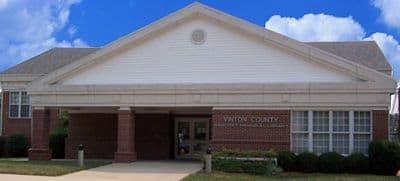
The Vinton County Court remains centered in McArthur, and the court website lists the courthouse at 100 E. Main Street, McArthur, OH 45651.
The Vinton County Historical and Genealogical Society gives family researchers another practical stop. It is listed at 207 South Sugar Street, McArthur, Ohio 45651, with public hours shown on local listings as Wednesday through Friday, 11:00 a.m. to 2:00 p.m., and on another listing as Wednesday through Friday, 12-3.
The Vinton County Chapter of the Ohio Genealogical Society has also published booklet indexes for Vinton County Marriage Records, 1859-1869, 1869-1878, and 1878-1888. Each booklet is listed at $12.00.
How to use the records efficiently
Start with the names you already know, then match them to a place. If a family appears in McArthur in one record and Zaleski or Wilkesville in another, a marriage entry may be the first document that connects those dots. If the line is unclear, the officiant’s name can help point toward a church, a justice of the peace, or another local official whose records may survive elsewhere.
A practical search usually moves through these steps: 1. Check county-level marriage listings and archived subject entries for the surname or time period. 2. Look at the Vinton County chapter’s booklet indexes for 1859-1888 if the family fits that span. 3. Use courthouse or society locations in McArthur when a record needs in-person follow-up. 4. Cross-check the marriage date against census shifts, township changes, and cemetery or church records.
This article was produced by Prism’s automated news system from verified source data, official records, and press releases, then run through automated quality and moderation checks before publishing. The system is built and supervised by the people who set the standards it runs under. Read our full AI policy.
Did this article answer your question?