Vinton Furnace State Forest serves as Ohio’s forest science lab
Vinton Furnace is Ohio’s forest lab, where oak, fire and wildlife studies can shape timber, habitat, water and hunting decisions in Vinton County.
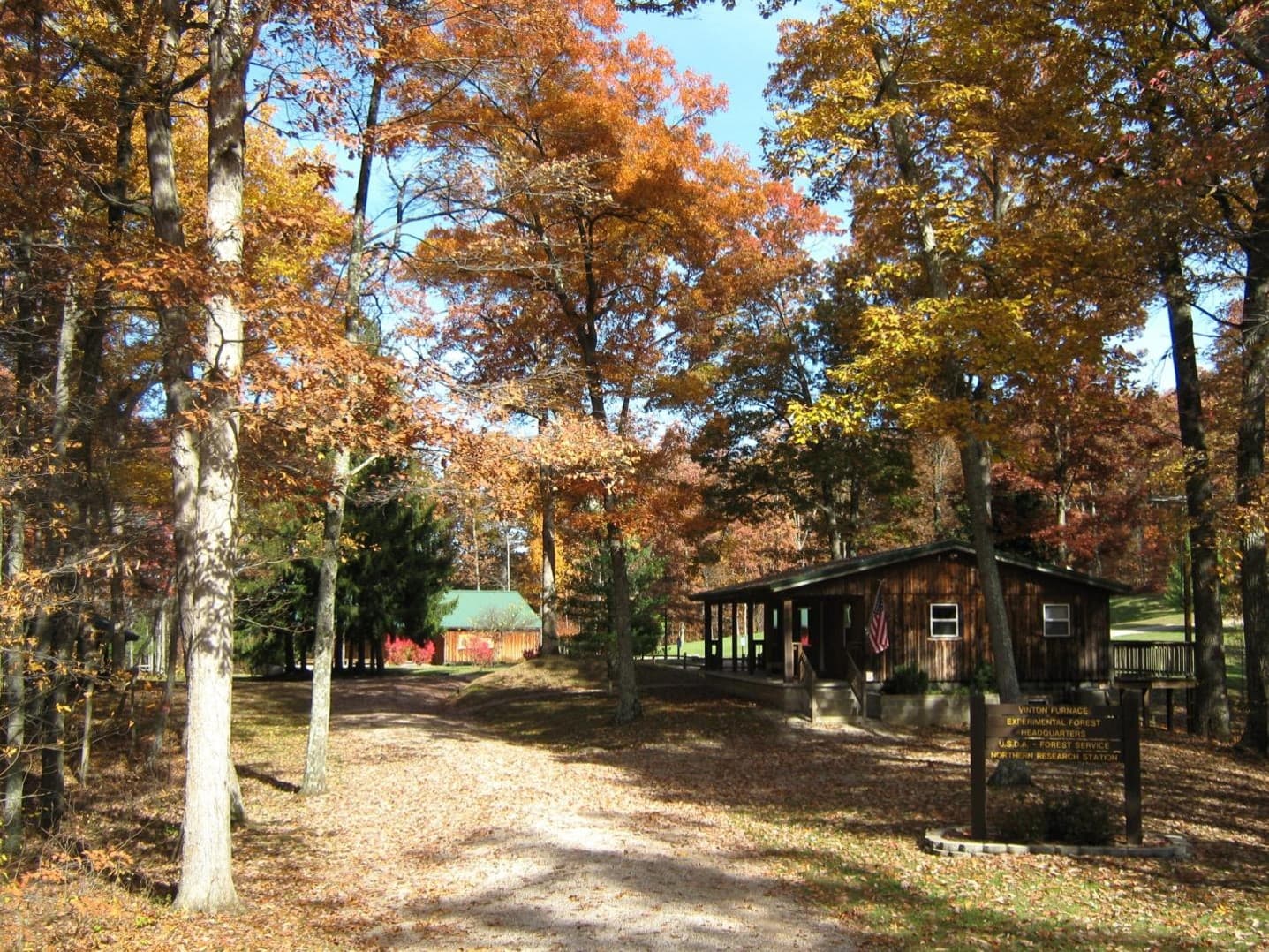
Spread across 12,089 acres near McArthur, Vinton Furnace State Forest is a working research landscape tied to decisions about oak restoration, timber management, wildlife habitat, water protection, and fire behavior that can affect Vinton County for years.
A forest with unusual ecological weight
The Ohio Department of Natural Resources calls Vinton Furnace one of the most biologically diverse ecosystems in the United States. It is home to the state’s largest known population of bobcats. The same landscape supports timber rattlesnakes, cerulean warblers, and several rare plant species, with data collected there cited in hundreds of scholarly papers on forest ecology, forest management, and wildlife.
The site sits inside Ohio’s broader multiple-use forest system, where state forests are managed for sustainable timber production, wildlife habitat, soil and water protection, and recreation.
How the research campus came together
The larger Vinton Furnace Experimental Forest has been building that record for decades. It began in 1952, when Baker Wood Preserving Company set aside 486 hectares for research. In 1965, Mead Corporation formalized the arrangement, and in 2010 the land was purchased by the Ohio Division of Forestry. The site has since expanded to more than 1,200 acres and remains one of the most important long-term forest research locations in southeastern Ohio.
Early work centered on farm forestry, pine conversion, and cutting practice demonstrations. Later studies moved into silvicultural research, regeneration, and growth and yield of desirable hardwood species, giving managers a place to test how forests recover after cutting, what comes back naturally, and what needs help. The forest still draws scientists, foresters, and students who need decades-long data rather than a single season’s snapshot.
The headquarters near McArthur includes a meeting and training center, visitor quarters, a weather station, office equipment, and broadband internet access. The Forest Service puts annual visits in the thousands for research, meetings, training, and tours.
Why oak restoration sits at the center
Current research is dedicated to restoring oak trees to Ohio’s forests, and the reason is both ecological and economic. Oaks are important wildlife habitat and a major part of the state’s wood industry, which means what happens at Vinton Furnace can influence deer cover, mast production, and timber supply at the same time.
Current work at Vinton focuses on shelterwood harvests, herbicide, prescribed fire, fire history and behavior, landscape ecology, and rare plant and wildlife management. Those are not abstract topics for a county that lives with working forest land. Shelterwood harvests can open the canopy enough for oaks to regenerate. Prescribed fire can reduce competing vegetation and shape understory growth. Herbicide use can help foresters target specific species that crowd out oak seedlings.
The site’s physical setting makes those studies even more relevant. The larger experimental forest sits in the Unglaciated Allegheny Plateau, with dissected topography, narrow ridges, and steep slopes. Elevations run from about 650 to 980 feet, mean annual precipitation is 1,024 mm, and the frost-free growing season lasts 158 days. Those conditions affect everything from seedling survival to erosion risk, which is why fire behavior, storm runoff, and regeneration patterns have to be studied here under local conditions rather than borrowed from flatter ground elsewhere.
What Vinton County may notice next
For residents, the most visible effects are likely to show up in the woods, not in a lab. Research findings can change where the state burns, where it thins trees, which habitat gets priority, and how much money goes into monitoring rare species or restoring oak stands. That can affect hunting access, because habitat projects often alter cover, browse, and openings that hunters depend on. It can also affect water quality, because steep hillsides and heavy rainfall make erosion control and stream protection part of any responsible management plan.
Wildfire risk is part of the same equation. Prescribed fire research helps managers decide when controlled burns are useful, how fire behaves in mixed-oak forests, and what conditions make burns safer or more effective. In a county with steep terrain and a long forest-management history, those findings can influence the timing and cost of future land work, including the state and federal dollars that pay for crews, equipment, monitoring, and training.
Bobcats were extirpated from Ohio by 1850, began repopulating in the mid-1900s, and became more frequently sighted in the early 2000s. State monitoring now shows an established bobcat population in eastern and southern Ohio that continues to expand. Vinton Furnace is central to that recovery story, and the same ground also supports black bears and at least 15 rare plant species, making it a high-value conservation site as well as a research forest.
A landscape shaped by what came before
The forest also carries the mark of Vinton County’s industrial past. The Belgian Coke Oven Ruins, reached by a 5.6-mile out-and-back hike, are a reminder of the region’s iron and coke era. The late-19th-century discovery of high-grade ore in the Lake Superior region brought that era to a halt, and the land that once fed furnaces shifted into new uses.
This article was produced by Prism’s automated news system from verified source data, official records, and press releases, then run through automated quality and moderation checks before publishing. The system is built and supervised by the people who set the standards it runs under. Read our full AI policy.
Did this article answer your question?