AI Voice Cloning Scam Targets Wake County Sheriff's Office Callers
On November 22, 2025, scammers used AI driven voice cloning and number spoofing to impersonate Wake County Sheriff's Office deputies, leaving a voicemail that urged a return call about "urgent legal matters". The sheriff's office warned residents not to provide money or personal information over the phone, and urged callers to verify suspicious contacts directly with the agency.
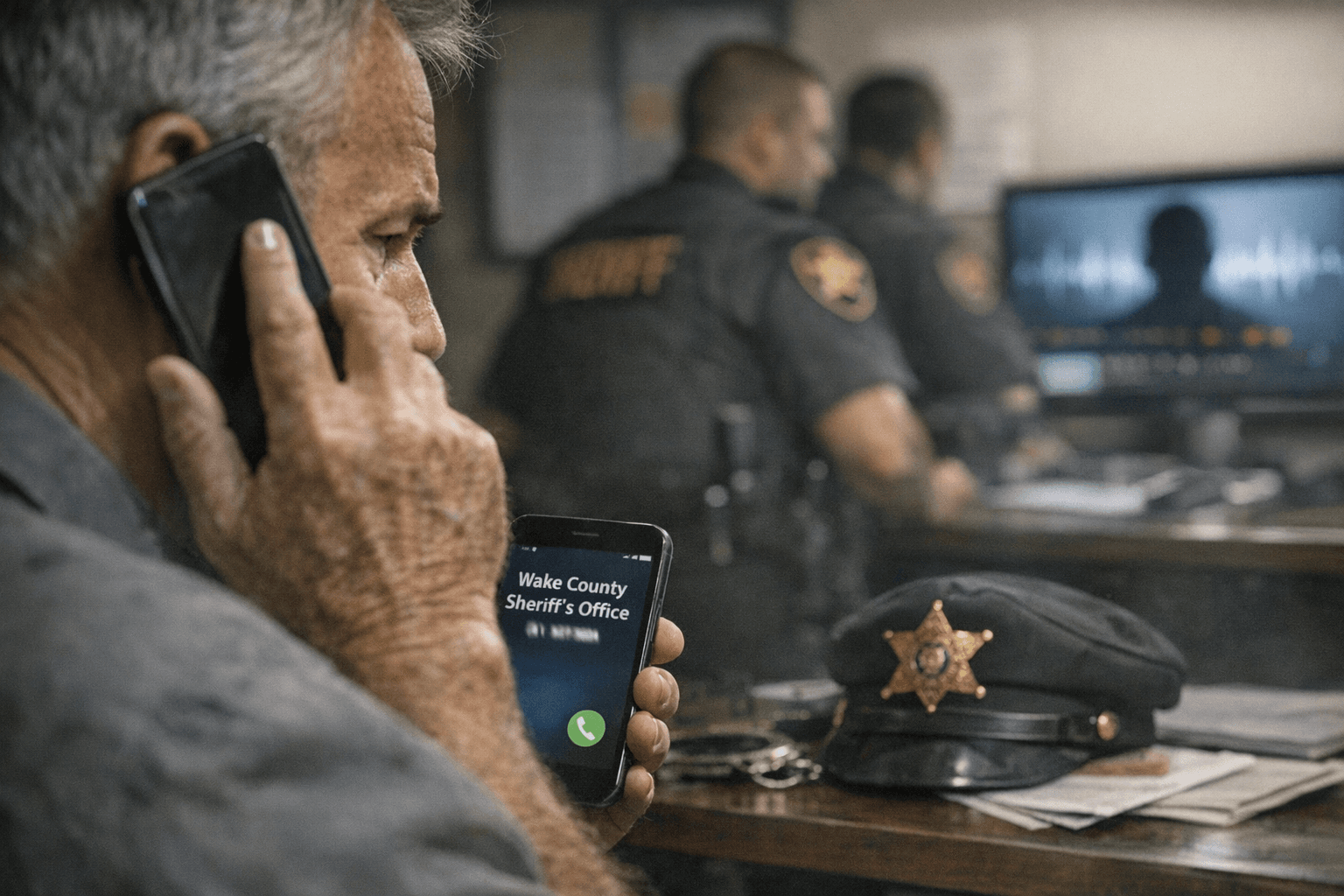
Wake County residents received a troubling demonstration of emerging technology being used to commit fraud when scammers delivered a convincing voicemail that impersonated a sheriff's office deputy on November 22, 2025. The recording used an actual deputy's name and a synthesized voice that closely resembled the officer, telling the recipient the call was about "urgent legal matters" and urging a return call. Local law enforcement and consumer protection experts say the episode illustrates how artificial intelligence and number spoofing can amplify the reach and credibility of telephone scams.
The Wake County Sheriff's Office confirmed the incident and described the methods behind it. Sgt. Kurt Steinberger said scammers are spoofing sheriff's office numbers and harvesting short audio clips of real officers to generate convincing fake calls. The sheriff's office warned residents: "do not provide money or personal information over the phone; hang up and verify with the agency directly." Officials emphasized that legitimate agencies will not demand payment over the phone and urged anyone who receives a suspicious call to contact the Wake County Sheriff's Office to confirm.
The immediate local impact is financial risk for residents who follow the callers' instructions, and an erosion of trust in official communications. Scams that mimic law enforcement can be particularly persuasive for older adults and others who may be less familiar with voice cloning technology or caller ID spoofing. Beyond direct losses, the incident complicates how residents verify legitimate outreach from government agencies, and it places additional verification burdens on local law enforcement.
Number spoofing allows scammers to display official phone numbers on caller ID even when the call originates elsewhere. When combined with short voice samples scraped from social media, public presentations, or other sources, AI tools can construct believable messages that mimic tone and phrasing. That capability raises policy and operational questions for local agencies. Law enforcement must balance public outreach with safeguards to prevent misuse of recorded voices and phone numbers, while consumer protection educators must update guidance about verification steps.
For Wake County residents the immediate steps are clear. Do not send money or share personal information in response to an unsolicited call. Hang up and call the Wake County Sheriff's Office directly using a number from the official website or a previous verified contact. Report suspicious calls to local law enforcement and to the state consumer protection office so authorities can track patterns and warn the community.
As voice cloning technology becomes more accessible, elected officials and agency leaders will face pressure to adopt new protocols for public communication. Transparent procedures for verifying official calls, public education campaigns, and coordination with telecom providers on caller authentication could reduce the threat. For now, vigilance and direct verification remain the primary defenses for Wake County residents.
This article was produced by Prism’s automated news system from verified source data, official records, and press releases, then run through automated quality and moderation checks before publishing. The system is built and supervised by the people who set the standards it runs under. Read our full AI policy.
Did this article answer your question?