Barista's Advocacy Helps Raleigh's 321 Coffee Employing Adults With Disabilities Land Wegmans
A Raleigh coffee chain that hires adults with intellectual and developmental disabilities landed shelf space at Wegmans after a longtime barista advocated for the product, expanding local retail access.
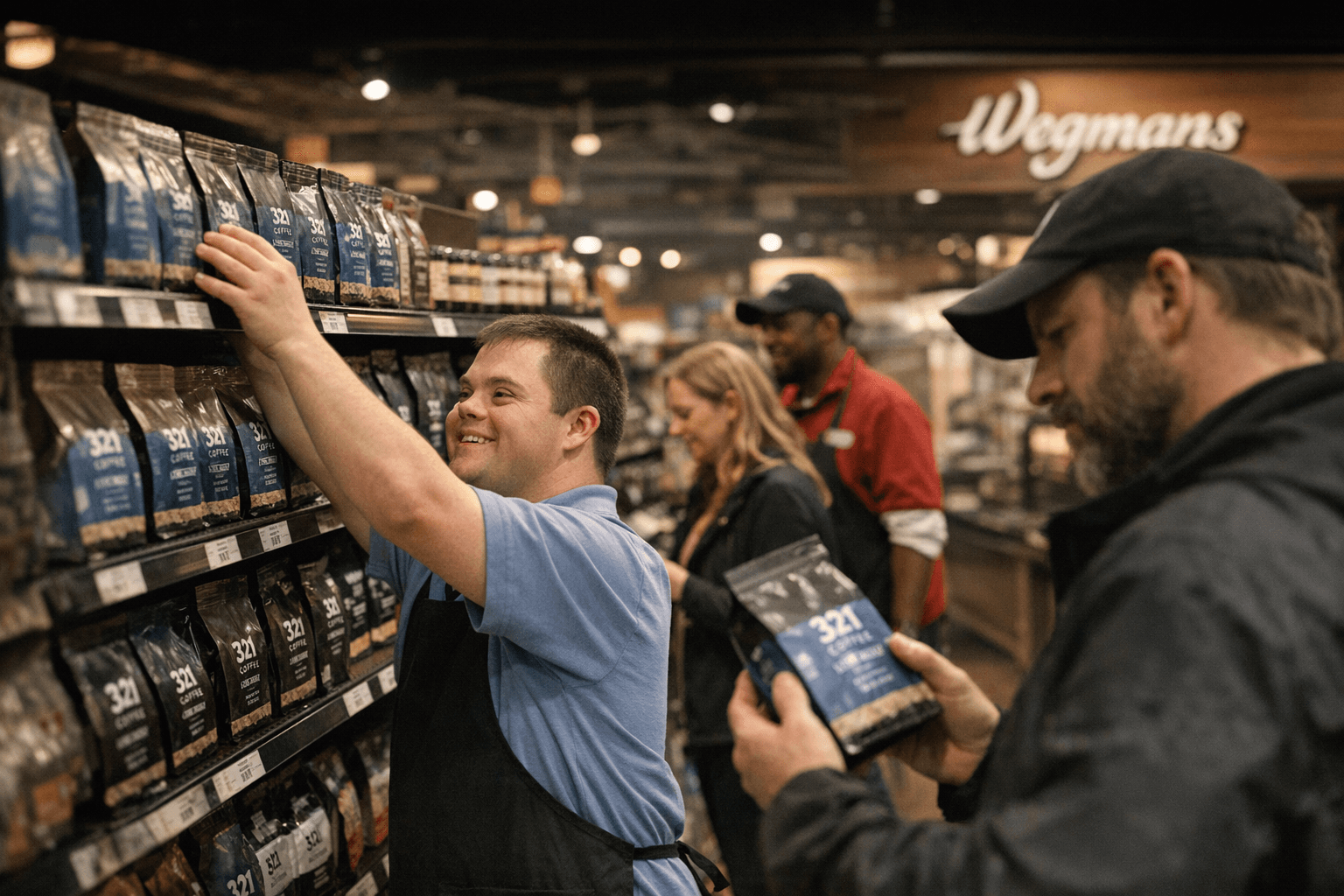
A Raleigh coffee business built on inclusive hiring expanded its retail footprint after a barista’s advocacy helped secure a deal with Wegmans. 321 Coffee, which employs more than 50 adults with intellectual and developmental disabilities across three Raleigh locations, will now have its packaged coffee in Wegmans stores serving Raleigh, West Cary, Wake Forest and Chapel Hill.
The placement marks a notable distribution milestone. Wegmans became the third major grocery retailer to carry 321 Coffee products, following launches at Whole Foods and Food Lion in 2024. The addition to Wegmans gives the local social enterprise broader shelf visibility across Wake County and adjacent markets, increasing the potential customer base and recurring revenue that can underwrite jobs and training programs.
The partnership traces back to Megan Czejkowski, a seven-year employee at 321 Coffee who also works part time at Wegmans. Czejkowski persuaded her Wegmans manager to stock the shop’s products, a move credited by 321 Coffee’s leadership as pivotal in expanding retail access. That kind of employee-driven advocacy underscores how everyday connections can translate into commercial opportunities for mission-driven firms.
For Wake County residents, the deal has both symbolic and practical significance. Practically, retail distribution through large grocers increases product availability and could boost sales volumes that support additional hiring and program expansion. Symbolically, the arrangement reinforces Raleigh’s role as a regional hub for inclusive employment models that offer meaningful work to adults with intellectual and developmental disabilities.
Economic context suggests this model matters beyond a single product line. People with disabilities have lower employment rates than the general population at the state level, and social enterprises that combine retail revenue with job training help close that gap by creating market-based pathways to employment. Scaling through major grocery chains is a common route to steadying revenues for small food businesses; for social enterprises, that stability directly impacts capacity to hire and train more workers.
Local shoppers who want to support the initiative can find product information at 321coffee.com. As 321 Coffee moves from local shops into larger retailers, Wake County stands to see a modest but tangible expansion in inclusive employment opportunities and in the visibility of businesses that blend social mission and market strategy. The question now is whether broader retail success will translate into more jobs and similar partnerships across the region.
This article was produced by Prism’s automated news system from verified source data, official records, and press releases, then run through automated quality and moderation checks before publishing. The system is built and supervised by the people who set the standards it runs under. Read our full AI policy.
Did this article answer your question?

