Boliek Launches Bipartisan 22-Member Commission to Modernize SEIMS
State Auditor Dave Boliek launched a bipartisan 22-member commission to guide a multi-phase modernization of North Carolina’s election data systems, a change that will affect how Wake County manages voter records and campaign finance.
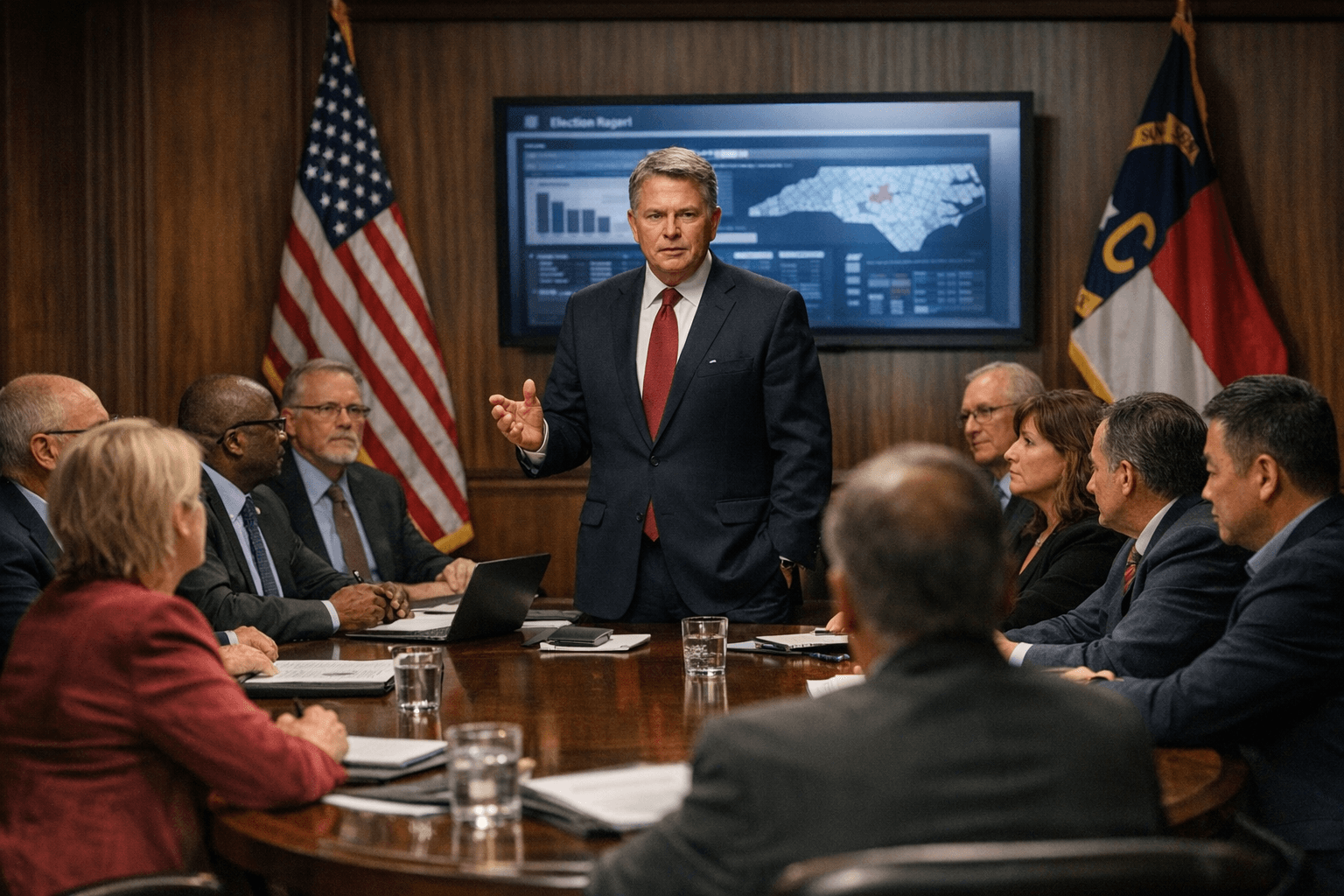
State Auditor Dave Boliek has created the Modernization of Election Data Systems commission, a bipartisan, 22-member panel he will chair, to provide practical advice on replacing and upgrading the Statewide Elections Information Management System, known as SEIMS. The panel is charged with helping make election data tools more secure and user-friendly for voters, local election administrators, and candidates.
The Office of the State Auditor and the North Carolina State Board of Elections are working together on a three-phase plan to modernize SEIMS. Officials say the current platform has been in place since the late 1990s, and the MEDS commission will now review public feedback, evaluate vendor proposals and monitor implementation as the state moves through the next procurement steps. An initial Request for Information gathered input from citizens and vendors, and a Request for Proposal has now been issued for phase two of the project.
Boliek said, "Developing a secure, user-friendly election management system requires input from those on the ground and directly from voters across North Carolina." He added, "We have a deep bench of elections professionals from all corners of this state." The commission’s stated tasks include recommending functional improvements, assessing security protocols and advising a parallel overhaul of the state’s campaign finance reporting system to make it easier for the public to track political spending and for candidates to comply with rules and regulations.
Membership blends practitioners and experts. Non-voting technical advisors will include State Board Executive Director Sam Hayes and State Board Chief Information Officer Bret Kelly, and all five members of the North Carolina State Board of Elections will serve as ex officio non-voting members. The roster also includes county election directors, policy directors, university professors and former government administrators; Johnston County elections director Leigh Anne Price is one of the named county-level appointees.
For Wake County, modernization could mean streamlined voter record management, clearer campaign finance disclosures and updated security measures that change daily election office workflows. Local election officials will be among the users expected to test and provide feedback on vendor proposals and new system functions.
Key details remain to be released publicly, including the commission’s full membership list, formal charter, meeting schedule, phase timelines, budget figures and whether the campaign finance system will be integrated with SEIMS or operate separately. The Auditor’s office has indicated a public dashboard exists for related materials; residents and local officials should watch for posted updates as the commission begins reviewing proposals for the second phase. The panel’s work will determine how quickly Wake County and other local jurisdictions move from an aging platform to a modernized system built around security, usability and transparency.
This article was produced by Prism’s automated news system from verified source data, official records, and press releases, then run through automated quality and moderation checks before publishing. The system is built and supervised by the people who set the standards it runs under. Read our full AI policy.
Did this article answer your question?