How First Citizens Bank grew from Raleigh lender to national player
First Citizens' leap from Smithfield to a top-20 U.S. bank put Raleigh on a bigger financial map. The real question is how much of that growth still benefits Wake County.
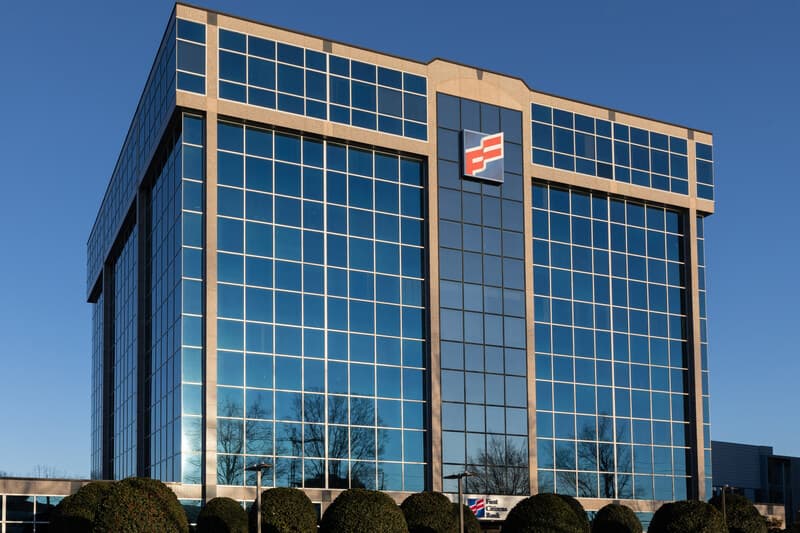
First Citizens Bank did not become a national player by leaving Raleigh behind. It grew from a Johnston County startup with $10,000 in capital into a Raleigh-headquartered institution that now ranks among the largest banks in the country, and that shift changes what the city means in the financial world. For Wake County, the story is no longer just about a hometown bank with deep roots, but about how much influence a family-controlled institution can keep at home while operating at national scale.
From Smithfield to Raleigh’s financial center
First Citizens opened for business on March 1, 1898, as the Bank of Smithfield in Johnston County. From that single office, the bank says it has grown to hundreds of branches nationwide, but the local identity never disappeared, and that matters in a region that still values companies with a visible Carolina base. The bank’s move from a small-town lender to a Raleigh-based holding company gives downtown the kind of corporate anchor that comes with boardrooms, executive offices and the kind of attention that usually follows much larger national banks.
That presence also helps explain why the bank’s growth resonates beyond balance sheets. A major financial institution headquartered in Raleigh adds to the Triangle’s reputation as a place where companies can scale without surrendering their roots. It brings prestige, but it also concentrates expectations, because once a local bank becomes a national player, its decisions can ripple well past Wake County.
The Holding family kept control while the bank scaled up
At the center of First Citizens’ rise is the Holding family, which the company says has led the bank for three generations. Frank B. Holding Jr. was elected chairman in February 2009 and has served as CEO since January 2008, while his sister, Hope Holding Bryant, was appointed vice chairwoman in 2011. That continuity is unusual in modern banking, where family control has largely given way to diffuse corporate ownership and management turnover.
The family’s influence gives First Citizens a local identity that many national banks lack. It also creates a different kind of corporate story for Raleigh, one in which expansion did not require the bank to become anonymous. Instead, the institution grew larger while staying tied to a specific family, a specific city and a specific regional identity that still carries weight in the Triangle.
The two deals that changed everything
The scale of First Citizens changed sharply after two major transactions. The first came on January 4, 2022, when First Citizens completed its merger with CIT Group. After that deal, the bank said it was a top 20 U.S. financial institution with more than $100 billion in assets and the largest family-controlled bank in the nation.
The second, and even more consequential, move came on March 27, 2023, when the Federal Deposit Insurance Corporation entered a purchase-and-assumption agreement with First-Citizens Bank & Trust Company for all deposits and loans of Silicon Valley Bridge Bank, N.A. FDIC materials said the bridge bank had about $167 billion in total assets and about $119 billion in total deposits as of March 10, 2023, while Reuters reported First Citizens agreed to acquire about $110 billion in assets, $56 billion in deposits and $72 billion in loans from Silicon Valley Bank. That deal instantly pushed First Citizens into the center of a national banking emergency and showed that a Raleigh institution could be called on to stabilize one of the country’s biggest financial shocks.
What national scale means for Raleigh and Wake County
For Raleigh, the upside of this growth is easy to see. A larger First Citizens brings more corporate gravity to downtown, more executive attention, and a stronger case for the Triangle as a place where major financial decisions are made locally. The bank’s own materials say the Silicon Valley Bank transaction would broaden its reach into innovation hubs and strengthen its commercial and private banking presence, which signals a business model built to compete far beyond North Carolina.
The harder question is whether that scale still translates into local value for businesses and customers in Wake County. National expansion can widen a bank’s lending reach, strengthen its balance sheet and give it more room to serve large commercial clients, but it can also make a hometown institution feel more distant from the small-business owners and households that gave it its first base. In Raleigh, First Citizens now sits at the intersection of both realities: it is still a local symbol, but it is also a bank whose decisions carry national consequences.
The company’s own investor relations materials now describe First Citizens BancShares, Inc. as a top 20 U.S. financial institution with more than $225 billion in assets and headquarters in Raleigh. That scale confirms how far the bank has traveled from its 1898 beginnings in Smithfield. It also explains why Raleigh’s relationship with First Citizens matters, because the city is no longer just home to a regional lender, it is home to one of the most important family-controlled banks in the United States.
This article was produced by Prism’s automated news system from verified source data, official records, and press releases, then run through automated quality and moderation checks before publishing. The system is built and supervised by the people who set the standards it runs under. Read our full AI policy.
Know something we missed? Have a correction or additional information?
Submit a Tip