Paré says nonprofit tax fix should prompt Wake County rollback
Wake County’s $90 property tax hike could trace to a loophole covering $2.2 billion in exempt property, and Erin Paré says Raleigh should clear the way for a rollback.
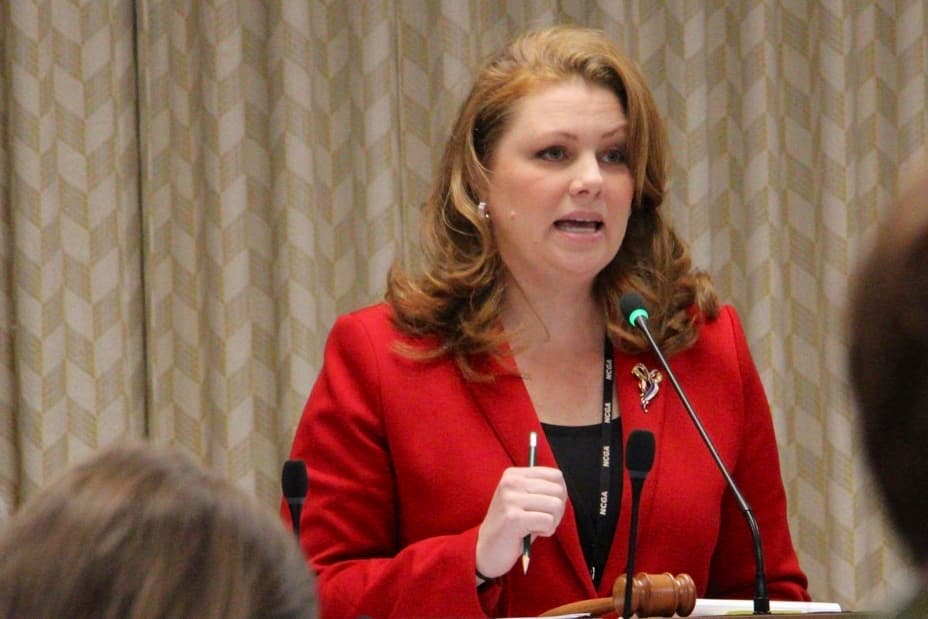
Wake County’s 2-cent property tax increase, which county leaders said will add about $90 to the average homeowner’s bill, landed as state Rep. Erin Paré pushed a fix that she says should let commissioners roll the hike back. The county approved its $2.2 billion budget in early June after using $35 million in reserves as a temporary measure and arguing that the nonprofit property tax loophole was draining revenue.
Paré’s bill, House Bill 1042, titled “Affordable Housing Exemption Mods.,” was filed April 23, introduced with Reps. Julia Howard, Mitchell Setzer and Mark Schietzelt, passed first reading April 27 and was sent to the House Finance Committee. On May 12, the committee considered a substitute version. The proposal would keep the exemption for 100% nonprofit owners and certain joint ventures with government financial support, while tightening the rules so for-profit developers cannot use passive nonprofit partners to claim the break without government backing and long-term affordability enforcement.

The stakes in Wake are measured in real dollars. County officials said 137 properties qualified for the exemption in 2025, totaling $2.2 billion in exempt value, up $776 million from the previous year and nearly $2 billion more than in 2020, when 66 properties qualified. One property that had been fully taxable at $104.2 million in 2024 received a 70% exemption in 2025, leaving only $31.3 million taxable. Wake estimates the loophole will cut county revenue by $12.3 million in the coming fiscal year, while Paré has said the county’s losses climbed from about $1.7 million in 2021 to $11.4 million in 2025.
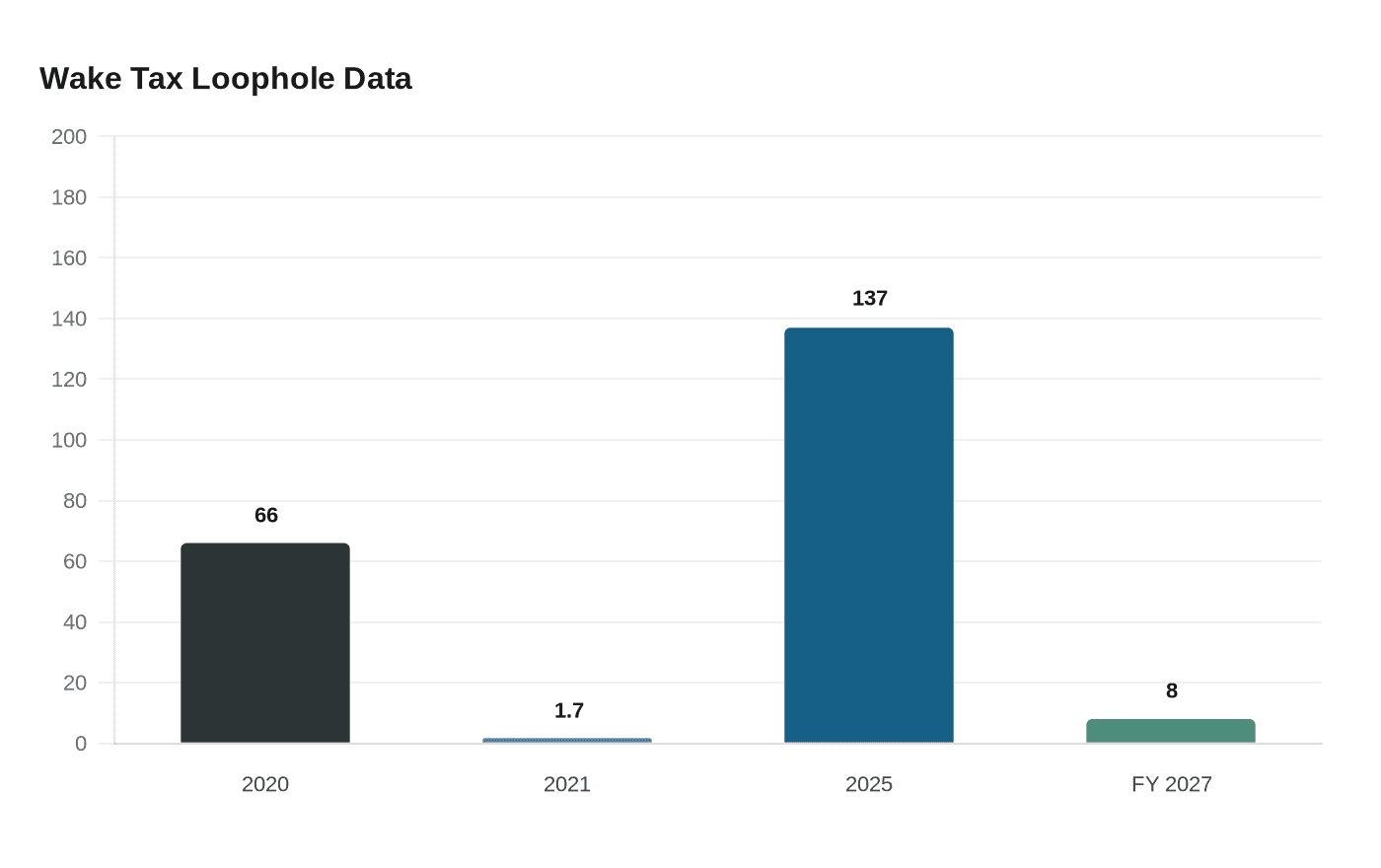
Wake County Tax Administrator Marcus Kinrade called the loophole “the biggest threat” to the county’s revenue stream and “a substantial leak” in the tax base. County leaders said they typically expect $40 million to $50 million in new revenue each year, but for fiscal year 2027 they expect only about $8 million, all of it aimed at public safety needs, including EMT positions, firefighter recruitment and detention services. Chair Don Mial said, “A tax increase is always the last option,” while Vice Chair Safiyah Jackson warned the consequences could be “catastrophic” if the General Assembly does not act. Raleigh Mayor Janet Cowell added, “You can see a real train coming down the railroad at you.”
The fight has also drawn a line between closing the loophole and protecting legitimate housing groups. Democratic Rep. Tim Longest said he supports the fix but wants to avoid harming organizations like Habitat for Humanity. Paré said the current system lets “for-profit private equity investors” team with passive nonprofits, buy older properties with naturally low rents and secure tax exemptions while raising rents. The General Assembly’s Fiscal Research Division estimated that closing the loophole would raise local government revenue by $22 million next fiscal year and $32.6 million by fiscal year 2030-31, giving Wake leaders a possible path to offset the increase if Raleigh acts soon enough.
This article was produced by Prism’s automated news system from verified source data, official records, and press releases, then run through automated quality and moderation checks before publishing. The system is built and supervised by the people who set the standards it runs under. Read our full AI policy.
Know something we missed? Have a correction or additional information?
Submit a Tip