Raleigh activates Stage 1 water restrictions as Falls Lake drops in drought
Falls Lake has slipped below Raleigh’s April trigger, and Stage 1 restrictions begin Monday for more than 660,000 Wake County customers.
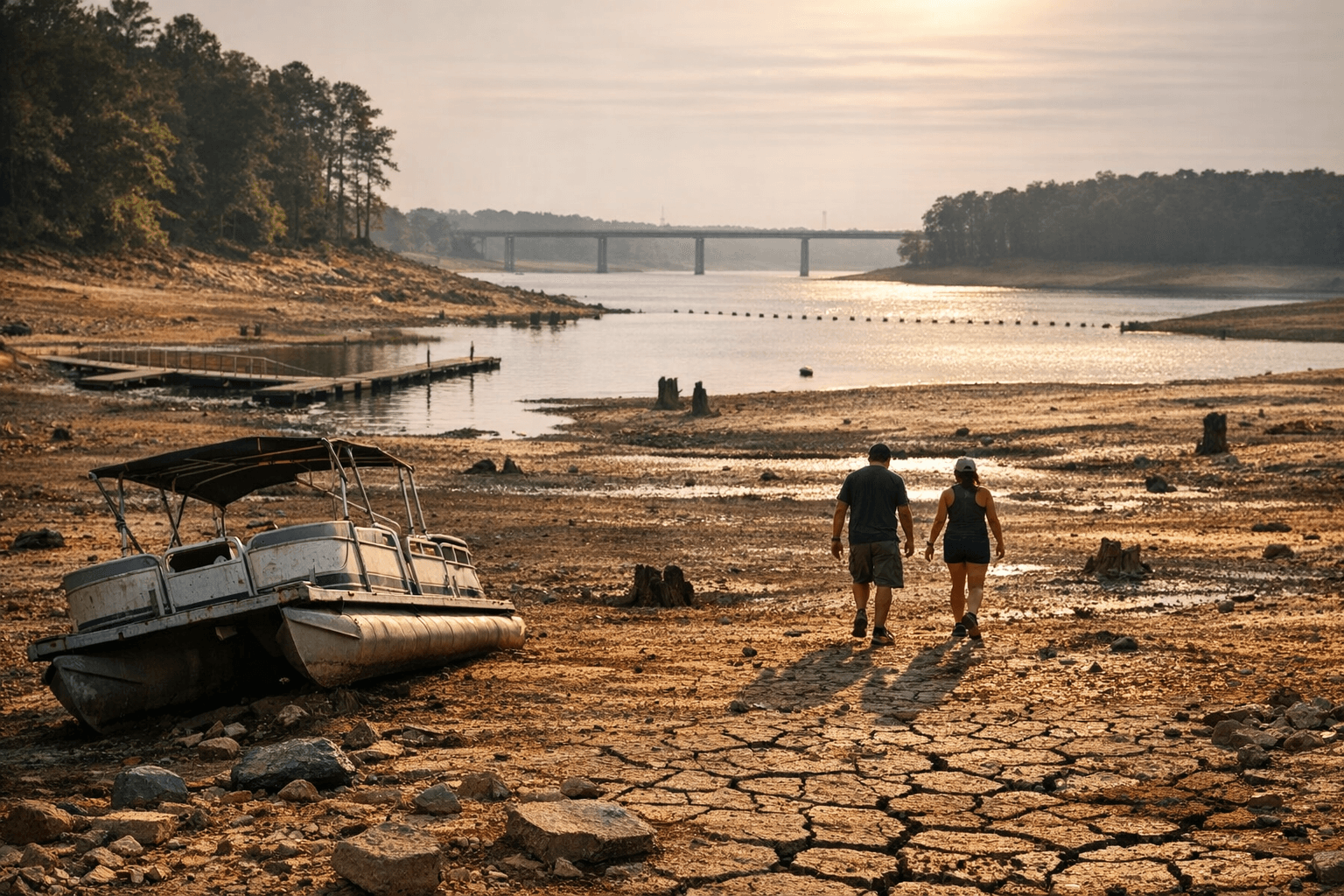
Raleigh water customers are heading into Stage 1 restrictions just as Falls Lake has dipped below the city’s April trigger, tightening the buffer for the region’s main drinking-water supply. Officials say the move is meant to protect long-term supply, with the sharpest limits aimed at outdoor watering and irrigation.
Raleigh Water said the restrictions take effect Monday, April 20, after the city updated its drought status on April 15 and added an outdoor burning ban. The city said Falls Lake is Raleigh’s primary drinking water source, and about 58% of the lake’s water is available in the water supply pool, while the rest is held in reserve for downstream releases in the water quality pool. As of April 15, Raleigh said the water supply pool was 84% remaining, just below the city’s 85% trigger for April.
City officials have stressed that the lake’s overall level does not directly show how much drinking water remains. Raleigh also said it added 5.6 billion gallons to the Falls Lake water supply pool in 2019, making today’s drought triggers more conservative than they were before. The city’s Water Shortage Response Plan is based on more than 100 years of data and the natural cycle of fill and drawdown at Falls Lake, a setup officials say is designed to keep the city ahead of deeper shortages.
The drought picture is worsening across Wake County. The North Carolina Drought Management Advisory Council’s April 7 advisory urged water users in D3 areas to follow water shortage response plans and cut nonessential use to protect critical needs such as firefighting and health and safety. Drought.gov said 900,993 Wake County residents are affected and that 100% of the county is in drought, with the county posting its 6th driest March on record and its 3rd driest January-through-March stretch over the past 132 years.
Local weather reports have added to the pressure. There has been no measurable rainfall since April 5 at Raleigh-Durham International Airport, and only two days with measurable rain in the previous 29 days. Hot temperatures in the 90s have only made conservation more urgent.
The strain comes with history behind it. Falls Lake stood at about 249 feet in recent reporting, far above the 241 feet seen during the 2007-2008 drought, when N.C. State climate researchers said Raleigh had just 39 measurable-rainfall days from July through December 2007 and Falls Lake fell to a record low of 10 feet below full pond. A U.S. Army Corps of Engineers report said Raleigh was within weeks of having little or no water in 2008 after the reservoir nearly dried up.
The current restrictions apply to Raleigh Water customers in Garner, Knightdale, Rolesville, Wake Forest, Wendell and Zebulon, and ABC11 reported that more than 660,000 people across Wake County are affected. Cary, which draws from Jordan Lake instead of Falls Lake, says it still has a water supply surplus, even as town officials continue to encourage conservation.
This article was produced by Prism’s automated news system from verified source data, official records, and press releases, then run through automated quality and moderation checks before publishing. The system is built and supervised by the people who set the standards it runs under. Read our full AI policy.
Did this article answer your question?