Raleigh Adds Stop Signs Near NCSU After Professor's Fatal Crash
Nine crashes in three years at Clark and Pogue didn't prompt action. It took the death of NC State professor Natalia Duque-Wilckens, 41, to finally change that.

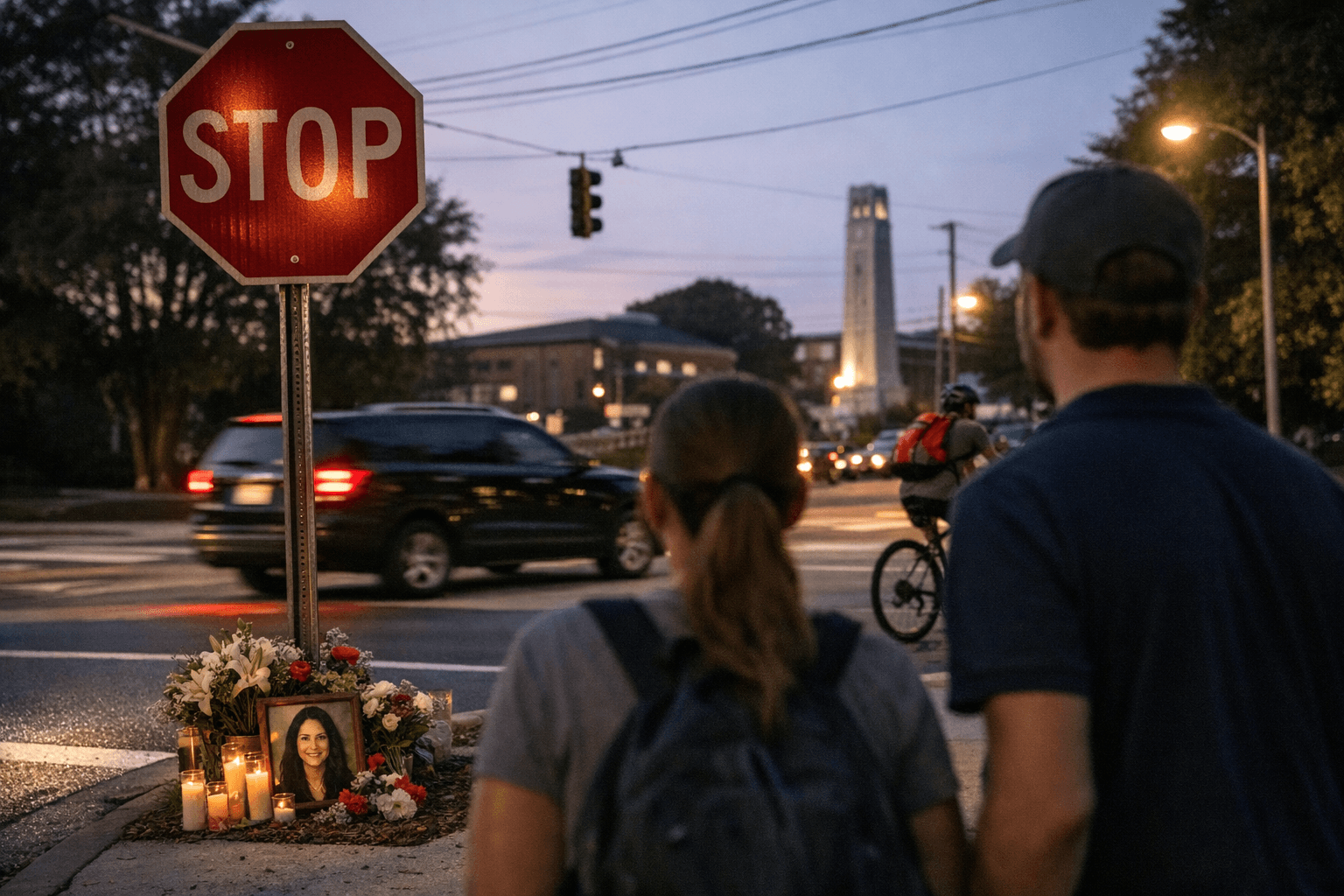
Three intersections on Clark Avenue near NC State University will become four-way stops within days, after Raleigh City Council approved the change following the November death of biology professor Natalia Duque-Wilckens, who was struck and killed while crossing the street at Clark and Pogue.
Duque-Wilckens, 41, was in a crosswalk on Nov. 11, 2025, when a pickup truck turning left from Pogue Street onto Clark hit her. She was taken to a hospital, where she later died. Jack Thomas Etheridge, 19, of Waxhaw, was charged with misdemeanor death by vehicle and failure to yield; those charges remain pending.
Stop signs will go up at Clark's intersections with Pogue, Horne and Chamberlain streets. Until now, drivers on Clark have not been required to stop at any of those three points. City staff said the signs are part of a short-term bundle of traffic controls planned for the corridor, with installation expected within the next week.
The stretch of Clark that runs through this neighborhood between the NCSU campus and The Village District carries between 9,000 and 10,000 drivers a day, many of them exceeding the posted 30 mph limit, according to a city analysis completed after the crash. Hilly terrain and a tree-lined median make it difficult for drivers to see pedestrians stepping into the roadway. City data counted nine reported crashes at Clark and Pogue alone over the past three years, and Raleigh police crash data shows a steady increase in collisions in that area since 2020. Duque-Wilckens' death was the first traffic-related fatality there since 2015.
Clark Avenue runs parallel to Hillsborough Street and functions as a popular cut-through, drawing a constant mix of students, faculty, staff and neighborhood residents on foot and behind the wheel. Long-time resident Stuart Guthrie, who has lived on the street for nearly two decades, described to WRAL what he has witnessed: "I can remember at least 7-8 accidents on Clark. One car ended up upside-down in the church across the street."
More than 1,200 people signed a petition after Duque-Wilckens died, arguing her death resulted from "known and unaddressed safety failures." The petition cited the daily reliance thousands of people place on those crossings: "Students, faculty, staff, and residents rely on these crossings every day. They deserve to walk safely in their own community." It added, "If proper safety measures were in place, Dr. Duque-Wilckens might still be with us today."
The stop signs are not the only intervention underway. A city spokesperson said light upgrades were completed at the end of last year in partnership with Duke Energy to increase visibility in low-light conditions. City staff also plan field visits in coming months to assess whether trees along the corridor need trimming to improve sight lines.
The city has previously applied traffic-calming measures on other segments of Clark with measurable results in reducing average speeds, and staff pointed to that track record when making the case for similar fixes near campus.
Know something we missed? Have a correction or additional information?
Submit a Tip