Raleigh Police Expand Drones, Private Camera Use to Solve Crimes
Raleigh police flew drones live at John Chavis Memorial Park on March 31, showing residents how surveillance tech solves crimes and what privacy limits the department has set.
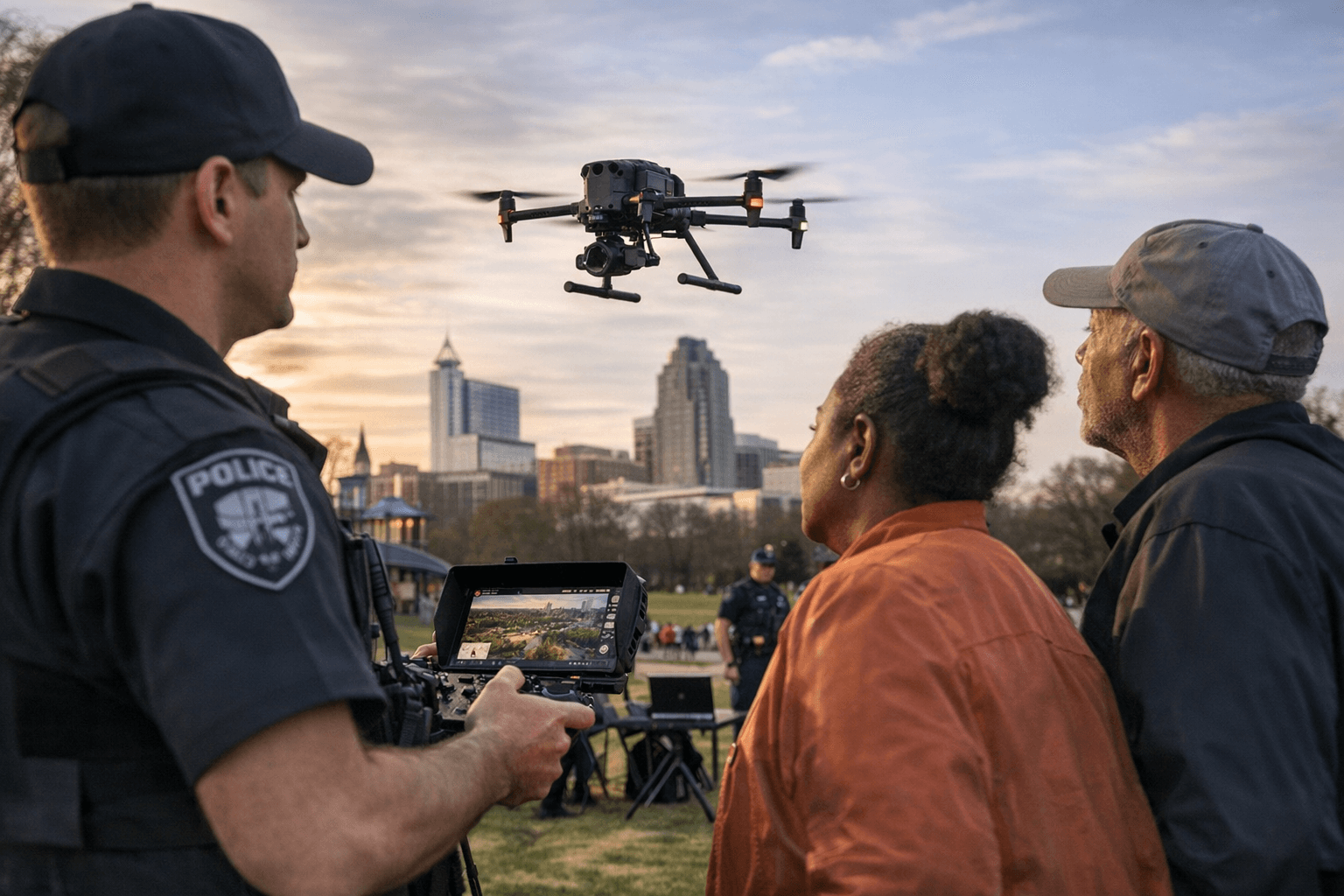
Raleigh's Police Advisory Board brought drones to John Chavis Memorial Park on March 31 for a community forum that put the department's expanding surveillance toolkit on public display and under direct questioning from residents.
The Raleigh Police Department has been growing its drone fleet and deepening its reliance on privately owned doorbell and security cameras through ConnectRaleigh, a city program that lets residents and businesses register their surveillance systems with police. When an incident occurs nearby, officers can request footage from registered cameras rather than canvassing a neighborhood cold, giving investigators what the department describes as a force multiplier for building cases.
Drones serve a different set of missions: search-and-rescue operations, tracking suspects in active situations, and giving commanders situational awareness during unfolding incidents. RPD has stated the department is not deploying facial recognition or automatic license-plate-reading capabilities within these programs, and all drone pilots hold FAA certification. The city has also emphasized training requirements as part of its public case for the technology.
The March 31 forum was organized specifically to address the tradeoffs those tools create. Alongside live demonstrations of the investigative equipment, the event included legal perspectives from both a defense attorney and representatives from the District Attorney's Office, allowing community members to hear how the technology intersects with search rights, victim protections, and the department's legal obligations. A Q&A session gave attendees direct access to officials and legal experts.
The city framed the event as part of a broader effort to build transparency and public trust around law enforcement's adoption of new tools, a tension that communities across the Triangle are navigating as drone use and residential camera networks become standard investigative resources.
Questions about data retention, access controls, oversight mechanisms, and long-term data security were not fully resolved at the forum, and the public conversation it started is likely to shape whether Raleigh moves toward formal ordinances governing how long footage is stored, who can access it, and what independent oversight looks like for a department with a growing aerial and digital presence.
This article was produced by Prism’s automated news system from verified source data, official records, and press releases, then run through automated quality and moderation checks before publishing. The system is built and supervised by the people who set the standards it runs under. Read our full AI policy.
Did this article answer your question?