Raleigh scientist recruits volunteers to help find hidden black holes
Raleigh volunteers are being asked to trace spiral arms in distant galaxies, a task tied to finding the black holes astronomers still cannot pin down.
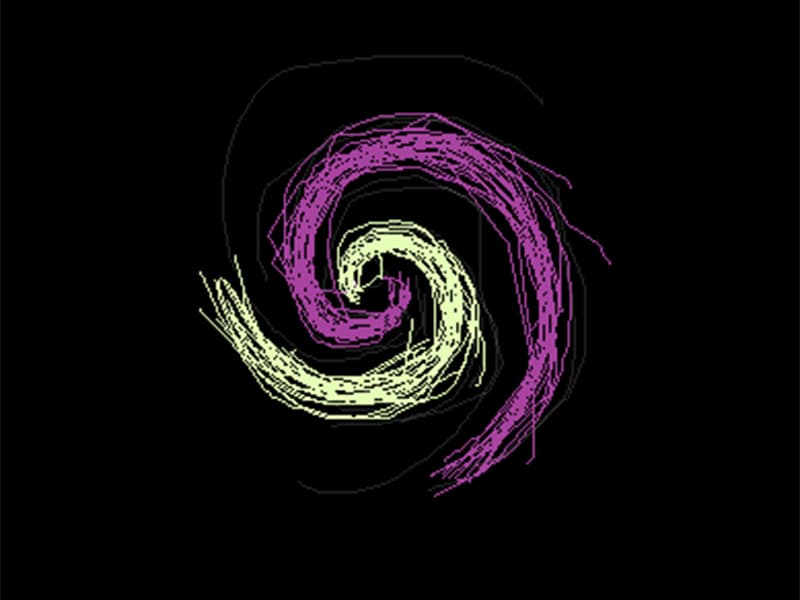
Patrick Treuthardt used a Science Café at the North Carolina Museum of Natural Sciences to recruit volunteers for a galaxy-mapping project that could help identify one of astronomy’s hardest-to-find objects: intermediate-mass black holes. Treuthardt, the assistant head of the museum’s Astronomy & Astrophysics Research Lab, is asking people to trace spiral arms in telescope images through SpiralGraph, a Raleigh-built effort aimed at locating black holes that sit between the small stellar-mass kind and the supermassive objects at the centers of large galaxies.
The project hinges on a measurable trait called spiral arm pitch angle, the winding of a galaxy’s arms. Earlier research found that as pitch angle increases, central black hole mass tends to decrease, and one published version of that relation predicted galaxies with pitch angles of about 26.7 degrees or more should host intermediate-mass black holes. Treuthardt’s team ran into limits with artificial intelligence, which had trouble telling bright regions from faint ones in galaxy images, so the museum turned to human pattern recognition instead. SpiralGraph now asks volunteers around the world to produce tracings from thousands of galaxies, and on June 24 the museum launched a follow-up project called Spiral Graph: Cluster Buster to organize those tracings more efficiently.
Intermediate-mass black holes are a long-sought missing link in black hole evolution, and astronomers have only a few candidates so far. In 2024, a Hubble and ESA release found strong evidence for one in Omega Centauri after analyzing more than 500 images spanning two decades. The category may help explain how the universe built the supermassive black holes that now anchor galaxies, including the Milky Way’s Sagittarius A*, which NASA puts more than 25,000 light years from Earth and at about 4 million suns.
The museum has been building the infrastructure for this kind of public science since its Astronomy & Astrophysics Research Lab opened with the Nature Research Center in April 2012. Volunteers already take part in research, learning centers and hands-on programs across the institution, and Treuthardt’s work focuses on nearby barred and non-barred spiral galaxies and how their structure connects to the supermassive black holes they harbor.
This article was produced by Prism’s automated news system from verified source data, official records, and press releases, then run through automated quality and moderation checks before publishing. The system is built and supervised by the people who set the standards it runs under. Read our full AI policy.
Know something we missed? Have a correction or additional information?
Submit a Tip