Raleigh sewage spill leaves health concerns after 1.14 million gallons leaked
A storm-drain mistake near RDU sent 1.14 million gallons of sewage into Turkey Creek, with bacteria risks still lingering downstream.

Turkey Creek took the first hit from a Raleigh wastewater failure that sent 1,143,800 gallons of untreated sewage from a 30-inch main into a storm-drain system near Raleigh-Durham International Airport. The contamination moved into Turkey Creek and may have reached Crabtree Creek, leaving anyone who lives, works or recreates near those waterways exposed to lingering public-health risks tied to raw sewage.
Raleigh officials said the spill began when a contractor hauler dumped wastewater into a storm drain instead of the sanitary sewer during work tied to the airport expansion. Raleigh Water said a bypass pumping operation failed, and the storm-drain manhole was only about 30 to 50 feet from the marked sanitary sewer manhole. The discharge was reported around 8 a.m. on May 13 at 2800 John Brantley Boulevard, and most of the sewage was said to have stayed contained in excavated pits before cleanup errors sent contaminated water into the creek system.
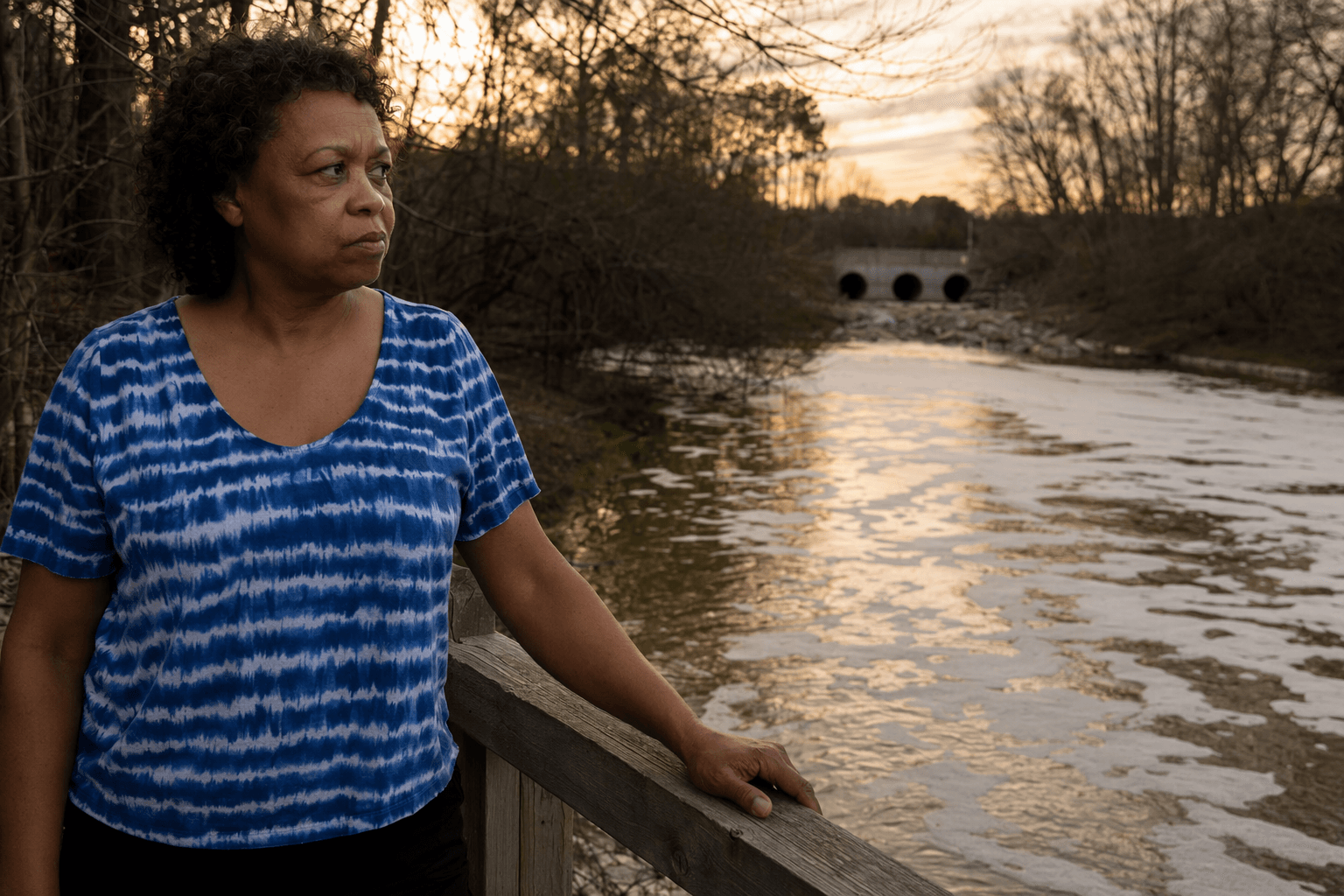
By May 15, Raleigh Water said crews had placed dams in Turkey Creek to isolate affected sections and were pumping collected water to the Neuse River Resource Recovery Facility for treatment. City officials said the cleanup could be finished as early as the beginning of the following week, depending on site conditions, but the health concerns did not end when the visible mess started to shrink. Sound Rivers said it found very high levels of E. coli in Turkey Creek at the spill site and more than half a mile downstream, underscoring the risk of bacteria, viruses and parasites in raw sewage.
Raleigh officials said no fish kills or visible vegetation damage had been reported as of May 19, but the North Carolina Department of Environmental Quality continued to monitor the incident and review reports and sampling data to determine what regulatory response and enforcement actions could follow. City officials also said a notice of violation was likely and that the responsible party would have to pay cleanup costs and complete remediation under Raleigh’s illicit discharge ordinance.
The city said Raleigh’s drinking water was not affected because the tap water supply comes from Falls Lake, not local neighborhood creeks. Even so, the spill carried a clear local burden for Wake County, where Raleigh Water serves more than 650,000 residents in Raleigh, Garner, Wake Forest, Rolesville, Knightdale, Wendell and Zebulon. The sewage leak also puts a sharper spotlight on the airport’s Transform RDU project, a $2.5 billion capital program that includes the replacement runway expected in 2029.
Know something we missed? Have a correction or additional information?
Submit a Tip