Raleigh Water Reports Strong 2025 Performance, New Lab and Innovations
Raleigh Water on December 17 released its 2025 year end summary, highlighting expanded infrastructure, intensive water quality testing, and a pioneering renewable natural gas project for buses. The report matters to Wake County residents because it details system reliability, public health monitoring, and sustainability steps that affect daily water service and regional transit emissions.
Raleigh Water on Wednesday summarized its work for 2025, reporting a year of intensive operations, infrastructure acceptance, and new facilities that officials say strengthen water quality and service reliability across the city and surrounding Merger Towns. The annual summary enumerated routine challenges and notable achievements that will shape local service and environmental efforts going forward.
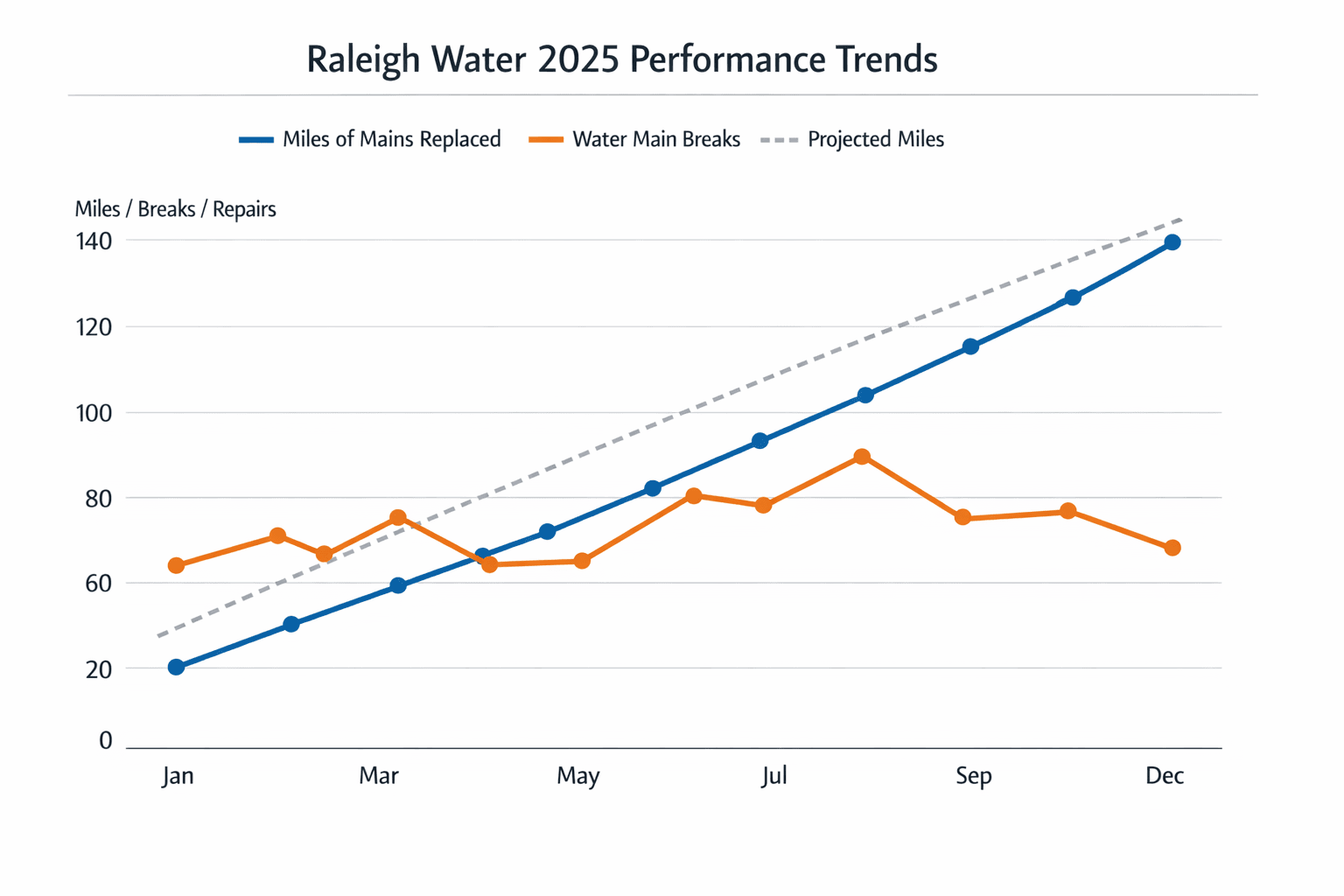
The utility logged eight reportable sanitary sewer overflow incidents during the year and recorded 224 main breaks as of early December. Crews completed 264 water service leak repairs, and accepted 74 miles of new mains in Merger Towns, including 36 miles of water mains and 38 miles of sewer mains. Raleigh Water projected it would accept 81 miles of new mains by the end of the year. These figures underscore the pace of infrastructure expansion as the utility integrates territories from merged communities while maintaining aging pipes and responding to breaks and leaks that can interrupt service.
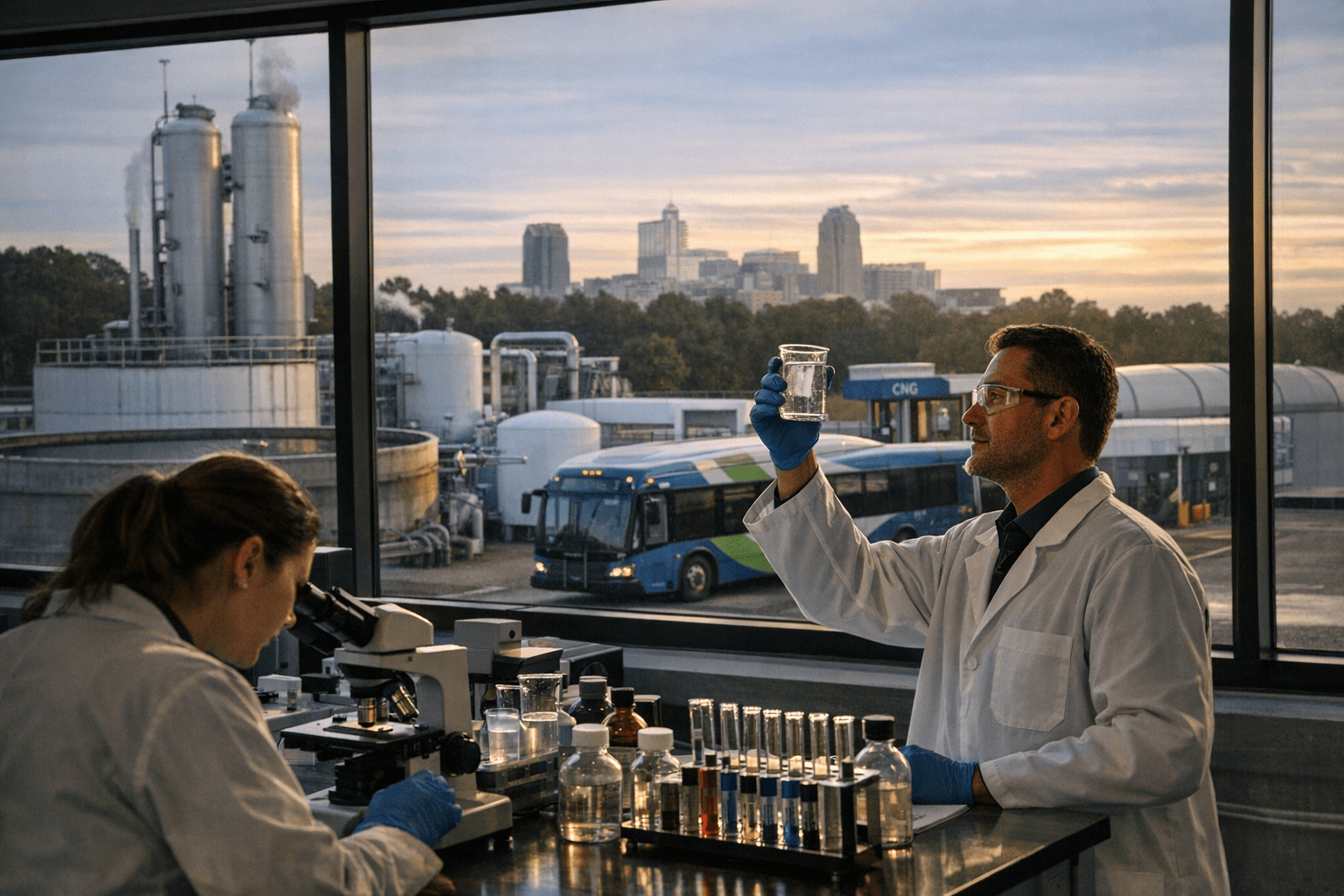
On the public health front, Raleigh opened a new state of the art drinking water laboratory and reported it performed 434 lead and copper (Pb/Cu) analyses for customers this year. The laboratory supports a distribution network that includes 270 sampling stations used for regulatory compliance monitoring, and the lab averages 41,935 analytical tests per year. Expanded local testing capacity is intended to provide faster results for residents and regulators, reinforcing confidence in tap water safety as the city grows.
Raleigh also positioned itself as a regional leader in clean energy by becoming the first jurisdiction in North Carolina to power buses with renewable natural gas derived from wastewater through its Bioenergy Recovery Project. That project links everyday sanitation services to broader climate and resource recovery goals, and it aligns local operations with global trends in circular economy practices.
Communications efforts included the launch of an Instagram account, @Raleigh_Water, intended to improve outreach and inform customers about outages, testing, and projects. The utility also acknowledged staff sacrifices over holidays as crews worked to keep water flowing. For Wake County residents, the year end summary offers both reassurance about ongoing monitoring and a reminder of the operational work required to sustain safe, reliable water service and to pursue sustainability goals.
Know something we missed? Have a correction or additional information?
Submit a Tip