Raleigh's Iconic WKRP Call Letters Are Up for Auction
A 100-watt Raleigh community station is auctioning the WKRP call letters it's held since 2014, with Cincinnati broadcasters now in the bidding mix.
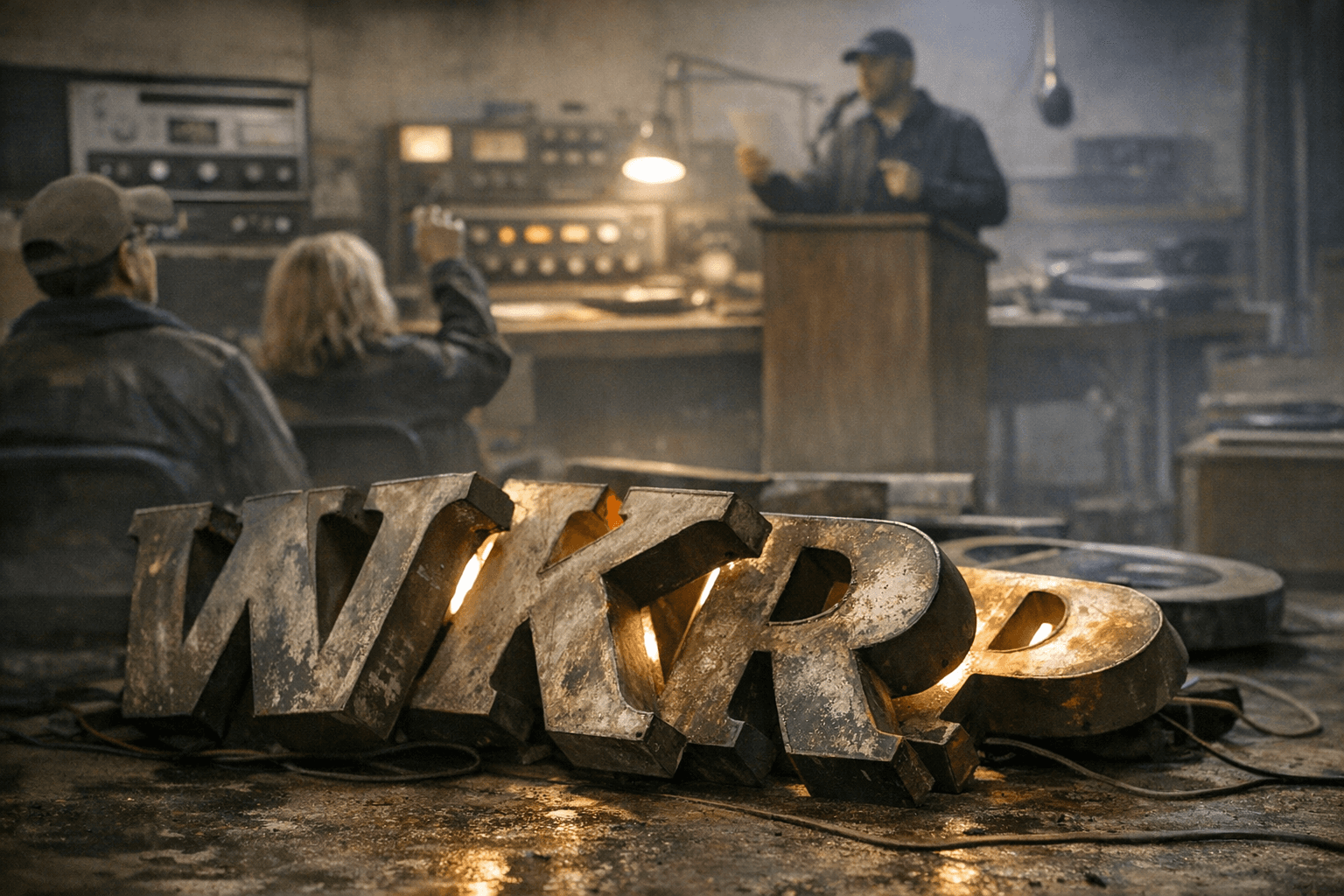
The call letters that turned a fictional Cincinnati radio station into a television punchline have been broadcast from a 100-watt transmitter on Raleigh's 101.9 FM dial since 2014. Now they are leaving.
WKRP-LPFM, operated by nonprofit Oak City Media, launched an auction for its call letters and associated intellectual property, including logos and slogans developed over the station's run. The call letters would transfer free to whoever purchases that IP package, with general manager D.P. McIntire anticipating a final outcome by April 30, 2026.
The station announced its plan to cease broadcast operations in August 2025. Oak City Media says proceeds from the auction will fund a new initiative to build a network of low-power community radio stations for nonprofit organizations across the country, trading a single Raleigh signal for something with national scope.
What a call sign carries in market value depends largely on the brand history attached to it, and WKRP carries considerable weight. The sitcom "WKRP in Cincinnati" ran on CBS for four seasons from 1978 to 1982, following the misadventures of a fictional rock station staff, and produced one of broadcast television's most quoted moments. According to the Museum of Broadcast Communications, no Cincinnati radio or television station has ever actually held the WKRP call letters, despite the show being set there.
That historical gap is what makes the auction structurally unusual. McIntire opened the bidding to TV stations, AM stations, and full-power FM stations, the three categories in which FCC regulations permit shared call signs. Under those rules, call letters can be transferred between active licensees, but a low-power station like WKRP-LPFM cannot convey its call sign to just any party: the receiving broadcaster must hold a valid FCC license, and the transferred call sign must conform to the station class acquiring it.
McIntire has not been guarded about his preferred outcome. "I would like nothing better than to see a Cincinnati-licensed commercial radio or television station participate in our process and 'bring WKRP home,'" he said. The station later posted on Facebook that the auction had already been publicized by "multiple Cincinnati radio and television stations," adding: "This may get very interesting, very quickly." McIntire acknowledged the sentiment but stopped short of predicting it. "Part of me feels that the WKRP call sign belongs in the Cincinnati market in some form or fashion," he said. "But whether that will occur or not I can't speculate."
The auction process narrows to a private competition among three finalists per FCC-permitted category. "We will then separate contenders from pretenders," McIntire said, with bids already reported to have exceeded expectations and negotiations underway across categories.
For listeners currently tuning 101.9 in Raleigh, the practical impact is limited but not nothing. WKRP-LPFM does not stream its signal, confining its reach to whatever land a 100-watt transmitter covers. Its daily lineup included McIntire's own four-hour midday program, a novelty music block called Weird Al & Friends that McIntire described as featuring "a host sounding like Krusty the Clown" from The Simpsons, and the national news broadcast Democracy Now. The station's logo featured the Raleigh skyline.
Once the call letters transfer, that skyline branding goes with them. The 101.9 frequency itself remains, subject to whatever FCC filings Oak City Media pursues as the station winds down. What Raleigh gives up is primarily the brand, an eleven-year local claim on four letters that, in the public imagination, were always somebody else's story to tell.
This article was produced by Prism’s automated news system from verified source data, official records, and press releases, then run through automated quality and moderation checks before publishing. The system is built and supervised by the people who set the standards it runs under. Read our full AI policy.
Did this article answer your question?

