RDU tests experimental stormwater system for massive parking expansion
RDU’s new Park Economy 3 lot will spread nearly 110 acres of pavement across the airport, while an experimental wetland system tries to keep runoff from washing downstream.
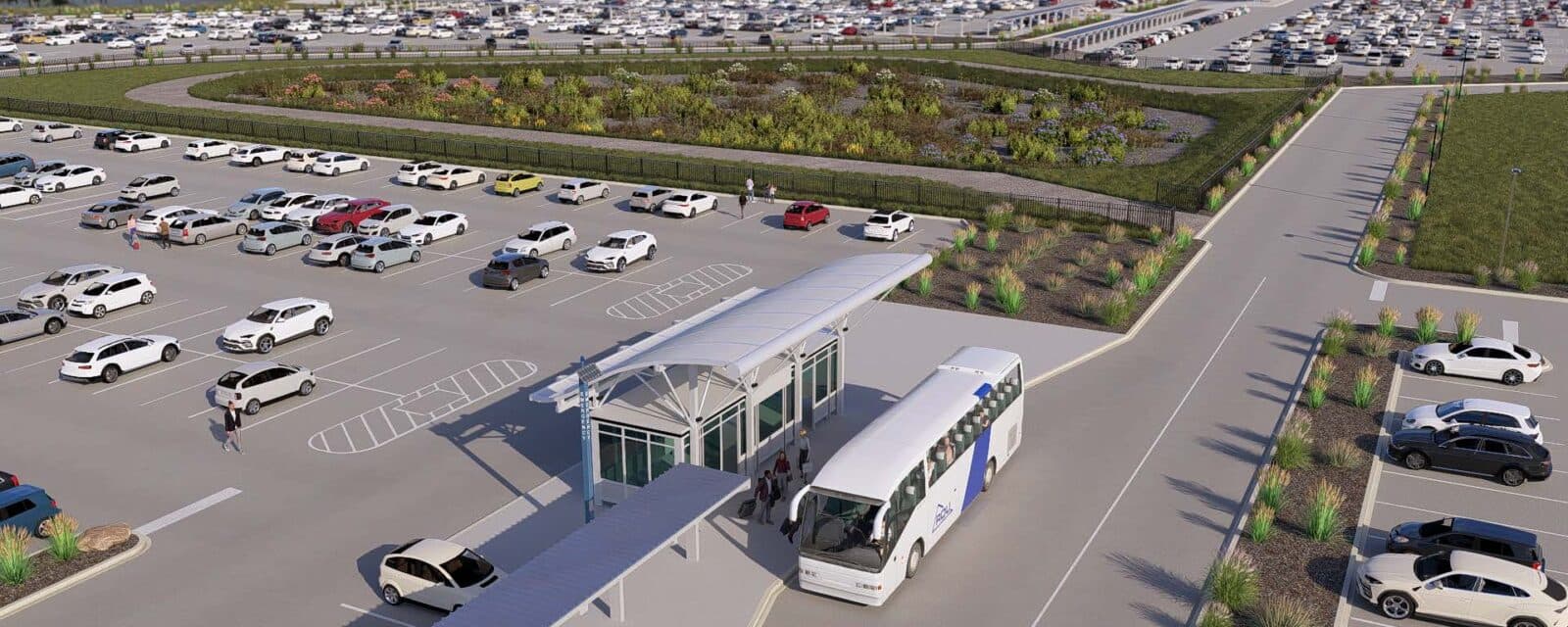
Raleigh-Durham International Airport is testing whether one of Wake County’s biggest new parking projects can grow without creating a bigger water problem for nearby communities. Its Park Economy 3 expansion will eventually cover about 110 acres with asphalt and concrete and is expected to hold nearly 11,000 cars by the end of the year.
That scale matters because every foot of new pavement changes how rain moves. Instead of soaking into soil, stormwater can race off hard surfaces, pick up oil, trash and sediment, and carry it toward creeks and drainage channels. At RDU, the answer is an experimental system built to slow that water down and filter it before it leaves the site.
The setup uses submerged gravel wetlands along with other measures designed to mimic what a natural landscape would do. Water is routed through gravel and wetland areas, where it can be held back, filtered and released more gradually than it would be from a conventional parking lot. State regulators are watching the system closely because it is still considered experimental and one of the first of its kind in North Carolina.
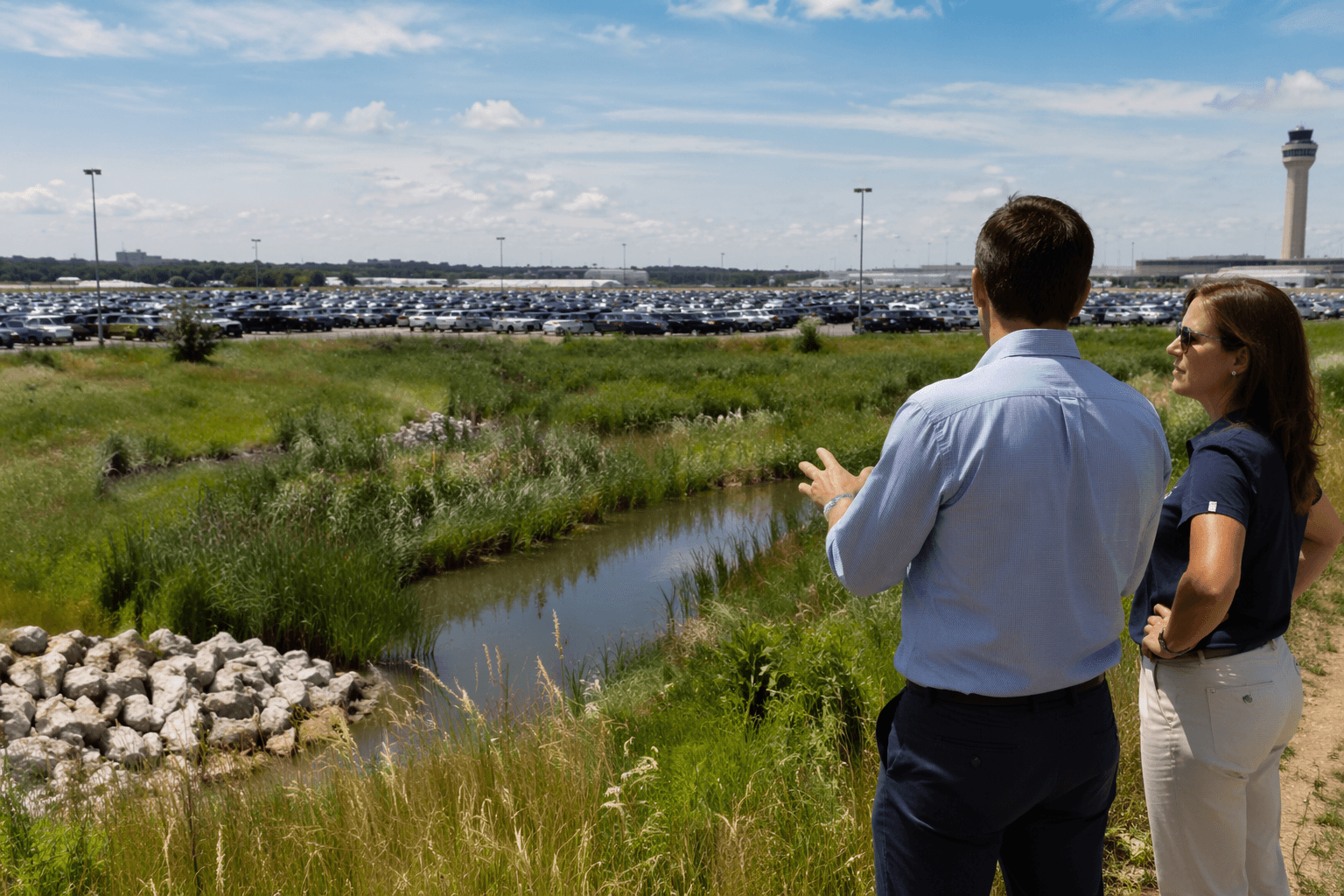
Bill Hunt, a North Carolina State University professor, and graduate student Anna Dias were among those explaining how the system works. Their role underscores that the project is more than a standard airport infrastructure buildout. It is also a live test of whether engineered wetlands can help a giant paved site handle runoff without simply pushing the burden onto downstream neighbors.
For Wake County, the stakes are practical as much as environmental. Airport parking expansion is easy to overlook compared with terminal construction or runway work, but a lot this large can shape drainage, water quality and long-term maintenance for years after the spaces open. RDU’s parking buildout is also happening alongside a much larger airport transformation, which makes this parcel a useful gauge for how future paved projects might be designed elsewhere in the Triangle and beyond.

If the system works, the airport could become a model for other large paved sites looking to keep pace with growth while limiting polluted runoff. If it fails, regulators will have a real-world example of how difficult it can be to make a massive parking lot behave more like a wetland. Either way, the lot at Park Economy 3 is now a test of whether expansion and accountability can share the same ground.
This article was produced by Prism’s automated news system from verified source data, official records, and press releases, then run through automated quality and moderation checks before publishing. The system is built and supervised by the people who set the standards it runs under. Read our full AI policy.
Did this article answer your question?

