SBI gained access to Flock cameras at Lowe's stores, raising privacy concerns
SBI access to Lowe’s cameras now reaches Raleigh shoppers, and Flock’s system can capture far more than plate numbers.
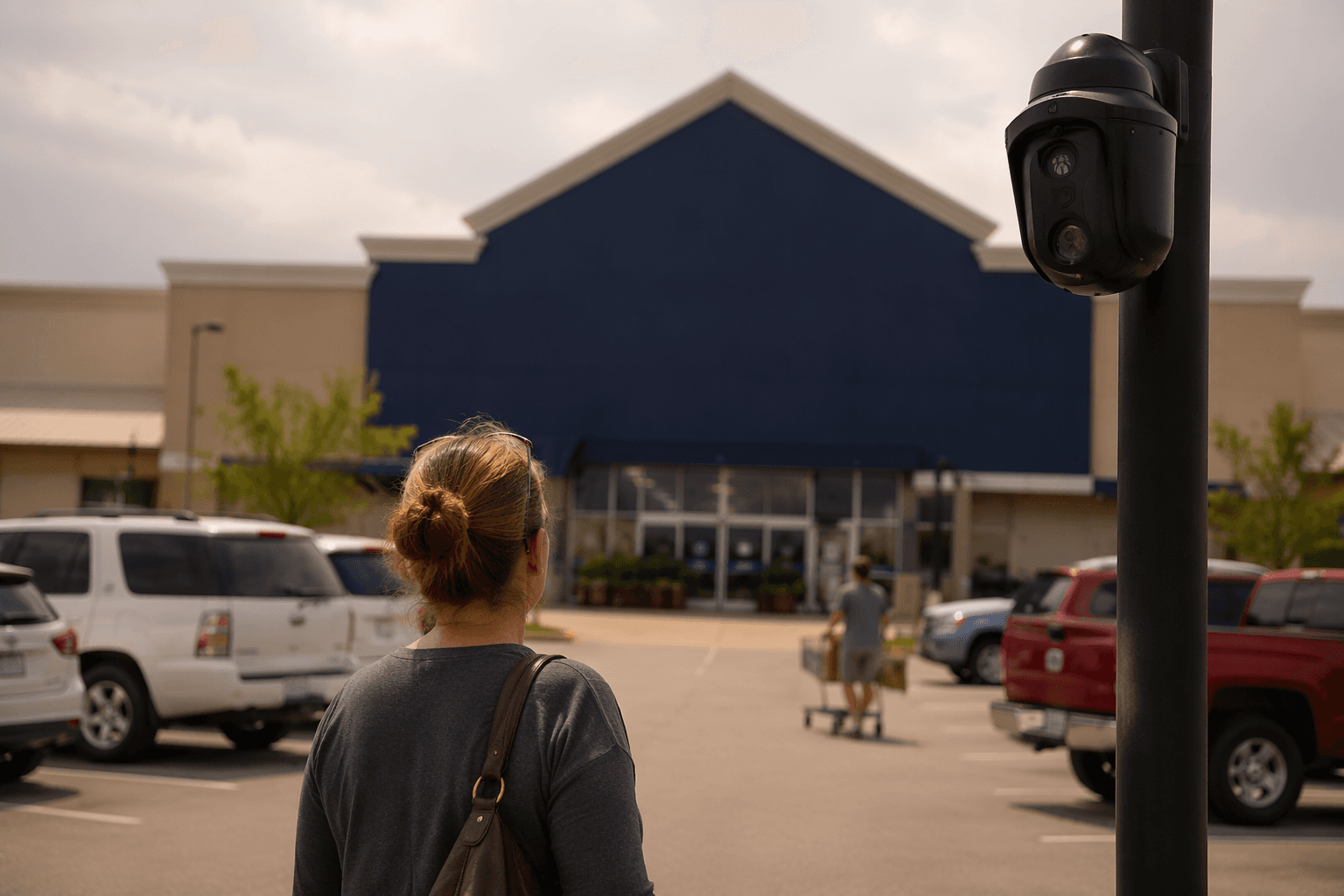
A Lowe’s parking lot on Capital Boulevard in Raleigh is now part of a surveillance network the State Bureau of Investigation has been able to tap since September 2025, widening camera access beyond the roadside readers many drivers expected. The arrangement extends to Lowe’s stores across North Carolina and could also include cameras in South Carolina and Virginia, putting ordinary shopping trips inside a searchable law-enforcement system.
The hardware-store access was not pitched as a simple license-plate reader program. Records show Flock Safety approached the SBI in July 2025 offering access to cameras at hardware stores, and a 2024 presentation prepared for the bureau said the cameras can capture a vehicle’s make, decals, body type and racks. Other reporting based on the same material said officers can use a multi-geo search tool to track a vehicle across multiple incidents without needing a specific plate number.
That matters in Wake County because the SBI’s broader plate-reader pilot is already large and growing. By early April 2026, more than 100 cameras had been installed on state rights-of-way from Raleigh to Ocean Isle Beach, and the system had recorded more than 150 million plate scans, according to an SBI report reviewed by The News & Observer. Thirty-two agencies across North Carolina were in the pilot, including the Raleigh Police Department, the Wake County Sheriff’s Office, Charlotte Mecklenburg Police Department and UNC Charlotte Police Department.
The report also showed that adoption was uneven. Only 17 agencies had their networks up and running by early April, while the Burlington Police Department and Harnett County Sheriff’s Office each had 20 scanner locations, the most among the agencies already operating. The program is overseen by the SBI and the North Carolina Department of Transportation, and local agencies opt in rather than being automatically included.
The legal backdrop has helped turn the issue into a policy fight. Session Law 2023-151 authorized the state-rights-of-way pilot and made it a Class 1 misdemeanor to obtain, access, preserve or disclose ALPR data except as allowed by law. At the same time, some North Carolina towns have pulled back after privacy backlash. In Pittsboro, commissioners voted 4-1 in May 2026 to end the town’s Flock contract and require removal by July 1, 2026.
For Wake County, the tension is now plain: a tool marketed as public safety infrastructure is also creating a dense record of where people drive, park and shop, including at a familiar Lowe’s on Capital Boulevard. The question for local officials is not whether the technology exists, but how much of that data the public is willing to let state investigators reach.
This article was produced by Prism’s automated news system from verified source data, official records, and press releases, then run through automated quality and moderation checks before publishing. The system is built and supervised by the people who set the standards it runs under. Read our full AI policy.
Know something we missed? Have a correction or additional information?
Submit a Tip