State Biologists Monitor Largest Bat Roost Under Wake County Stormwater System
North Carolina Wildlife Resources Commission biologists are monitoring the largest known roost of Southeastern myotis bats inside a Wake County underground stormwater system, amid concern the colony could be exposed to the fungus that causes white nose syndrome. The discovery matters to local residents because shifts in bat populations affect insect control, local ecology, and how city maintenance crews handle stormwater infrastructure.
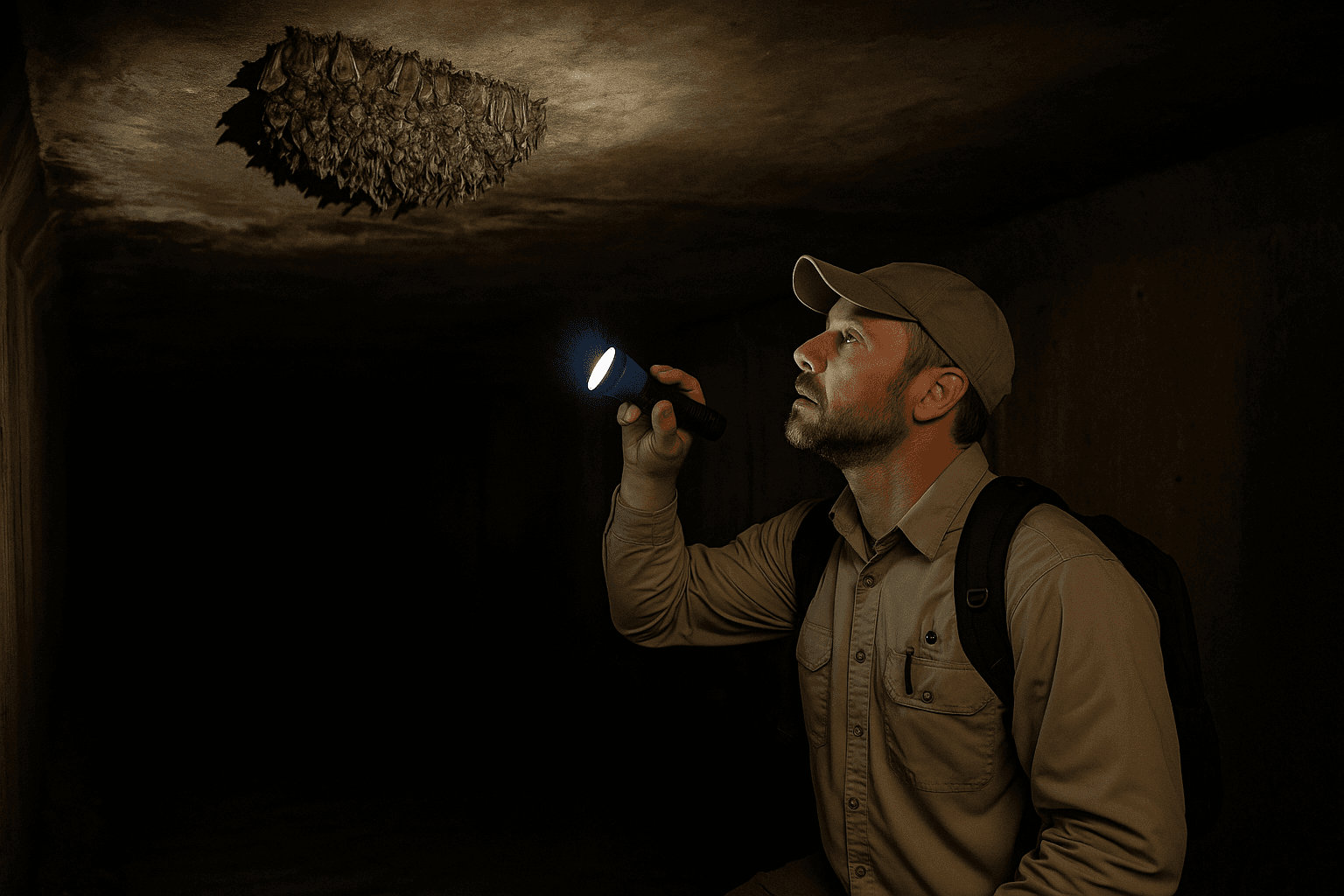
The North Carolina Wildlife Resources Commission is monitoring what it describes as the largest roost of Southeastern myotis bats found in an underground stormwater system in Wake County, a site first discovered by a city stormwater maintenance crew in the fall of 2024. Commission biologists have been tracking the site because some bats in the region have tested positive for the fungus Pseudogymnoascus destructans, known to cause white nose syndrome, a disease that has killed millions of bats across North America since 2006.
Commission surveys show the number of bats using stormwater systems in this area varies seasonally, dropping to about 125 in winter and rising to roughly 1,000 during the late spring maternity season. In September biologists placed radio transmitters on both male and female bats from the Wake County roost to locate other nearby colonies. The females remained at the stormwater site, while one male was tracked moving to another smaller Southeastern myotis colony where tricolored bats tested positive for Pd. It remains unclear whether the male contracted the fungus during movements between sites. WRAL has reached out to the commission for comment and is awaiting a response.
White nose syndrome is one of several pressures contributing to dramatic declines in bat populations, alongside pesticides, persecution, and disturbance of hibernation and maternity sites. According to the commission, as of early 2020 the disease had been recorded in 34 U.S. states and seven Canadian provinces, and several North Carolina species are now listed as threatened or of conservation concern.
For Wake County residents the situation highlights practical concerns for public works and for neighborhoods near stormwater infrastructure. Bats provide important natural insect control that benefits gardens, yards, and agriculture, and sudden declines in local bat numbers could increase insect pressures. City crews and residents are advised to avoid disturbing known roost sites and to follow guidance from the NCWRC on handling stormwater structures and reporting bat observations. The commission website offers additional information on bat populations and ongoing efforts to monitor and mitigate white nose syndrome in the state.
This article was produced by Prism’s automated news system from verified source data, official records, and press releases, then run through automated quality and moderation checks before publishing. The system is built and supervised by the people who set the standards it runs under. Read our full AI policy.
Did this article answer your question?