Statewide Energy Saver NC Program Expands Into Wake County This Month
Wake County is now included in Energy Saver NC, giving households access to up to $16,000 or $14,000 in federal rebates for insulation, heat pumps, electric stoves and other upgrades.

Wake County homeowners and renters can now apply for Energy Saver NC rebates that offer up to $16,000 under the HOMES track or up to $14,000 under the HEAR track to cut monthly utility bills and pay for upgrades such as insulation, air sealing, heat pumps and electric stoves. The North Carolina Department of Environmental Quality expanded the program into Wake County this month, making both rebate types available statewide.
A DEQ press release dated Feb. 10, 2026, says the program has been rolled out to all 100 North Carolina counties after adding Wake and Mecklenburg as the last two counties. DEQ describes the available funding as “more than $200 million” from two U.S. Department of Energy rebate programs; a Wakeweekly report cited a $208 million federal allocation. DEQ also said North Carolina is the first state to fully launch both rebate types at the same time.
The two rebate tracks are Homeowners Managing Efficiency Savings, or HOMES, which provides eligible households up to $16,000 for measures that reduce overall energy use such as air sealing and energy-efficient HVAC units, and Home Electrification and Appliance Rebates, or HEAR, which provides up to $14,000 for high-efficiency electrical appliances including heat pump water heaters and electric stoves. DEQ materials and local reporting list electrical panel improvements, new appliances, heat pumps and improved insulation among qualifying measures.

Early program metrics show substantial local interest: DEQ reported more than 4,800 applications received statewide, with more than 1,700 applications approved and working through the rebate reservation process, and initial estimates of $777,000 in rebate-eligible projects installed across 51 households since launch. DEQ Secretary Reid Wilson framed the county rollout as a household and air-quality benefit: “Energy Saver NC will help Wake Co. families who need it most save money on utility bills, make their homes healthier and more comfortable, reduce pollution emissions, and improve our air quality,” DEQ Secretary Reid Wilson said. Governor Josh Stein added, “This vital program will improve North Carolinians’ lives on a daily basis, from efficient new electric appliances to installation of new heating and cooling systems.”
The program is explicitly income-based and open to renters and multifamily building owners, with renters required to obtain landlord approval before participating. Community advocate Meech Carter of the N.C. League of Conservation Voters cited high COVID-era heating costs as part of the program’s urgency, saying, “That bill was from a woman who got an oversized heating unit during COVID because that's all there was,” in reference to a $960 electricity bill she encountered in Edgecombe County.
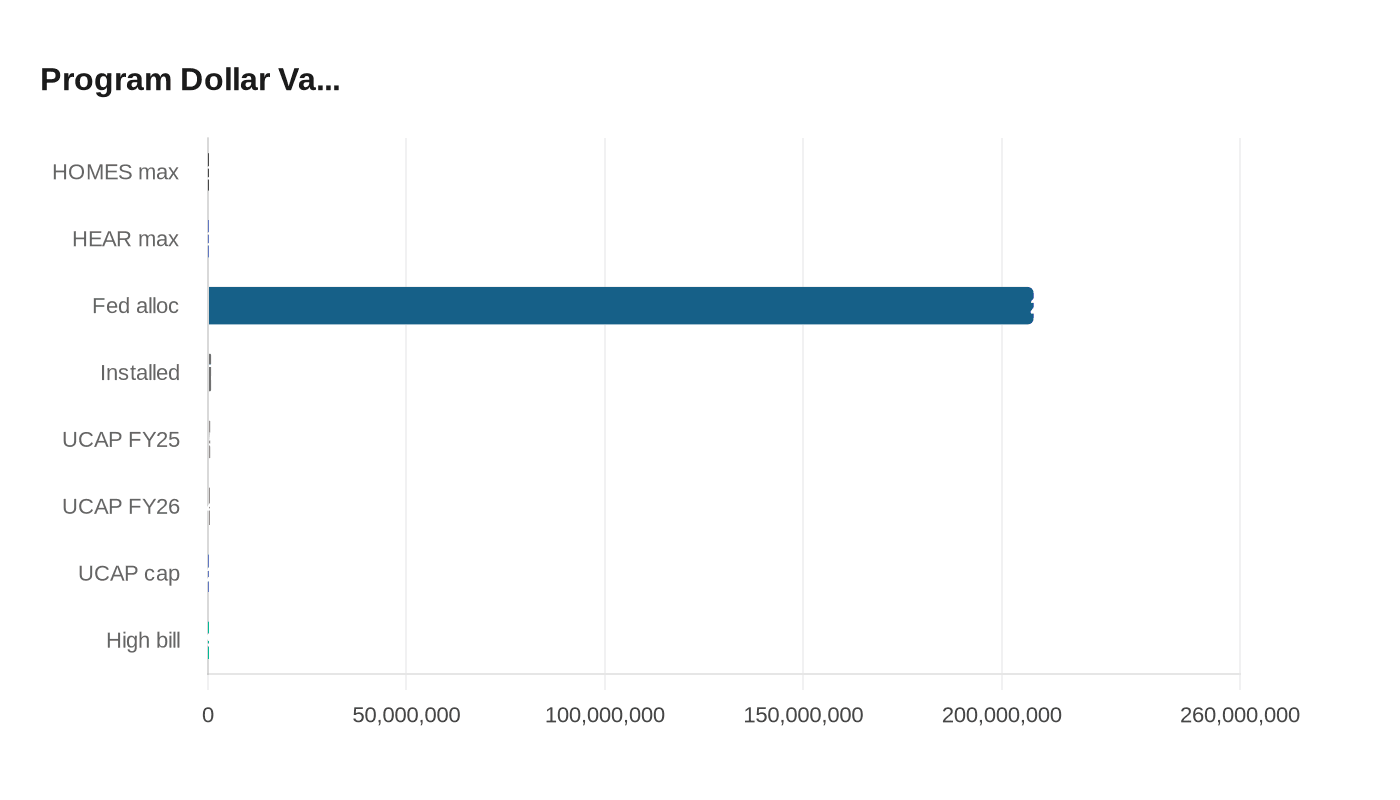
Wake County officials point to Energy Saver NC as a complement to existing local assistance. The City of Raleigh’s Utility Customer Assistance Program, administered with Wake County Human Services, offers eligible utility customers up to $275 per fiscal year and maintains a history of UCAP assistance totals, including $583,565.97 in FY2025 and $450,150.33 in FY2026. Wake County Public Health now operates from 200 Swinburne St., Raleigh, NC 27610 for residents seeking in-person support or referrals.
DEQ says residents can check eligibility and apply for rebates through the Energy Saver NC process; the program continues to accept and approve applications daily. With state officials noting both the program’s rapid uptake and the stress recent ice and cold events placed on regional power grids, DEQ and local partners expect the Wake County expansion to accelerate installations that lower bills and reduce peak electricity demand this year.
This article was produced by Prism’s automated news system from verified source data, official records, and press releases, then run through automated quality and moderation checks before publishing. The system is built and supervised by the people who set the standards it runs under. Read our full AI policy.
Did this article answer your question?