Thriftmas Boosts Downtown Raleigh Stores, Cuts Holiday Waste
In the weeks leading up to Christmas, downtown Raleigh vintage and thrift shops saw a noticeable surge in shoppers as the season of "Thriftmas" pushed demand for used jewelry, vintage apparel and collegiate gear including NC State merchandise. The trend matters locally because it channels consumer spending into small businesses, reduces textile waste and lowers emissions associated with new clothing production.
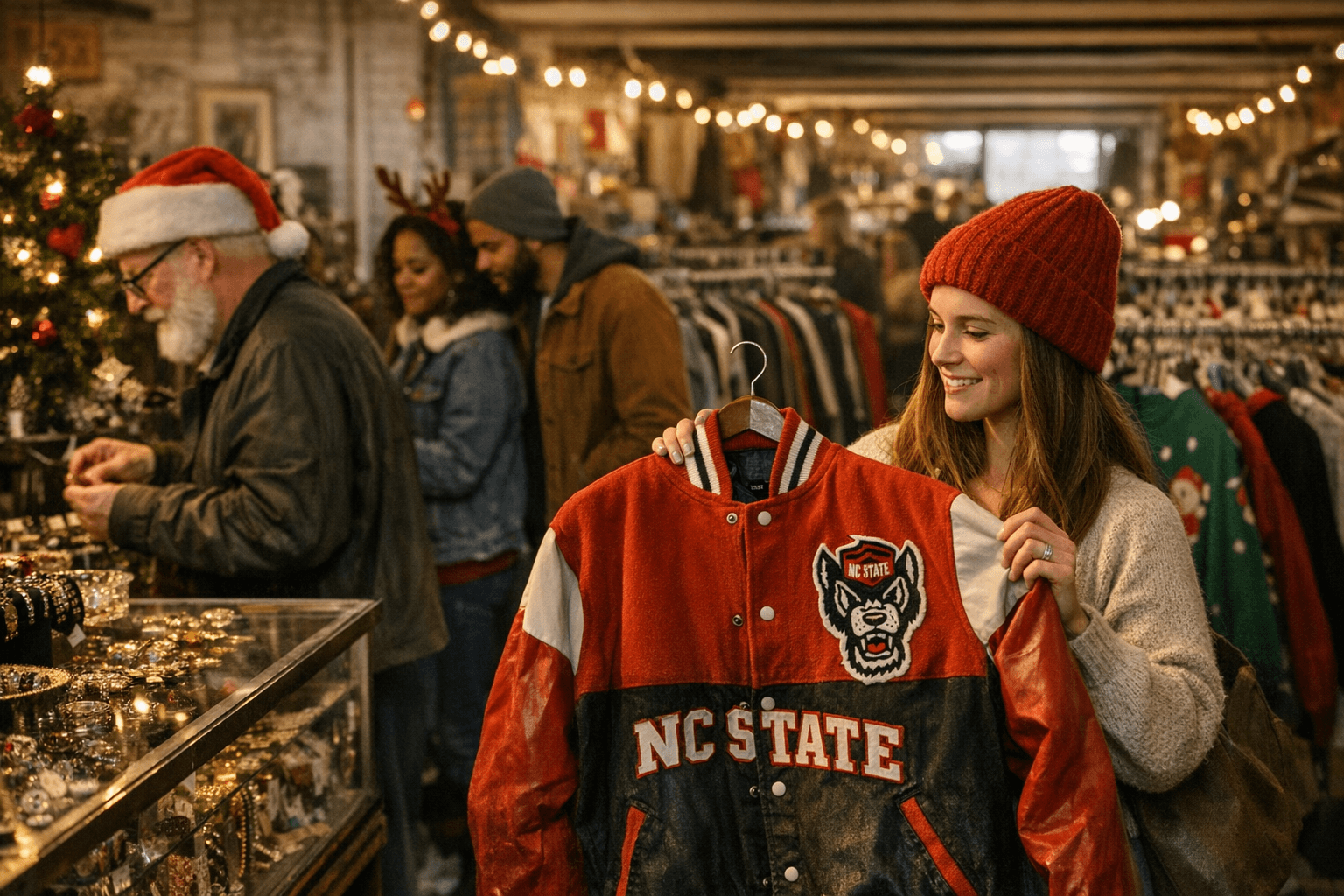
Last week, downtown Raleigh vintage and thrift stores experienced an uptick in secondhand shopping that staff and owners described as brisk and sustained through the last-minute gift buying period. Store floors that typically slow in late December instead reported steady foot traffic, with particular pressure on racks of vintage apparel, cases of costume and fine jewelry, and shelves stocked with collegiate gear that buyers favored for local gifting.
The local spike in demand reflects two parallel forces. First, shoppers seeking affordability and distinctive gifts pushed traffic into small independent shops rather than big box retailers. Owners noted that buyers increasingly value items that feel meaningful and unique when purchased under time pressure. Second, consumers are responding to sustainability considerations. Buying used textiles reduces the flow of garments into waste streams and avoids emissions tied to creating new pieces, a point that resonated with shoppers who said environmental impact informed their choices.
Market implications for Wake County are tangible. Increased sales in downtown thrift and vintage stores translate directly into revenue for local entrepreneurs, and higher inventory turnover can improve cash flow for small retailers at a critical time of year. The popularity of collegiate items, especially NC State branded apparel, also underscores a persistent local niche that supports predictable seasonal demand. Retailers may need to adjust sourcing and staffing plans in early December to capture this business in future years.
From a policy perspective, the seasonal surge highlights opportunities for county waste managers and economic development officials to support circular economy practices. Expanding textile collection programs, offering guidance to retailers on inventory management, and promoting thrift shopping as a municipal sustainability goal could amplify both environmental and economic gains. Long term, continued growth in the resale market could ease pressure on municipal solid waste systems while reshaping downtown retail patterns.
For residents, the Thriftmas season shows how modest changes in holiday shopping can keep dollars in the local economy and cut textile waste at the same time. As retailers and policymakers digest this seasonal behavior, the choices made by shoppers in Wake County during this holiday week may influence how the market and local programs adapt in the year ahead.
This article was produced by Prism’s automated news system from verified source data, official records, and press releases, then run through automated quality and moderation checks before publishing. The system is built and supervised by the people who set the standards it runs under. Read our full AI policy.
Did this article answer your question?

