Wake County Advances Bus Rapid Transit Network Across Four Corridors
Wake County and the City of Raleigh are expanding Bus Rapid Transit (BRT) service across four major corridors to deliver faster, higher-capacity bus service linking downtown Raleigh with Cary, eastern and southern neighborhoods, and northern suburbs. The changes aim to cut travel times, improve reliability and accessibility, and will affect commutes, local businesses and trip planning for residents.
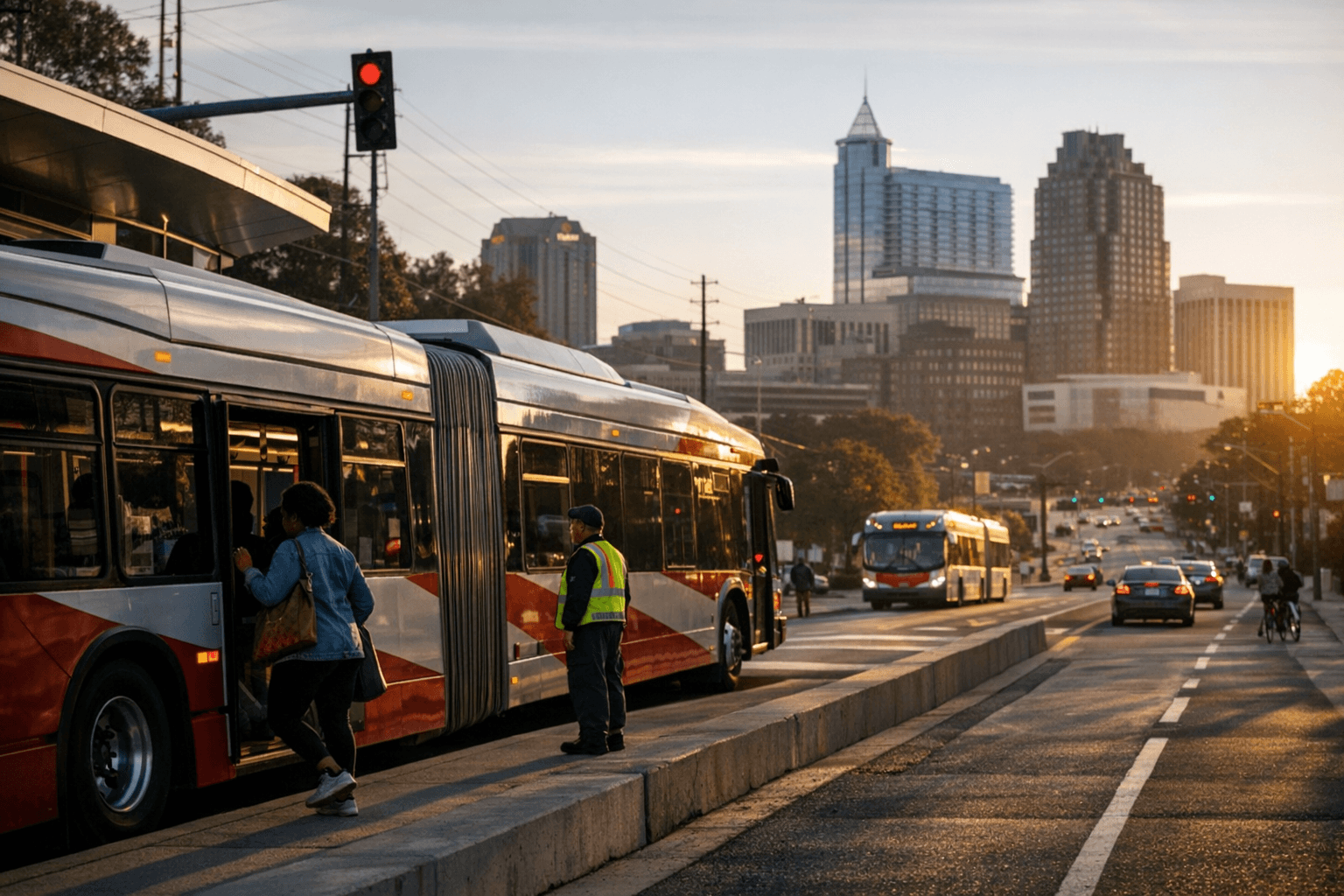
Wake County and the City of Raleigh are in the process of building out a Bus Rapid Transit network designed to provide faster, more reliable bus service along four primary corridors. The BRT program emphasizes features such as dedicated lanes where feasible, transit signal priority, level boarding platforms, off-board fare payment and higher-frequency service to move more people efficiently across the region.
The Western Corridor will connect downtown Raleigh to downtown Cary across roughly 12 miles, using a planned mix of dedicated lanes and some mixed-traffic segments to balance speed with street design constraints. The New Bern Avenue Corridor is a major downtown-to-east route that incorporates dedicated street improvements and aligns with ongoing Wake Transit investments. The Southern Corridor targets fast-growing southwest and south Wake neighborhoods, while the Northern Corridor focuses on linking northern suburbs to employment centers.
For residents, the practical effects include shorter boarding times at BRT stations when level platforms and off-board payment are in place, and generally more consistent arrival times thanks to transit priority features. Riders should plan trips by checking route maps and station locations in advance; GoRaleigh and GoCary transit maps provide schedules and real-time arrival information that will reflect BRT routing as service phases begin. Accessibility is a stated priority: stations and vehicles are being planned to meet ADA standards to improve access for people with mobility needs.
Construction and street improvements are likely to affect local traffic patterns and business fronts at different stages. The city’s BRT project pages list construction timelines, public meeting schedules and small-business mitigation resources for those seeking details on how a particular corridor segment will be managed. Anticipate localized lane changes, temporary detours and work zones as projects move from design into construction.
Wake County’s BRT expansion reflects a broader trend among mid-sized American metro areas that are investing in bus-based rapid transit to increase capacity without the higher cost of rail. For Wake County residents, the promise is not only faster commutes between downtown Raleigh and Cary or the suburbs but also improved transit access for employment, education and services across the county. Check GoRaleigh and GoCary for up-to-date maps and schedules and visit the City of Raleigh BRT project pages for technical details, timelines and community meeting information.
This article was produced by Prism’s automated news system from verified source data, official records, and press releases, then run through automated quality and moderation checks before publishing. The system is built and supervised by the people who set the standards it runs under. Read our full AI policy.
Did this article answer your question?