Wake County chronic absenteeism stays high, especially for Black and Hispanic students
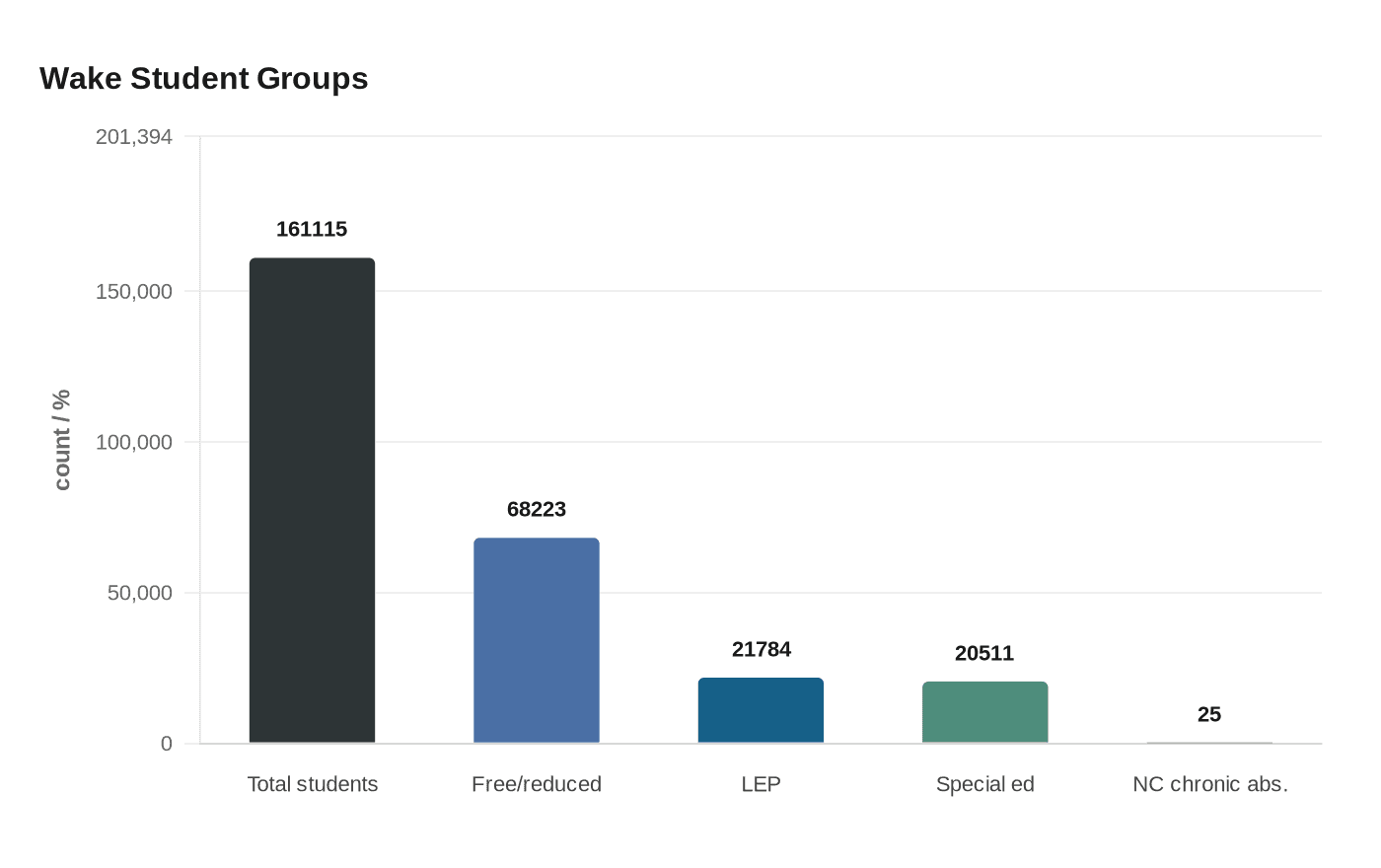
Wake County's absenteeism gap is widest for Black, Hispanic, LEP and special education students in a district serving 161,115 children.

Chronic absenteeism is still leaving too many Wake County students behind, and the burden is falling hardest on Black, Hispanic, Limited English Proficiency and special education students in a district that serves 161,115 children across 203 schools.
Wake County Public School System says missing just two days a month, whether excused or unexcused, adds up to more than two weeks of lost learning each year. Under district guidance, schools contact families after three or more unexcused absences to discuss ways to support regular attendance, a reminder that officials are treating attendance as an academic issue, not just a paperwork issue.
That urgency matters in a system this large. Wake County Public School System reported 68,223 students eligible for free and reduced-price lunch, 21,784 students identified as Limited English Proficiency, and 20,511 students receiving special education services. Those are the same student groups that attendance experts say are most likely to face chronic absence when poverty, language barriers, disability-related needs and other obstacles interrupt the school day.
The district’s attendance policy is blunt: attendance in school and participation in class are integral to academic achievement, and regular attendance by every student is mandatory. That mirrors the broader research behind the issue. Chronic absence means missing 10% or more of school days for any reason, including excused absences and suspensions. Attendance Works says chronic absence can make it harder for children to learn to read by third grade and raises the risk of weaker middle school performance and lower high school graduation outcomes.
The statewide picture remains troubling as well. North Carolina’s chronic absenteeism rate was 25% in the 2023-24 school year, and national rates are still above pre-pandemic levels. Attendance Works also says children living in poverty are two to three times more likely to be chronically absent, and students of color and students with disabilities are disproportionately affected.
Wake County Public School System says it is responding through family engagement, early intervention and policy reviews, with updated attendance resources and reminders for parents to contact teachers or counselors when attendance problems start. Superintendent Dr. Robert P. Taylor and the Wake County Board of Education have both framed attendance as part of the district’s broader push for student success and continuous improvement. The question now is whether those efforts can close the gap fast enough for the students already paying the highest price in lost class time.
This article was produced by Prism’s automated news system from verified source data, official records, and press releases, then run through automated quality and moderation checks before publishing. The system is built and supervised by the people who set the standards it runs under. Read our full AI policy.
Did this article answer your question?