Wake County Drivers Warned: Circulating Text About Traffic Fines Is a Scam
A scam text targeting Wake County drivers names a phony judge "Michael Rodriguez" and threatens court. The NC court system says: "This is a scam."

Wake County drivers received a text last week from a judge named Michael Rodriguez ordering them to pay a traffic fine or appear in court at 9 a.m. on March 25. Michael Rodriguez is not a Wake County judge. Neither does a "Paul Lopez" work in the Wake County Clerk of Court's office, as the same message also claimed. The North Carolina court system's response was four words: "This is a scam."
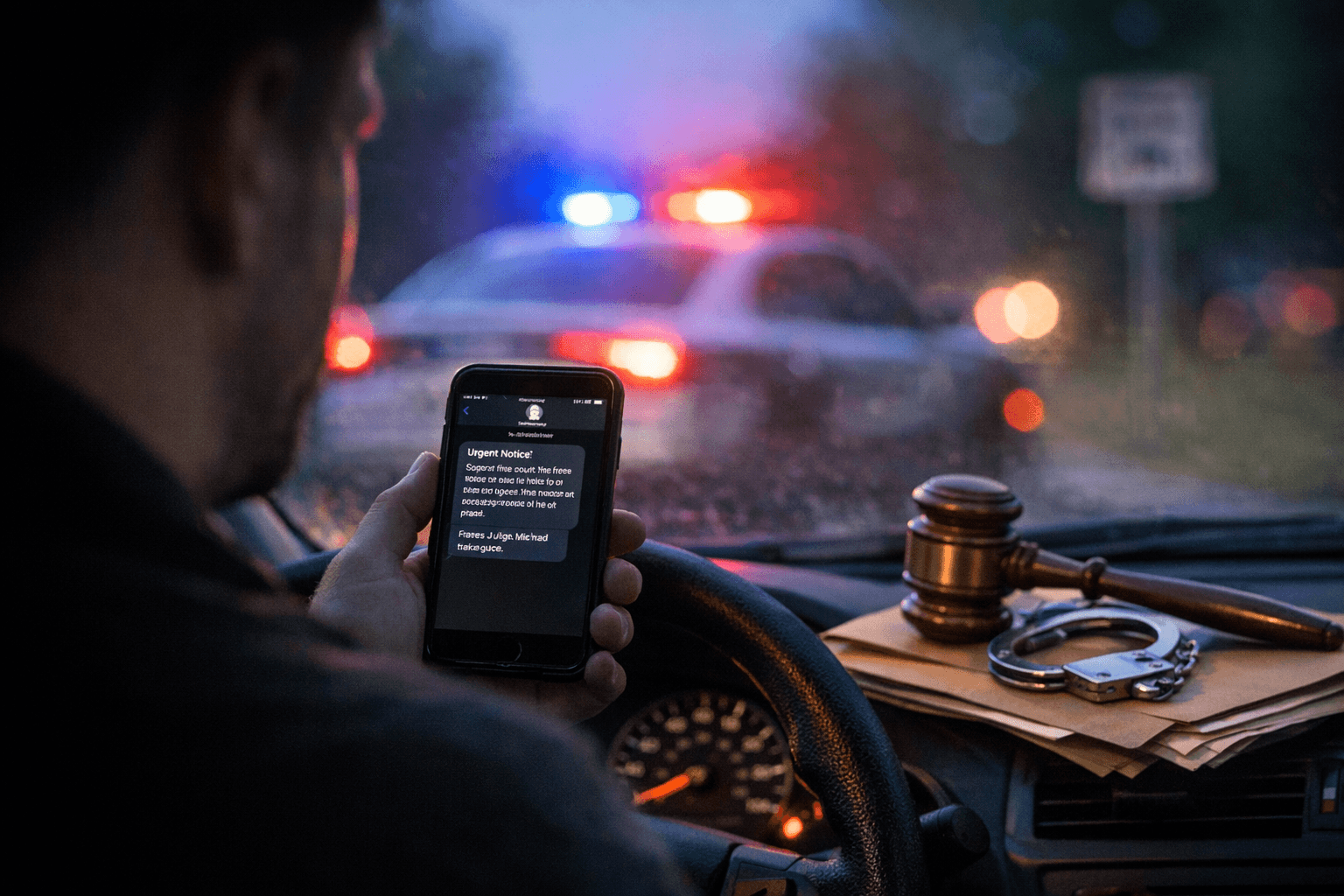
The fraudulent message, which claimed to originate from the Wake County District Court, displayed what appeared to be the North Carolina State seal, in reality a crude graphic replica, alongside a QR code engineered to send recipients to either a payment page or a data-harvesting site. The text issued a "final and urgent warning regarding an outstanding traffic violation" and warned of "legal and administrative consequences" unless the recipient took "immediate action," with the fabricated 9 a.m. March 25 court hearing listed as the deadline.
The North Carolina court system was explicit about what its staff and the Wake County Sheriff's Office will never request by text: Social Security numbers, credit card numbers, money, prepaid debit card numbers, payments by MoneyGram, or any other sensitive financial information. "It is a scam if payment is demanded to satisfy the issue," the advisory stated. Anyone wanting to verify whether they have a legitimate outstanding court matter should contact the clerk of superior court's office through a verified phone number or the court's official website, not through any link or QR code in an unsolicited text.
Anyone who already scanned the QR code or entered information on a linked page should act quickly. Contact your bank or credit card provider immediately to flag potential unauthorized charges, and change passwords for any accounts that may have been compromised. Report the incident to local law enforcement, then file a complaint with the North Carolina Attorney General's Consumer Protection Division. A report to the Federal Trade Commission can be submitted at reportfraud.ftc.gov.
Those reports carry weight beyond any individual case. Every complaint filed with the FTC and the AG's Consumer Protection Division adds to the evidentiary trail Wake County deputies need to trace the campaign's origin and scope. Elderly and less tech-savvy residents face the greatest risk from messages like this one, which pair official-looking graphics with tight deadlines specifically to override skepticism before a single critical question gets asked.
Know something we missed? Have a correction or additional information?
Submit a Tip