Wake County jail overcrowding forces inmates to sleep on floors
Wake County’s jail system was housing nearly 1,400 people in space built for 1,574, forcing some lower-security inmates onto bedding in common areas.
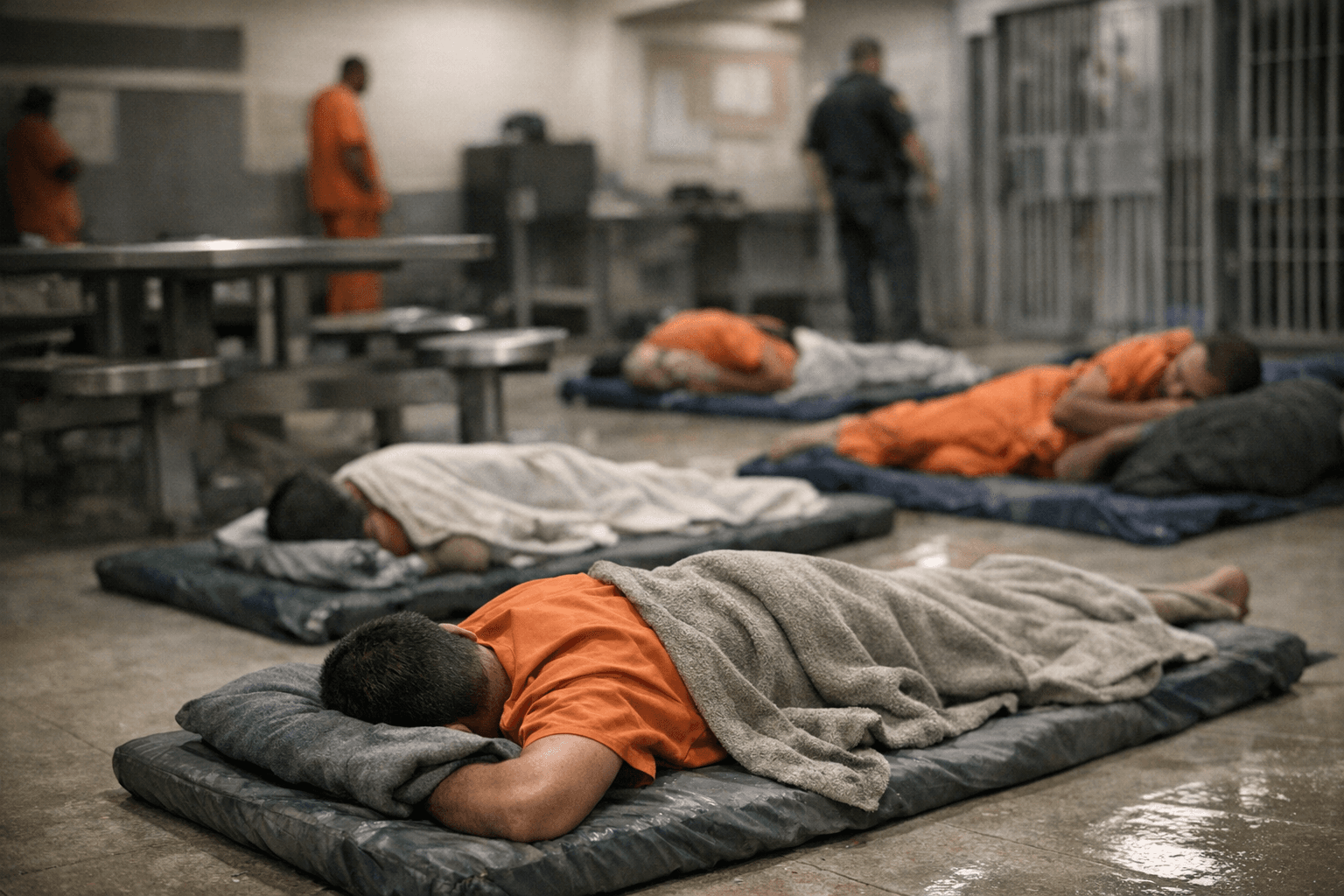
Wake County’s jail system has been pushed so hard that some inmates have been sleeping outside cells on cot-like beds or bedding in common areas, a sign of strain that now affects safety, staffing, court speed and county spending.
In February 2024, Wake County Sheriff’s Office data shown to county commissioners said the two jails were housing just under 1,400 people a day on average, against a combined capacity of 1,574. Since 2020, the average daily population had climbed 47%, while the average length of stay increased 73%, leaving more people stuck in the system for longer periods of time.
Sheriff Willie Rowe has said Wake’s population boom, court backlogs and a rise in higher-level offenders were driving the pressure. He has also argued the county needs more space, more staff and better pay to recruit detention officers. Staffing has been a major obstacle: officials said the sheriff’s office needed at least 123 staff members to operate a reopened detention annex, but the office had 134 vacancies out of 443 positions.
The county has already budgeted about $22 million to renovate the long-closed detention annex, which shut down in 2013 after a prior expansion. Consultants recommended reopening the annex within three years, sooner than originally planned, but the fix will still take time. County leaders have said the state can help now while Wake pursues both short- and long-term solutions, and the Wake County Board of Commissioners was expected to vote on expansion plans.
The overcrowding has also spilled into the courts. In March 2024, Wake County District Attorney Lorrin Freeman and Senior Superior Court Judge Paul Ridgeway launched a jail review hearing aimed at moving eligible inmates through the system faster. At that point, reports said the jail was 95% full and housing at least 1,500 inmates. By then, 80 cases had been reviewed and 40 defendants had been released that year.
Freeman said her office was short on prosecutors, noting she had 44 and needed about 12 more. That shortage, along with the jail’s crowded conditions, slowed the system from the front end to the back end, keeping people in custody longer and adding pressure to already limited space.
The strain has continued into 2025. On April 14, 2025, the North Carolina Department of Health and Human Services and the Wake County Sheriff’s Office launched NC RISE capacity-restoration services at the Wake County Detention Center for defendants found incapable to proceed to trial. The program, which also built on similar efforts in Mecklenburg and Pitt counties, was intended to move cases through court more efficiently while preserving state psychiatric hospital beds for patients who need them.
For Wake County, the overcrowding now stands as a government-capacity crisis with direct public consequences. Until the county adds beds, staff and faster case processing, the pressure inside the jail is likely to keep spilling outward into court delays, taxpayer costs and the daily operation of the justice system.
This article was produced by Prism’s automated news system from verified source data, official records, and press releases, then run through automated quality and moderation checks before publishing. The system is built and supervised by the people who set the standards it runs under. Read our full AI policy.
Did this article answer your question?