Wake County mother thanks Knightdale officer who saved her with CPR
Stephanie Avery walked into Knightdale police headquarters on June 4 and hugged Officer C. Doyle, the officer who helped keep her alive with CPR after she collapsed on May 29.
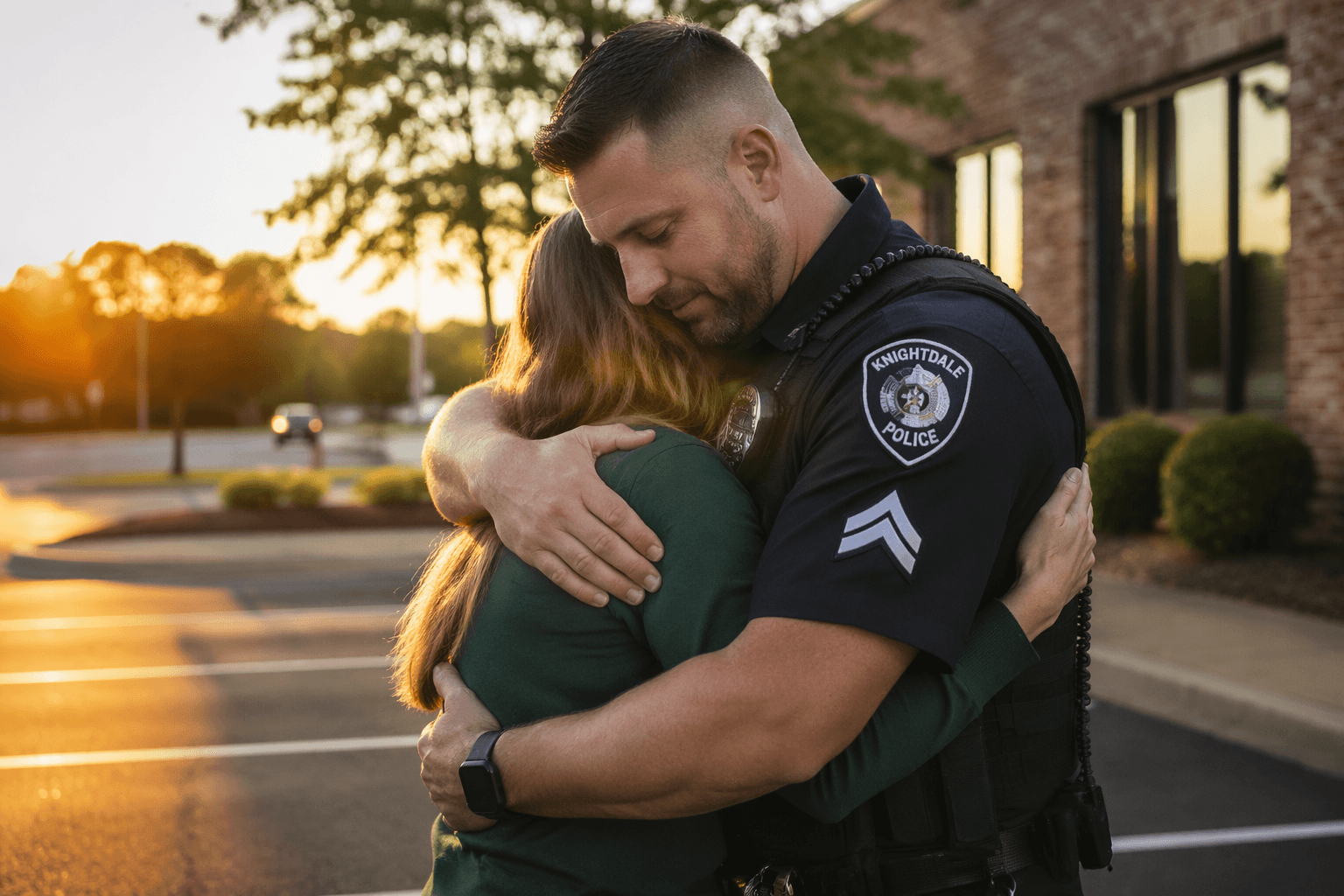
Stephanie Avery returned to Knightdale police headquarters on Wednesday, June 4, healthy enough to walk in under her own power, smile and hug the officer who helped save her life.
The Wake County mother of two had gone into cardiac arrest on May 29, and Knightdale Officer C. Doyle was dispatched to the emergency and immediately started CPR until an ambulance arrived. Avery’s husband and son also helped with CPR before emergency crews took over, a sequence her family said likely helped keep blood flowing during the most critical minutes before hospital care.
Avery, who works as a media specialist for Wake County Public School System, had been in critical condition after she was transported. By the time she came back to the station, the reunion had become something bigger than a thank-you. It was a living example of how fast response, basic training and family action can give someone a second chance.
That matters in Knightdale, where police officers are often among the first public safety workers to reach an emergency before fire or EMS units arrive. The Knightdale Police Department says it has 55 sworn and non-sworn personnel across Patrol, Support Services and Administrative divisions, and that staffing structure helps explain why officers can be first on scene in town emergencies. The department’s non-emergency number is 919-217-2261.
The Avery case also fits the broader reality of cardiac arrest at home. The American Heart Association says 73.4% of out-of-hospital cardiac arrests happen in homes or residences, and bystander CPR can double or triple the chance of survival. The association also says adult EMS-treated non-traumatic out-of-hospital cardiac arrest survival to hospital discharge was 9.1% in 2021, a number that shows how unforgiving these emergencies can be once the heart stops.
AHA research indicates the best outcomes come when CPR starts within the first two minutes, though help can still make a difference up to 10 minutes after collapse. In Avery’s case, that chain of action started with family members, continued with Officer C. Doyle and carried through ambulance transport and hospital care.
For Wake County Public School System, which says it is the largest school district in North Carolina, Avery’s recovery brought a personal victory into a workplace that serves thousands of families every day. For Knightdale, it was a reminder that CPR training is not abstract policy. It can be the difference between a tragedy and a reunion.
This article was produced by Prism’s automated news system from verified source data, official records, and press releases, then run through automated quality and moderation checks before publishing. The system is built and supervised by the people who set the standards it runs under. Read our full AI policy.
Did this article answer your question?