Wake County Schools Face Educator Pushback Over Proposed Budget Shortfalls
Wake NCAE's Christina Cole led protests at Enloe over a proposed $18M special ed cut that would eliminate 130 teacher positions across the district.
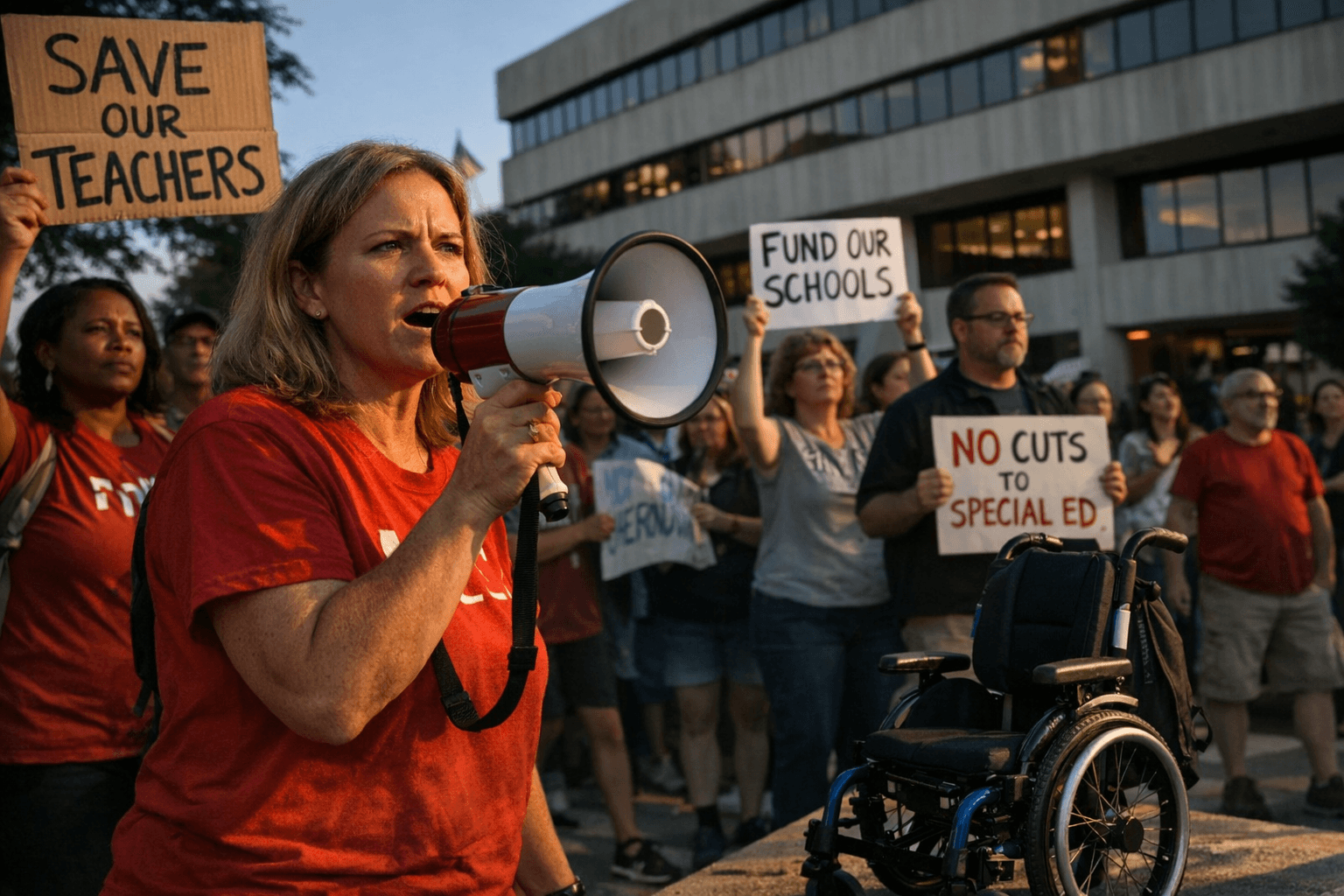
Dozens of Wake County educators gathered before sunrise outside Enloe Magnet High School in Raleigh to protest an $18 million proposed cut to special education that would eliminate 130 teaching positions across the district, a fight that came to a head at the school board's April 7 budget meeting.
The proposed reductions, first disclosed in an internal email from Assistant Superintendent for Special Education Services Lisa Allred, would reshape staffing ratios in one of the district's most resource-intensive programs. Christina Cole, president of the Wake County chapter of the North Carolina Association of Educators and a special education teacher herself, called the situation a crisis that educators identified as their single most urgent priority. "No school administrator should have to tell special education staff they might not have a position next year," Cole said. A second walk-in demonstration ran simultaneously at Fuquay-Varina Elementary at 8:30 a.m.
Jeff Fuss, a social studies teacher at Enloe, was among the protesters. "This does have real implications and real effects on our everyday classroom and not only for our work, but also for our students' education," Fuss said. Parents joined in. Susan Book put it plainly: "You don't cut the budget of your most vulnerable population and expect better results."
WCPSS Chief Business Officer David Neter framed the bind at a previous board meeting: "When costs go up and revenues remain flat, something has to be given up." The district described the 2026-27 budget as "perhaps one of the most challenging budgets to prepare in the past 20 years," driven by growing demand for specialized services and high-cost placements that available funding has failed to keep pace with. Layered on top: the expiration of federal pandemic relief dollars and declining enrollment districtwide.
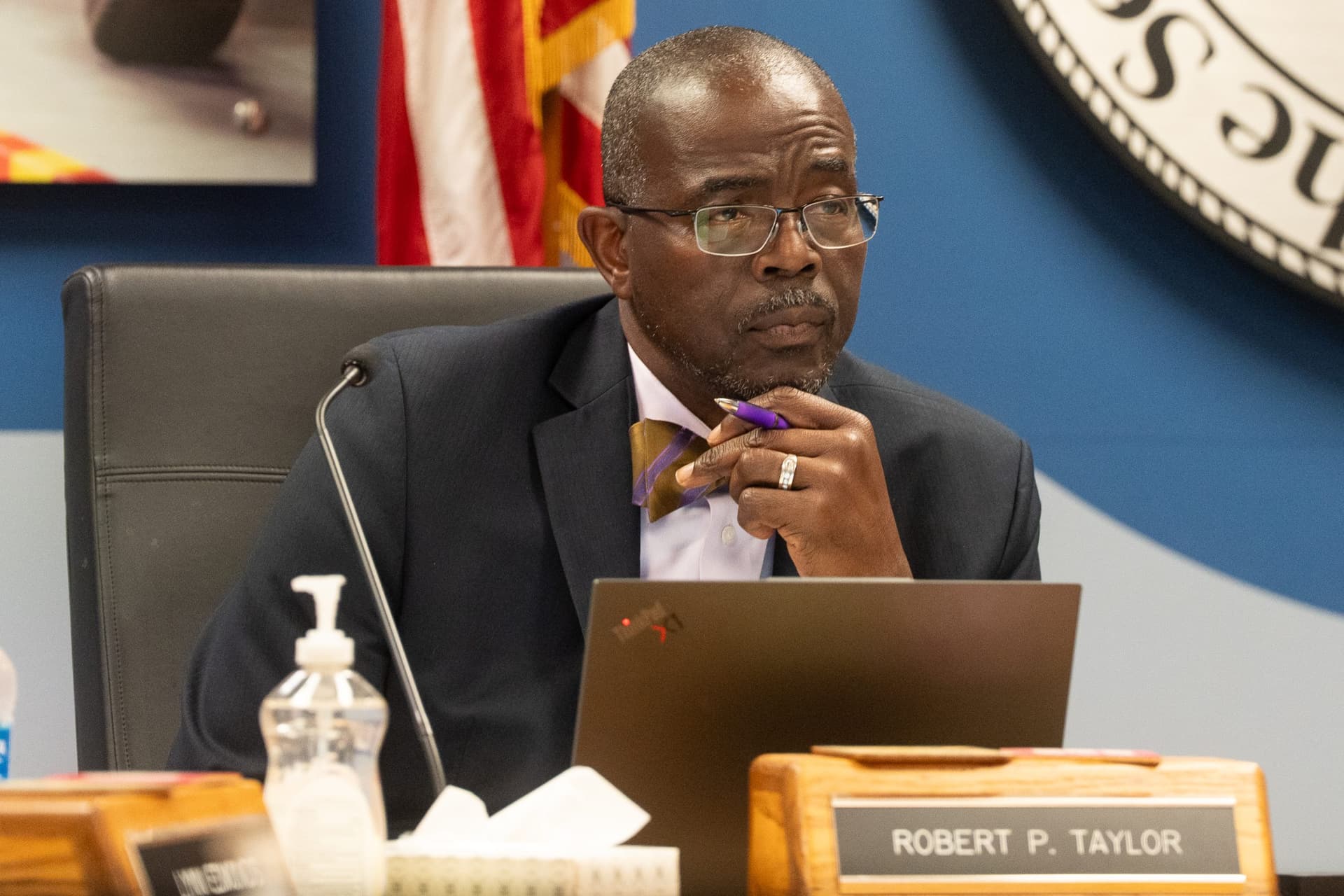
The school board pushed back hard. Chair Tyler Swanson, a former special education teacher at Enloe, said the announcement was "poorly communicated" and declared he was "not in favor of balancing budgets on the backs of our most vulnerable students." Board member Jennifer Job cited American Federation of Teachers guidance recommending caseloads of 12 to 16 students, calling a caseload of 50 "just unreasonable." The board directed Superintendent Robert Taylor to find alternative cuts rather than gut the special education staffing line, and Taylor's full proposed budget was placed before the board for approval at today's meeting.
Taylor has also asked the Wake County Board of Commissioners for an additional $25 million in local property tax revenue to help close the gap. Cole, meanwhile, has turned her sights toward the state legislature, calling for "increased per-pupil spending" and what she described as "clear demands from the state that puts kids first." With more than 160,000 students enrolled in North Carolina's largest school district, how Wake County resolves this shortfall will carry consequences well beyond any single classroom.
Here is the formatted output:
SUMMARY: Wake NCAE's Christina Cole led protests at Enloe over a proposed $18M special ed cut that would eliminate 130 teacher positions across the district.
CONTENT:
Dozens of Wake County educators gathered before sunrise outside Enloe Magnet High School in Raleigh to protest an $18 million proposed cut to special education that would eliminate 130 teaching positions across the district, a fight that came to a head at the school board's April 7 budget meeting.
The proposed reductions, first disclosed in an internal email from Assistant Superintendent for Special Education Services Lisa Allred, would reshape staffing ratios in one of the district's most resource-intensive programs. Christina Cole, president of the Wake County chapter of the North Carolina Association of Educators and a special education teacher herself, called the situation a crisis that educators identified as their single most urgent priority. "No school administrator should have to tell special education staff they might not have a position next year," Cole said. A second walk-in demonstration ran simultaneously at Fuquay-Varina Elementary at 8:30 a.m.
Jeff Fuss, a social studies teacher at Enloe, was among the protesters. "This does have real implications and real effects on our everyday classroom and not only for our work, but also for our students' education," Fuss said. Parents joined in. Susan Book put it plainly: "You don't cut the budget of your most vulnerable population and expect better results."
WCPSS Chief Business Officer David Neter framed the bind at a previous board meeting: "When costs go up and revenues remain flat, something has to be given up." The district described the 2026-27 budget as "perhaps one of the most challenging budgets to prepare in the past 20 years," driven by growing demand for specialized services and high-cost placements that available funding has failed to keep pace with. Layered on top: the expiration of federal pandemic relief dollars and declining enrollment districtwide.
The school board pushed back hard. Chair Tyler Swanson, a former special education teacher at Enloe, said the announcement was "poorly communicated" and declared he was "not in favor of balancing budgets on the backs of our most vulnerable students." Board member Jennifer Job cited American Federation of Teachers guidance recommending caseloads of 12 to 16 students, calling a caseload of 50 "just unreasonable." The board directed Superintendent Robert Taylor to find alternative cuts rather than gut the special education staffing line, and Taylor's full proposed budget was placed before the board for approval at today's meeting.
Taylor has also asked the Wake County Board of Commissioners for an additional $25 million in local property tax revenue to help close the gap. Cole, meanwhile, has turned her sights toward the state legislature, calling for "increased per-pupil spending" and what she described as "clear demands from the state that puts kids first." With more than 160,000 students enrolled in North Carolina's largest school district, how Wake County resolves this shortfall will carry consequences well beyond any single classroom.
This article was produced by Prism’s automated news system from verified source data, official records, and press releases, then run through automated quality and moderation checks before publishing. The system is built and supervised by the people who set the standards it runs under. Read our full AI policy.
Did this article answer your question?