5G test at Yuma Agricultural Center could boost farm efficiency
A 5G test at the University of Arizona’s Yuma Agricultural Center aimed to speed irrigation decisions and cut waste across local fields.
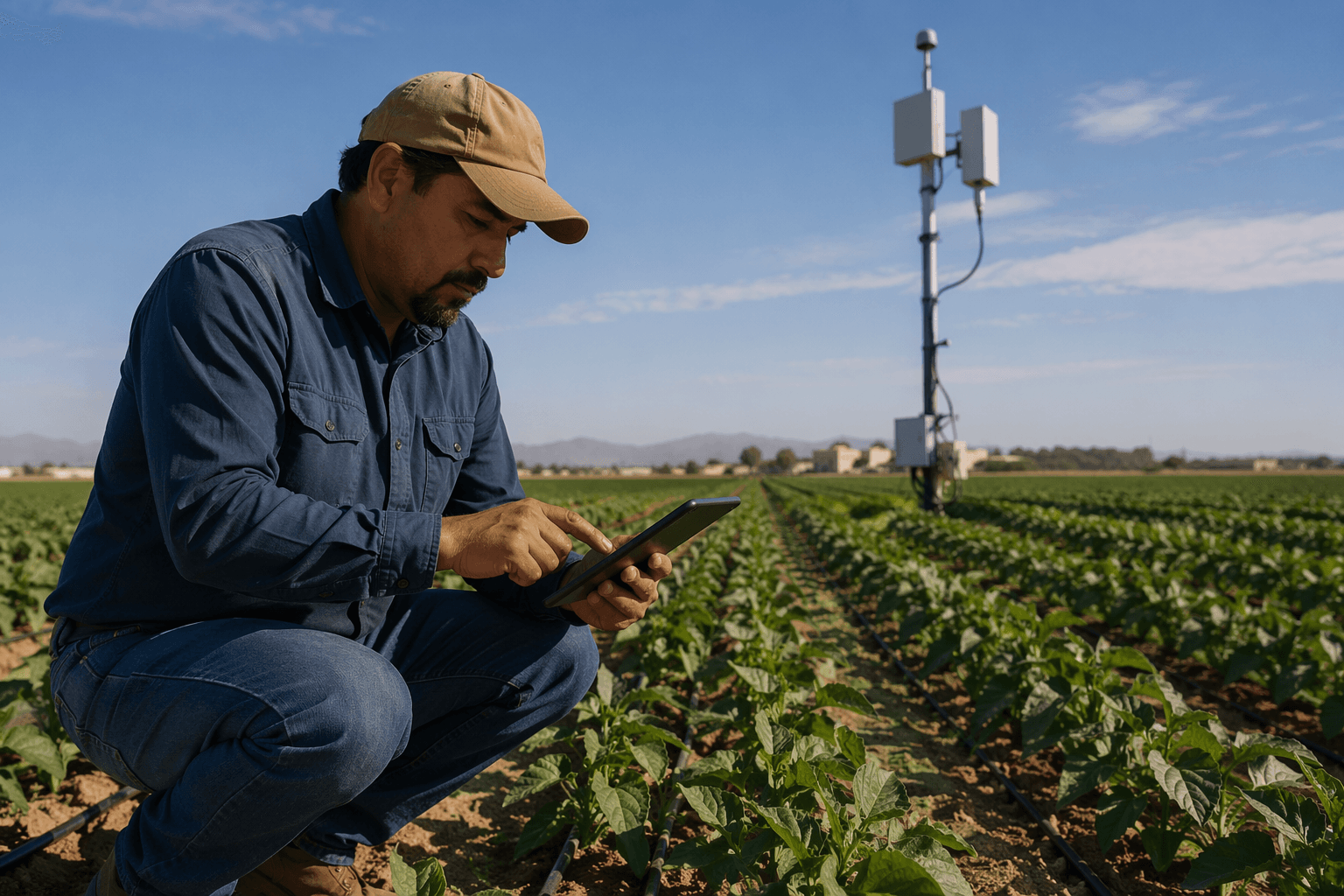
Researchers at the University of Arizona’s Yuma Agricultural Center were testing a 5G network built to help farmers manage crops and water use, a practical trial in a county where every irrigation decision carries real cost. The work was unfolding at a site already tied to desert agriculture, with the goal of moving field data faster and giving growers a quicker read on what is happening in their plots.
The Yuma Agricultural Center operates on two sites, Valley Farm, four miles west of Yuma, and Mesa Farm, four miles south of the city. University materials say the center includes 470 irrigable acres, a 10,500-square-foot greenhouse, 8,800 square feet of shop space and two meeting rooms, and it supports high-value vegetable and citrus industries in the lower Colorado River region. That makes the center a natural place to test whether faster connectivity can translate into faster farm decisions.
The connectivity push is not starting from zero. In September 2024, the Cyber Experiment Station, UITS, the Yuma Center of Excellence for Desert Agriculture and the Sun Corridor Network launched 10GB internet service at the center to provide corner-to-corner in-field wireless internet. Matt Rahr, director of the Cyber Experiment Station, said Yuma had been limited by weak service from big internet providers before the public-private broadband work and that the new network brought “true fiber technology to the farm.”
The local stakes are large. A University of Arizona alumni feature said Yuma County ranks third nationwide in sales of vegetables and melons, while an economic impact study cited in the same feature put Yuma’s agriculture and agribusiness contribution at $4.4 billion to Arizona’s economy in 2022, with $3.9 billion staying in Yuma County. In that setting, a 5G network that lets growers check field conditions without driving back and forth between plots could shorten the time between a sensor reading and an irrigation decision, helping reduce water waste and crop loss.

The 5G test also fit into a broader broadband buildout. In November 2025, Yuma County said its agricultural wireless mesh broadband network would include 34 tower sites across the county’s irrigation districts and support remote sensors, drones, precision irrigation, autonomous equipment, artificial intelligence and real-time data systems. The county said the wider project was funded by a $6 million ARPA grant and was expected to finish ahead of the September 2026 deadline, putting the Yuma Agricultural Center trial inside a much larger push to make connectivity part of daily farm operations.
This article was produced by Prism’s automated news system from verified source data, official records, and press releases, then run through automated quality and moderation checks before publishing. The system is built and supervised by the people who set the standards it runs under. Read our full AI policy.
Did this article answer your question?