Arizona Bill Would Let Nursing Home Residents Install Room Cameras
A 16-1 committee vote is pushing Arizona's SB 1041 toward law, giving nursing home residents the right to install room cameras over facility objections.
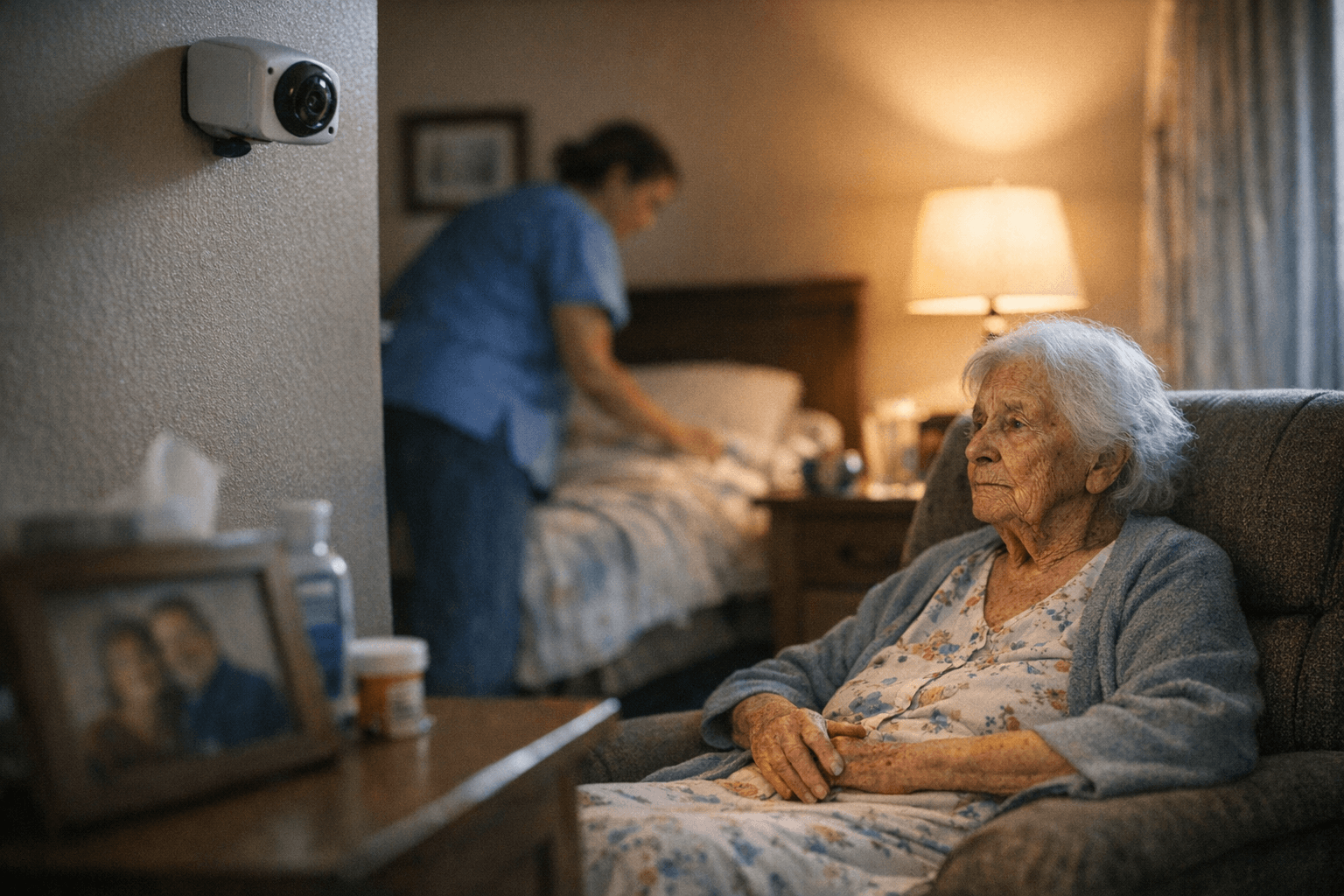
A lopsided 16-1 vote by the House Appropriations Committee advanced Arizona Senate Bill 1041 last week, moving the state closer to guaranteeing nursing home and assisted-living residents the right to install live video cameras in their private rooms, regardless of what any facility's internal policies say.
For Yuma County, where a growing population of elderly residents relies on a network of nursing homes, assisted-living communities, and memory care facilities stretching from central Yuma to San Luis, the bill represents one of the most direct shifts in patient-protection law in years. The question facing local families is no longer abstract: what would a camera actually change, and who controls it?
Under SB 1041, sponsored by Republican Rep. Quang Nguyen of Prescott, any facility would be prohibited from banning cameras outright in a resident's own room, removing a resident who wants one, or retaliating against anyone who consents to monitoring. If a resident lacks the cognitive capacity to decide, the right to authorize a camera passes to whoever holds legal authority, a power of attorney or a court-appointed guardian.
Shared rooms carry their own rules. The bill explicitly gives a roommate the power to veto any camera that would cover a space they also occupy. And if a live feed requires a WiFi or internet connection, the cost and logistics of providing it fall on the resident or family, not the facility.
Nguyen made clear he views the objections from industry lobbyists as revealing. "It captures people who are doing bad things that they shouldn't do," he said. "And it also captures people not doing the things that they also should be doing."
Those lobbyists, representing nursing home and assisted-living operators, testified that cameras could invade the privacy of staff and any other person who happens to enter the room. The committee's bipartisan majority rejected that argument, concluding that a patient's private room deserves the same latitude as a private home.
The measure now moves to the full House for a vote. If approved there, it still heads to the Senate, which has not yet reviewed this version of the bill. Yuma families tracking the bill should watch for any amendments that tighten or loosen the shared-room consent language, clarify who can access recorded footage, and specify how disputes between residents and facilities get resolved.
Families do not have to wait on the Legislature to act. Under current Arizona law, a family can ask a facility to voluntarily permit a camera, though the facility can legally refuse. Unannounced in-person visits remain among the most effective tools available and facilities are required to allow them during reasonable hours. Complaints about care quality can be filed with the Arizona Department of Health Services or routed through the state's Long-Term Care Ombudsman program, which operates through Area Agencies on Aging across the state. For residents whose care is funded through Medicaid or other public sources, Adult Protective Services can investigate reports of abuse, neglect, or exploitation. Those reports can be submitted online through the Arizona Department of Economic Security at any hour of the day.
This article was produced by Prism’s automated news system from verified source data, official records, and press releases, then run through automated quality and moderation checks before publishing. The system is built and supervised by the people who set the standards it runs under. Read our full AI policy.
Did this article answer your question?