Castle Dome City preserves Yuma County's steamboat and mining history
Castle Dome City shows how river traffic and mining built Yuma County, and the salvaged ghost town still maps the region’s desert crossroads.

Castle Dome City matters now because it still explains how Yuma County was built: by river transport, mining money and the hard logistics of moving people and goods through the desert. The site ties together the Colorado River port system, the mining district in the Castle Dome Mountains and the settlement pattern that made Yuma a strategic crossroads.
A river port that helped shape the county
Yuma County’s own history places Castle Dome among the Colorado River ports served by steamboats from the 1850s through the 1870s, alongside Yuma, Laguna and other landings. Those boats carried passengers and goods to mines and military outposts, turning the river into the region’s main supply line long before highways cut across the desert.
Castle Dome Landing sat inside that system as both a shipping point and a supply depot for the mines in the nearby Castle Dome Mountains. One local historical record says it was the first stop for steamboats heading up the Colorado River, which helps explain why a place that now feels remote once sat inside the working center of the frontier economy. The landing even had its own post office, established on December 17, 1875 and discontinued on June 16, 1884.
The broader military and transportation network mattered too. From 1864, the Yuma Quartermaster Depot supplied all forts in present-day Arizona and large parts of Colorado and New Mexico, reinforcing how river shipping, government supply and private mining operated together. Castle Dome was not an isolated curiosity at the edge of Yuma County. It was part of the logistics that made settlement possible.
What survived at Castle Dome City
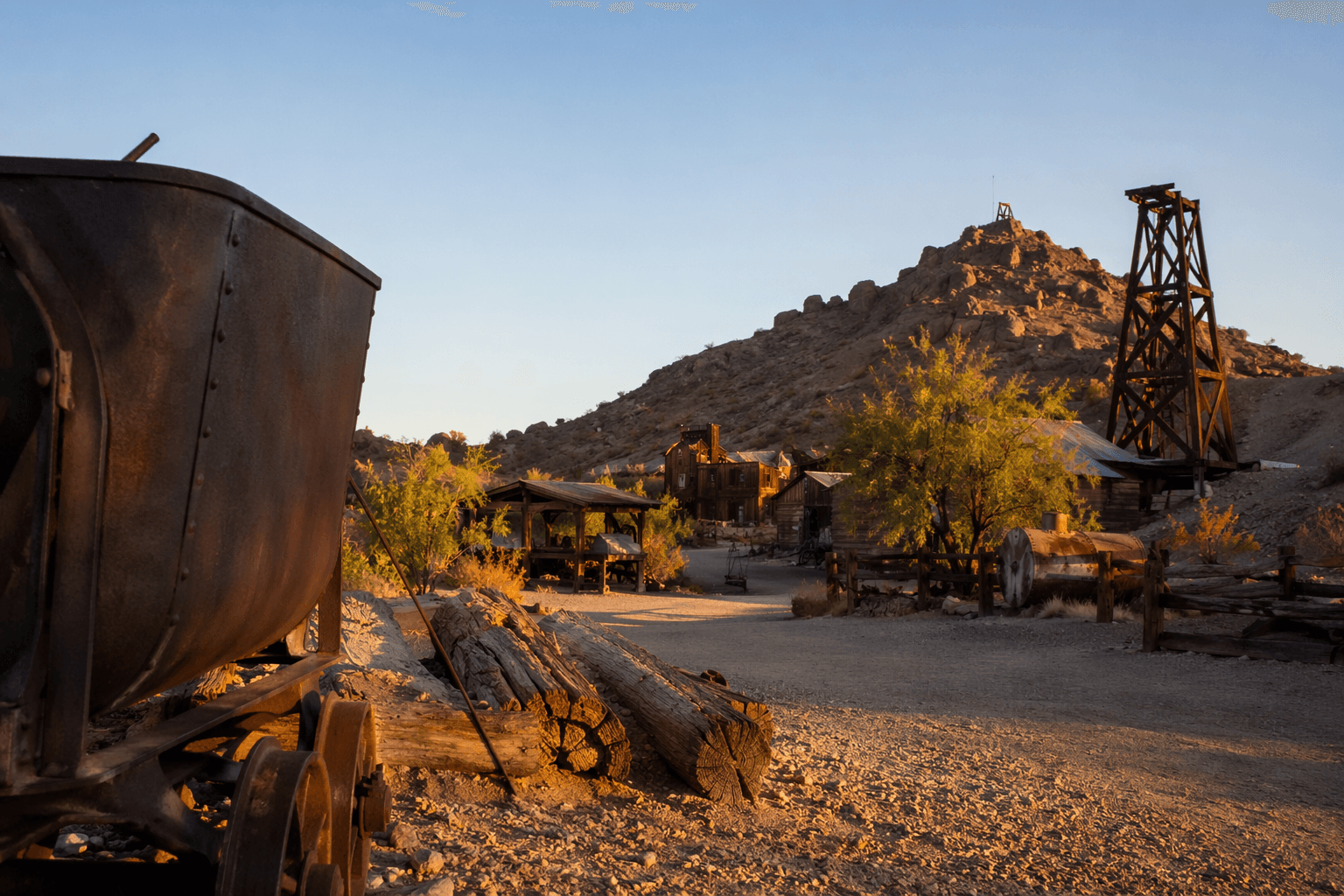
Castle Dome City today is built around more than 60 buildings salvaged from the desert and arranged into themed areas. The museum property includes sections that evoke the 1950s and the 1970s, along with paths that lead to the cemetery, the first cabin, the doctor’s office and the post office. That layout gives the site a layered feel, with mining history, later desert life and community infrastructure all placed within the same walkable landscape.
The Castle Dome Museum says the town was active from the 1860s through 1979 and describes it as Arizona’s longest active mining area. That span matters because it stretches Castle Dome beyond the standard boomtown story. It was not a short-lived strike-and-abandon camp, but a long-running industrial landscape that kept working through multiple eras of mining and desert development.
A Library of Congress caption describes Castle Dome City as the boomtown around the Castle Dome mining district above silver and later lead mines that thrived near Yuma from the late 19th into the mid-20th centuries. That shift from silver to lead shows how the district adapted as mineral demand changed. It also explains why the site still holds value for understanding the county’s economic history rather than just its frontier folklore.
The people who brought the ghost town back
The modern preservation story began in 1994, when Allen Armstrong and Stephanie Armstrong bought Castle Dome City and started restoring it. Their work turned a fading mining landscape into a place where visitors can see salvage, reconstruction and interpretation all in one stop.
The museum also grounds the site in the labor history of the district. Jacob Snively came to Castle Dome in 1863, and within 15 years the city’s population rivaled nearby Yuma, according to a historical marker record. That same record says the Floral Temple mine became the second patented mine in Arizona in 1871 and that the Castle Dome Mine was patented in 1876. Those dates anchor the site in the formal industrial expansion of Arizona territory, not just the mythology of the Old West.
The collection inside the museum reflects that working history. The property includes artifacts gathered from about 30 mines Allen Armstrong worked in, along with donations from several sources. That gives the site a local, hands-on character: the preserved buildings are not props, but pieces of a broader mining landscape assembled from real structures and real labor history.
How to reach it and why the drive matters
Castle Dome sits between Yuma and Quartzsite off Highway 95. Visitors travel through Yuma Proving Ground land and the Kofa Wildlife Preserve before reaching the museum property, a route that still conveys the isolation that shaped mining camps in southwestern Arizona. The drive is part of the experience because it shows how much empty space had to be crossed to keep the region supplied.
That access pattern also helps explain why Castle Dome remains useful to travelers interested in heritage sites. It is not only a preserved ghost town, but a destination that reveals how Yuma County linked river traffic, military supply and mineral extraction across distance. The site gives visitors a concrete way to understand why Yuma became a strategic desert crossroads rather than just a town at the river’s edge.
For residents, Castle Dome City offers a local history lesson with present-day value. It shows how the county’s economy was built on moving freight, supporting forts, serving mines and stabilizing settlement in one of the driest parts of Arizona. It also shows why preservation matters here: the ghost town keeps visible the machinery of a regional system that still shapes identity, tourism and the way Yuma County tells its own story.
This article was produced by Prism’s automated news system from verified source data, official records, and press releases, then run through automated quality and moderation checks before publishing. The system is built and supervised by the people who set the standards it runs under. Read our full AI policy.
Did this article answer your question?