Church Food Drive Feeds Families, Highlights Local Needs
Gila Mountain United Methodist Church hosted a free drive thru on November 25 and served about 130 meals to roughly 29 families, along with groceries and a fifty dollar gift card to help cover Thanksgiving meal costs. The event provided immediate relief for struggling households and underscores the ongoing role of local institutions and volunteers in addressing food insecurity in Yuma County.
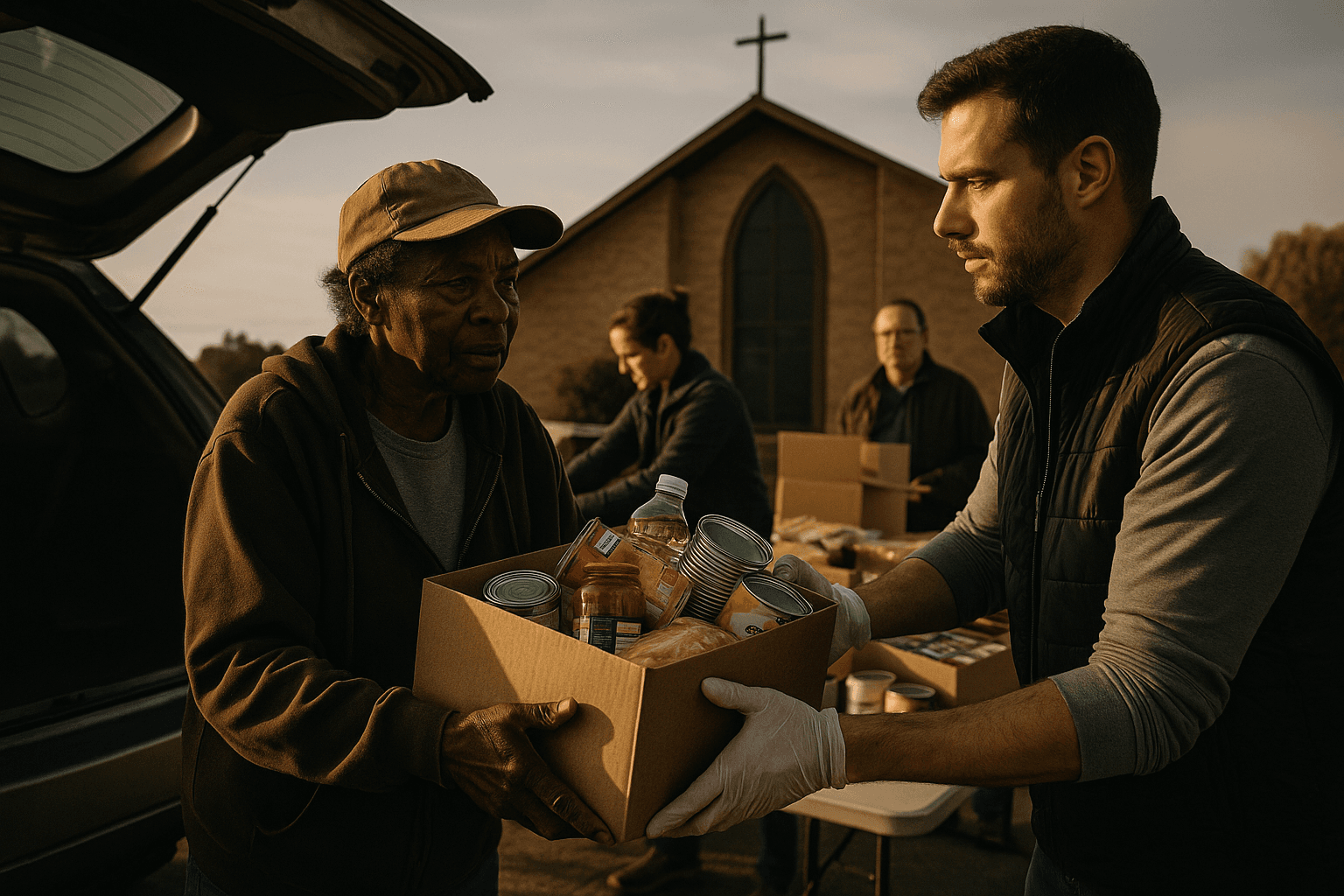
On the evening of November 25, Gila Mountain United Methodist Church opened its Frontage Road lot at 5 p.m. for a community food drive thru that served about 130 meals, supporting roughly 29 families. Along with prepared meals, organizers distributed grocery items and a fifty dollar gift card to each participating household to help cover the cost of holiday groceries. Volunteers and church members coordinated the distribution and urged residents to donate and to sign up to volunteer for future events.
The scale of the distribution, while modest compared with larger regional food bank operations, delivered concentrated support to families facing acute holiday needs. Providing an average of about four to five meals per family, plus a cash equivalent to grocery spending power, the church’s effort temporarily eased budget pressure for recipients at a time when grocery demand and prices typically rise. The gift card component effectively injected purchasing power back into local grocery retailers, helping families buy perishable items that drive regional food sales during the holiday week.
Beyond immediate relief, the event highlights a broader community dynamic in which faith based organizations and volunteers fill critical needs that public programs may not fully address. Local mobilization can be faster and more targeted than larger bureaucratic efforts, but it also depends on volunteer capacity and donations. Organizers encouraged continued community contributions and volunteering to sustain assistance through the winter months.
For Yuma County residents, the distribution is a reminder of both vulnerability and resilience. Short term interventions like the November 25 drive thru reduce food hardship for dozens of households, but sustaining that support would benefit from coordinated policy responses and stable funding streams that complement local initiatives. As volunteers tally turnout and donors assess needs, the event may spur expanded partnerships between churches, food banks, and local government to address holiday spikes and year round food insecurity in the county.
Know something we missed? Have a correction or additional information?
Submit a Tip