Church to Deliver 40,000 Pounds of Food to Yuma
The Yuma Community Food Bank will receive a full semi-truck carrying more than 40,000 pounds of shelf-stable food, scheduled to arrive January 6. The donation, part of a yearlong nationwide effort by the Church of Jesus Christ of Latter-day Saints, will bolster local food supplies while raising questions about coordination between faith-based donors, nonprofit providers, and public agencies.
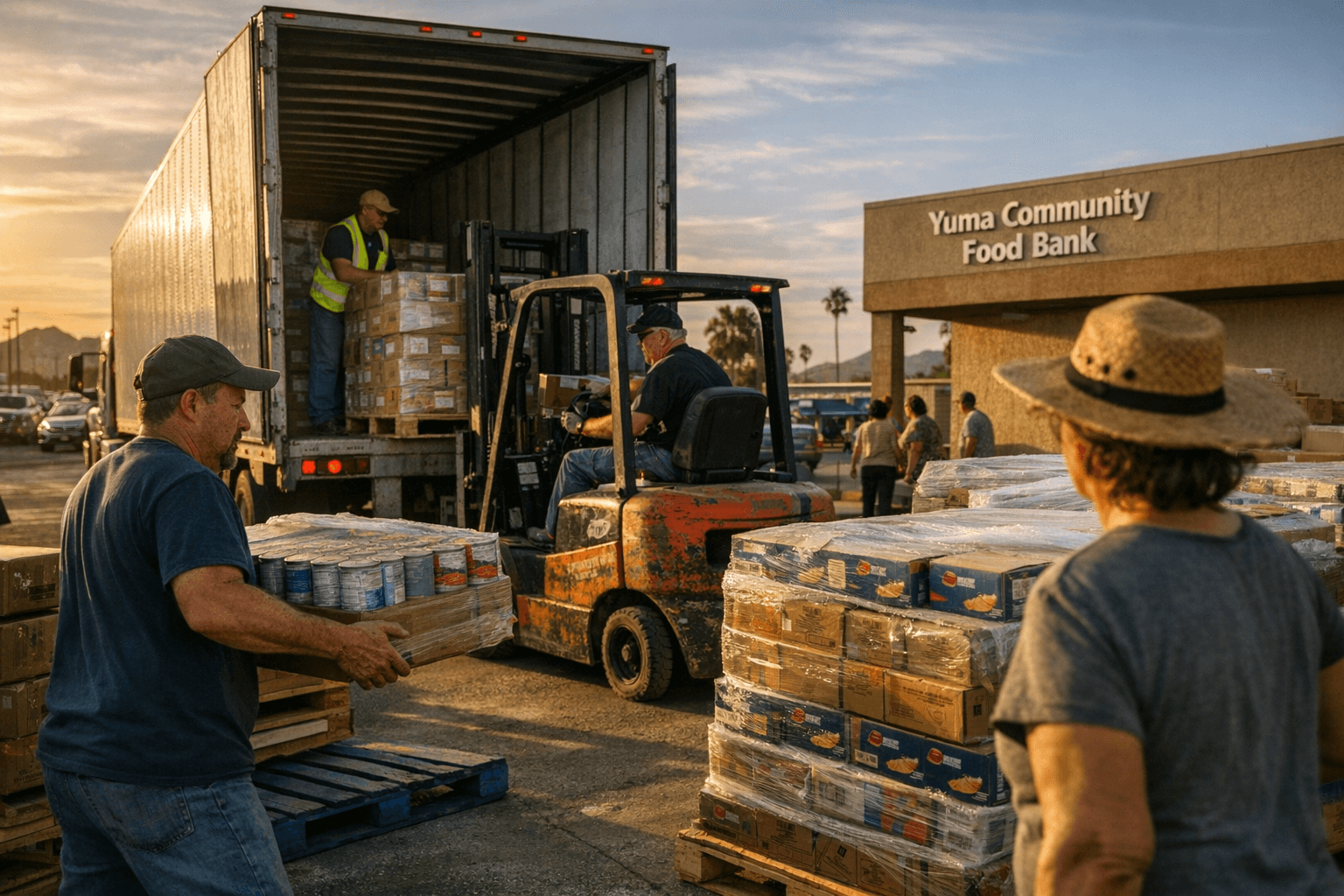
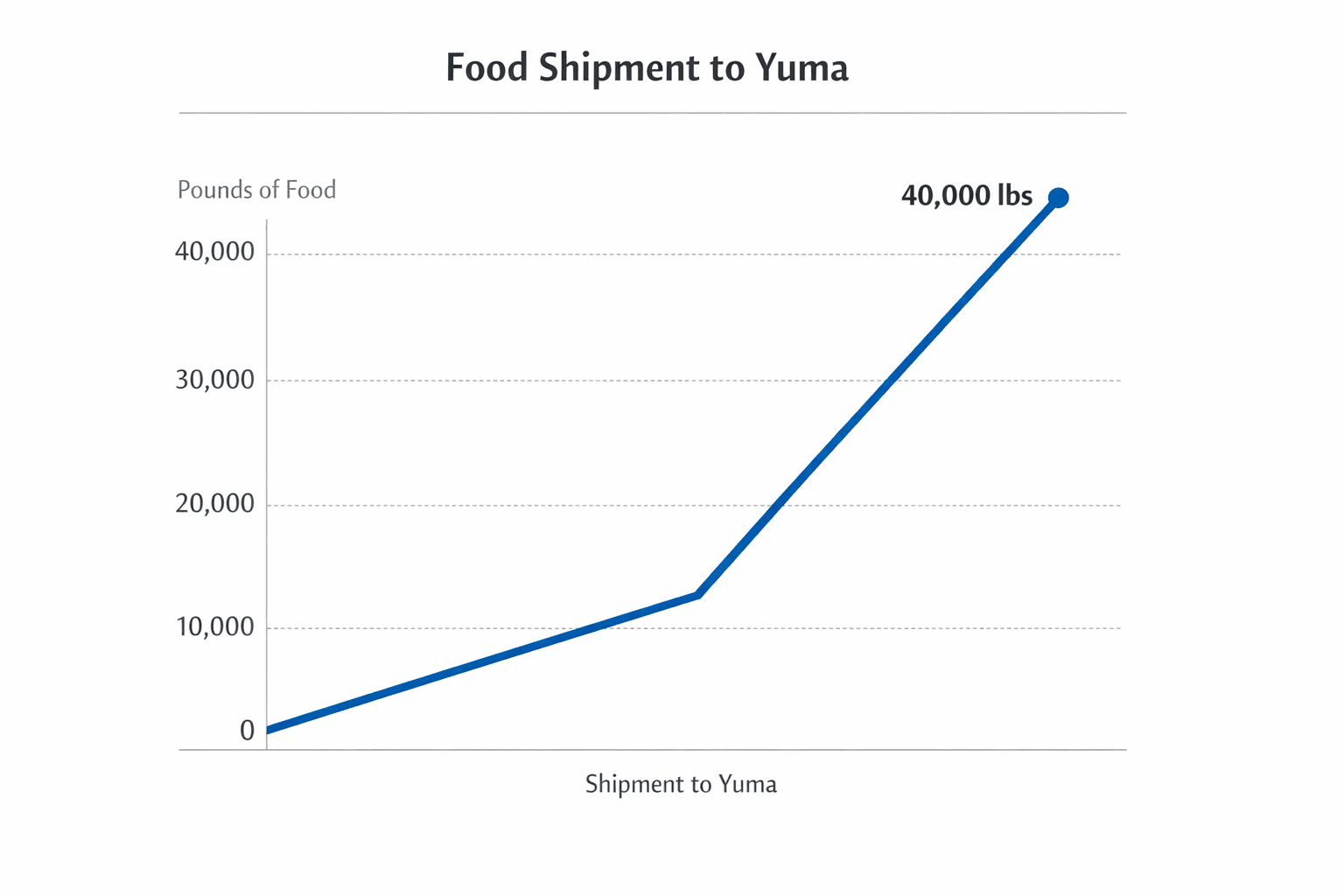
On January 4 local officials announced that the Yuma Community Food Bank will be the recipient of a full semi-truck of food from the Church of Jesus Christ of Latter-day Saints, with the truck due to arrive on January 6. The shipment includes over 40,000 pounds of shelf-stable goods such as flour, peanut butter, pasta, canned vegetables, oats, beans, hot cocoa and meat.
The donation arrives at a time when many community providers face persistent demand for emergency food assistance. Shelf-stable items are easier to store and distribute, allowing food banks to reach clients with limited refrigeration options and to smooth supply throughout the year. For Yuma County residents who rely on food assistance, the inbound truck means immediate relief in available grocery-type staples and the potential to expand food distributions in the weeks following delivery.
This single shipment is one component of a larger national initiative in which the Church plans to send 250 semi-trucks of food to all 50 states over the next year to mark the nation’s founding. For local nonprofits and public officials, such large-scale private donations create both opportunity and administrative obligations. Food banks must ensure they have adequate warehouse space, volunteer capacity and distribution plans to move product before seasonal demand shifts or stockpile constraints arise.
The involvement of a major faith-based organization underscores the continued reliance of emergency food systems on charitable contributions. While donations provide essential short-term relief, they do not replace the need for stable public policies that address the root causes of food insecurity, including housing costs, wages and access to federal nutrition programs. Local elected officials and county agencies will need to coordinate with the food bank to ensure equitable distribution, avoid duplication of services, and integrate this influx into broader hunger-relief planning.
For residents, the shipment offers immediate benefits in available food resources, but it also highlights civic choices about how Yuma County sustains its safety net. Volunteers and community leaders will play a central role in turning the donated goods into meals for families in need. Transparency around distribution priorities and collaboration between nonprofits and government will determine how broadly the donation eases food insecurity across the county in the coming months.
This article was produced by Prism’s automated news system from verified source data, official records, and press releases, then run through automated quality and moderation checks before publishing. The system is built and supervised by the people who set the standards it runs under. Read our full AI policy.
Did this article answer your question?